
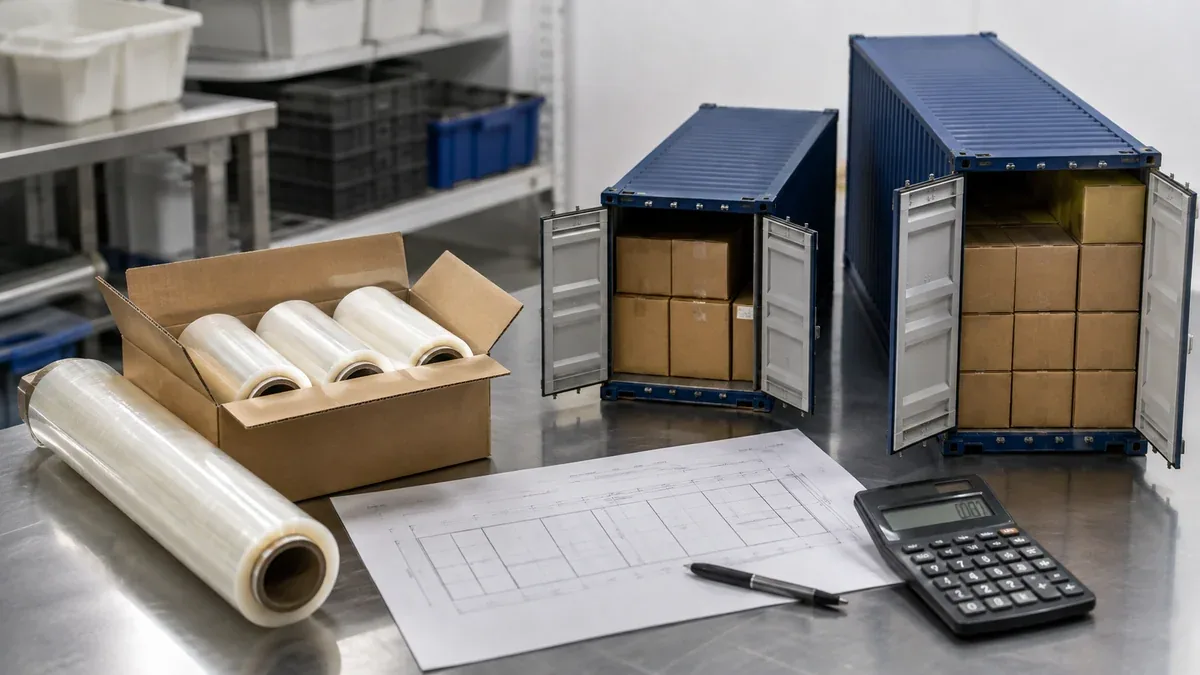
Compare 20GP and 40HQ with the actual packed order. Carton dimensions, gross weight, pallet pattern, container/door dimensions, payload, route limits and loadability all constrain the result. A universal carton count is not credible.
Collect the input set
| Input | Use |
|---|---|
| Closed external carton L × W × H | 3D pattern and CBM |
| Gross weight and stack limit | Payload and compression screen |
| Quantity by SKU | Mixed-load allocation |
| Pallet size/pattern or floor-load orientation | Usable, not theoretical, capacity |
| Booked equipment and route limits | Door, payload and inland feasibility |
Hapag-Lloyd states that specifications vary by container manufacturer. Use its current equipment pages for planning, then confirm the assigned unit with the carrier.
Screen cube and weight separately
Total CBM = sum of external carton volumes.
Total cargo weight = cartons + pallets/protection.
CBM division ignores orientation, voids, door clearance and safe unloading. Validate a loading pattern; reject any plan that exceeds carton, container or route limits.
Choose on total economics
Use live port-pair rates, equipment availability, inland cost, unloading, warehouse capacity and inventory carrying cost. Do not add slow SKUs just to fill a container. The loading guide covers protection; exact carton data comes from the selected roll configuration.