
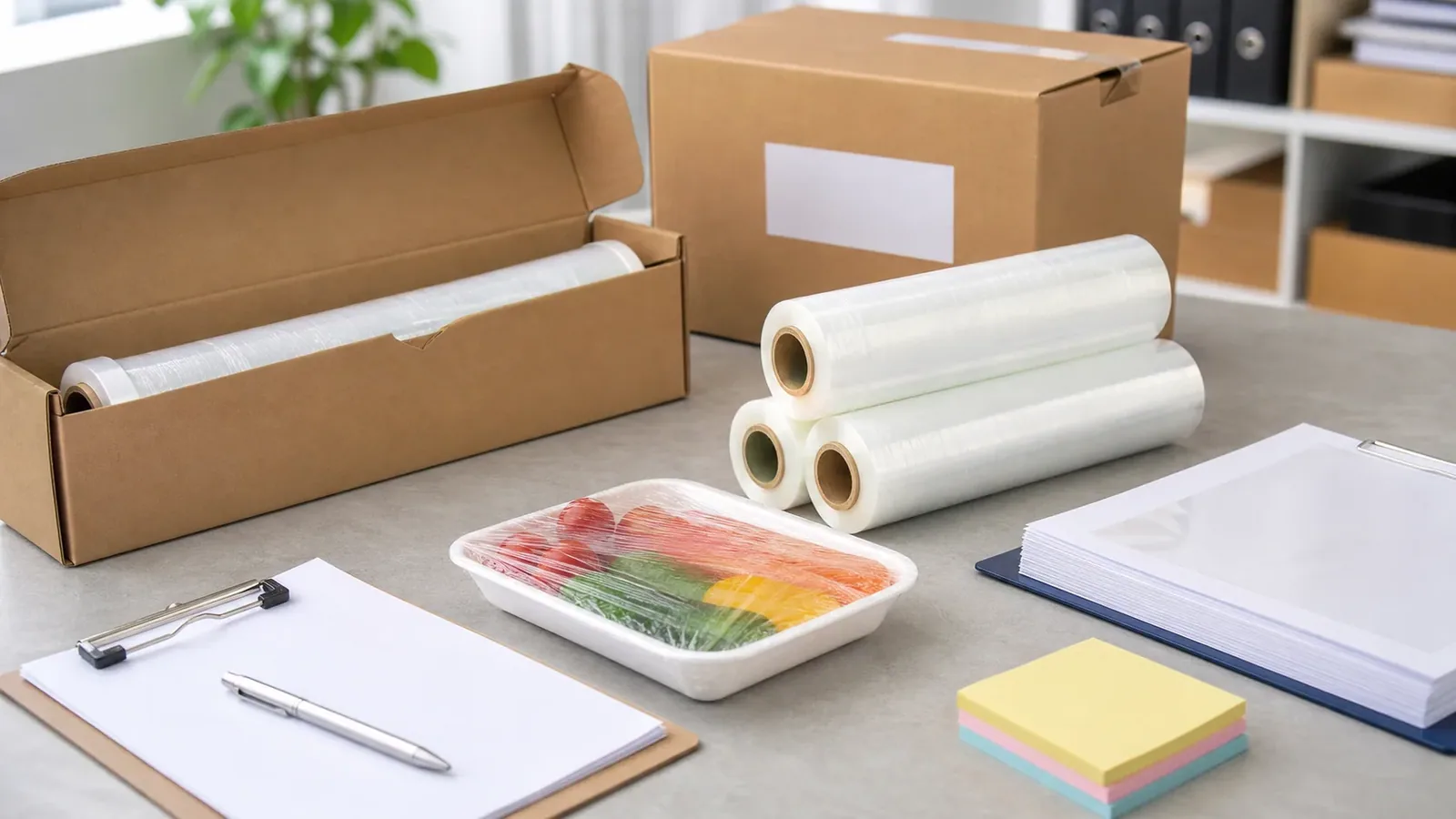
Cling film quotes are easy to compare badly. A roll price alone does not establish the film grade, thickness tolerance, usable length, net weight, cutter-box fit, or carton strength you will receive. This guide gives procurement teams a repeatable first-order process before they commit a deposit.
Define the roll you need before searching
Build a one-page requirement sheet so every supplier prices the same product and packing basis.
- Film type and intended food-contact use
- Width, target micron range, roll length, and core size
- Retail, food-service, jumbo-roll, or private-label packing
- Target order quantity, destination port, and preferred shipment window
Screen suppliers with evidence, not a profile page
Ask candidates to show how they control the product you are buying and how they document a batch.
- Company identity, factory address, and a current production contact
- Product photos or video that match the quoted roll and cutter box
- Relevant test-report scope and batch or sample identification
- A written answer on MOQ, lead time, change control, and export packing
Send an RFQ that makes quotes comparable
Request one quote format and require the supplier to identify assumptions instead of hiding them in a unit price.
- Price unit: kg, roll, meter, carton, or container
- Net and gross weight, rolls per carton, and carton dimensions
- Incoterm, destination, quote validity, and payment milestones
- Artwork, barcode, cutter, label, or carton requirements where applicable
Approve samples against measurable checks
Keep the approved sample, its specification sheet, and the test method together as the first production reference.
- Measure width, thickness, roll length or weight, and core dimensions
- Test unwind, cling, tear, clarity, and cutter-box compatibility in your use case
- Photograph labels, cartons, and pallet presentation
- Record agreed tolerances and what must be reported before any material change
Control the first shipment and prepare the import file
Confirm the finished product, packing count, and document set before cargo leaves the factory.
- Pre-shipment inspection plan, carton count, and loading photos
- Commercial invoice, packing list, bill of lading instructions, and origin requirements
- Destination-market food-contact and labeling requirements confirmed with your broker or local adviser
- A post-arrival scorecard for shortages, damage, and repeat-order decisions
Risks and checks
| Risk | Check | Action |
|---|---|---|
| A low price is quoted per roll | Ask for net weight, usable length, thickness range, and packing count. | Compare cost on the same product basis before choosing a supplier. |
| Sample and mass order behave differently | Agree which performance checks, tolerances, and changes require approval. | Keep the approved sample and signed specification as the reference. |
| Cutter boxes arrive damaged or do not fit | Confirm blade type, box board, core, roll diameter, and carton compression protection. | Approve packed samples and request pre-shipment packing photos. |
| Import documents are treated as an afterthought | Confirm document and destination requirements before production is released. | Have the importer or customs broker review the required set for the shipment. |
Frequently asked questions
What should a first cling film RFQ include?
State the film type, use case, width, target thickness range, length or net weight, core, packing, quantity, destination, and any private-label requirements. Ask suppliers to identify assumptions in writing.
Can I compare suppliers by price per roll?
Not reliably. Roll price can conceal differences in film thickness, actual weight, length, packing count, and delivered terms. Normalize the specification and commercial basis first.
Who should confirm import and food-contact requirements?
The importer should confirm destination-specific requirements with the appropriate local authority, customs broker, or qualified adviser before placing the order. This guide is a commercial sourcing framework, not legal advice.