
Short contact between aluminum foil and acidic or salty food is a different matter from long storage or hot holding. The European guidance targets the long case. Germany’s Federal Institute for Risk Assessment (BfR) recommends that uncoated aluminium foil, trays and dishes should not be brought into contact with acidic or salty foods. Its own testing found aluminium transferring into acidic foods held warm in uncoated trays. For caterers, the practical changes are in how long food is held, at what temperature and in which tray. For distributors, they are in what the label tells the user.
We make aluminum foil containers, so we have an obvious interest in this topic. That is exactly why we would rather explain it with sources than leave customers to find it elsewhere.
What the authorities actually say
BfR: the long-standing recommendation
The BfR’s 2014 annual report states that it has been recommending for some time that aluminium foils, trays and uncoated aluminium dishes and utensils should not be brought into contact with acidic or salty foods. It also notes that items such as beverage cans and yoghurt lid films are coated on the inside (BfR Annual Report 2014). The distinction between coated and uncoated aluminium runs through all of this guidance.
BfR: the 2017 tray study
In 2017 the BfR published tests on four uncoated aluminium menu trays filled with sauerkraut juice, apple sauce and sieved tomatoes. The food was prepared by the cook-and-chill method and then kept warm for two hours, as happens in institutional catering. Aluminium transferred into the acidic foods, especially during warm holding. The results far exceeded the Council of Europe release limit of 5 mg/kg. The BfR estimated that eating 200 g of such food a day would raise an adult’s weekly aluminium intake by roughly 0.5 mg per kg of body weight. That, it said, significantly increases the chance of exceeding the tolerable weekly intake. It singled out children and older people eating daily warm-held meals in communal catering. Salty foods had not been tested at that point; the BfR said further tests were planned (BfR press release).
Council of Europe: the release limit and labelling
Food-contact rules for metals are not harmonised across the EU. Many authorities refer to the Council of Europe’s Resolution CM/Res(2013)9 and its technical guide on metals and alloys (CM/Res(2013)9). This is the source of the 5 mg/kg specific release limit for aluminium. As summarised by the European Aluminium Foil Association, the guide also recommends the following. Storage of acidic, alkaline or salty liquid foods in uncoated aluminium should be limited. Producers should label uncoated aluminium for users. And producers should be able to give guidance on use with strongly acidic, alkaline or salty foods (EAFA labelling recommendations).
The industry view
The European Aluminium Foil Association has disputed how the BfR framed its tray study. It argues that the test conditions reflect a use of uncoated trays that the industry would not recommend (EAFA response). Both positions point to the same practical conclusion: uncoated foil is the wrong choice for long, warm contact with acidic food.
Which foods and which situations
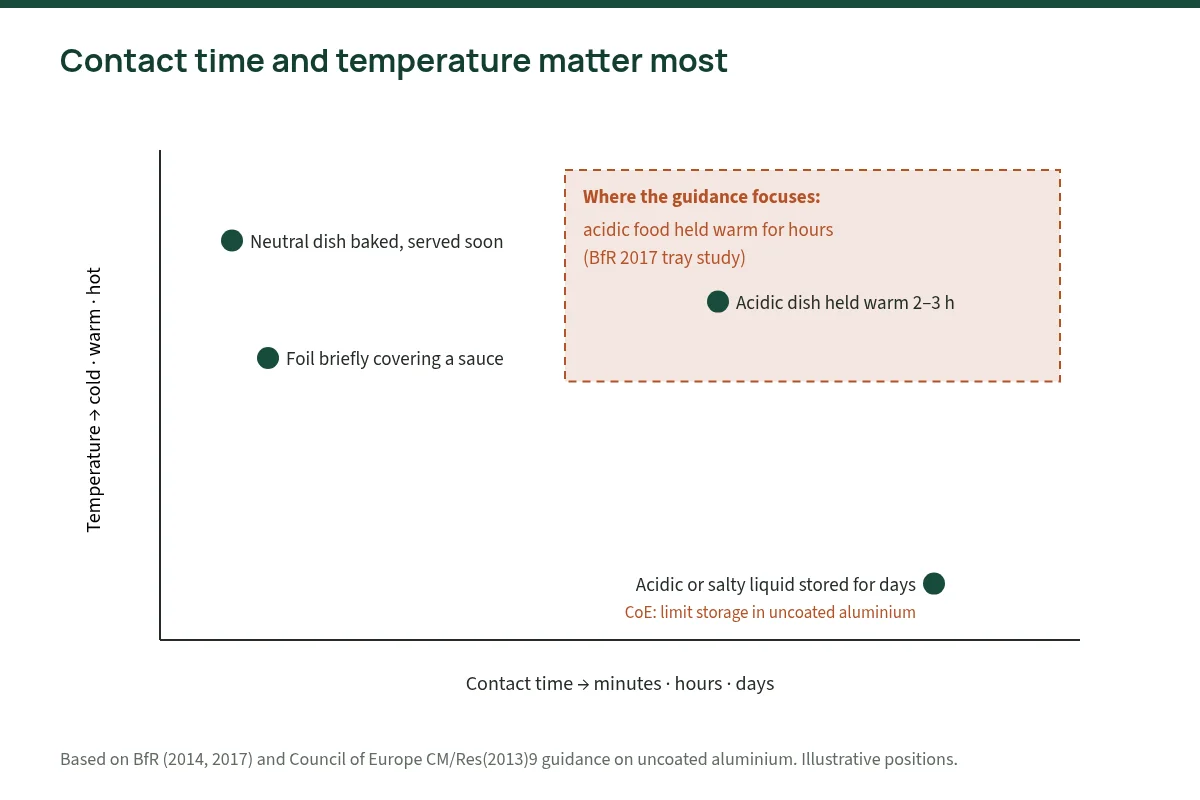
The guidance describes categories rather than a definitive list. Typical acidic examples in the sources include tomato products, fruit purées and juices, and fermented vegetables such as sauerkraut. Marinades with vinegar or citrus and heavily salted, brined or cured foods belong in the same conversation. Then sort your use cases by contact time and temperature:
| Situation | Relevance | Sensible response |
|---|---|---|
| Cooking a dry or neutral dish in a foil tray, served soon after | Low | Normal use; follow the supplier’s use instructions |
| Foil briefly covering a tomato dish during service | Low to moderate | Keep the foil off the food surface where possible |
| Acidic dish cooked, chilled and later held hot in an uncoated foil tray | The situation BfR tested | Shorten the hold, change the holding container, or use a coated tray if available |
| Storing acidic or salty liquid food in uncoated foil for days | Addressed by the CoE guidance | Use another container for storage |
This table is our reading of the published guidance for practical use. It is not a regulatory classification.
Worked example (hypothetical)
Picture a hypothetical contract caterer delivering hot lunches to a care home. The menu includes tomato-based stews twice a week. Meals are cooked the day before, chilled, reheated in uncoated foil trays and held warm for up to three hours across two delivery runs.
This sits close to the conditions in the BfR study, and it serves one of the groups the BfR named. The caterer reviews three options:
- Change the holding container for acidic dishes only. Tomato stews are reheated and held in stainless-steel pans and portioned into foil trays just before dispatch. Contact time in foil drops from hours to the delivery window.
- Ask the tray supplier about coated trays. The caterer asks whether a coated option exists for the tray size used, which surface is coated and what food-contact documentation covers the coating.
- Re-plan the delivery runs. Splitting the delivery into two batches shortens the maximum warm-hold time.
The caterer adopts the first option immediately and asks about the second for the next contract. None of this requires dropping foil trays for the rest of the menu.
What distributors should put on the label
If you sell uncoated foil containers or rolls under your own brand, the CoE guidance expects user information on the product. EAFA’s summary quotes example wording such as: “do not use this utensil for storage and processing of acidic, alkaline or salty food” and “to be used for storing food in refrigerator only”. Check the requirements of your own market, then decide which wording fits each product and use. For private-label packing, provide the final text to your supplier with the artwork. Do not leave it to be added later.
About YIYUAN foil products
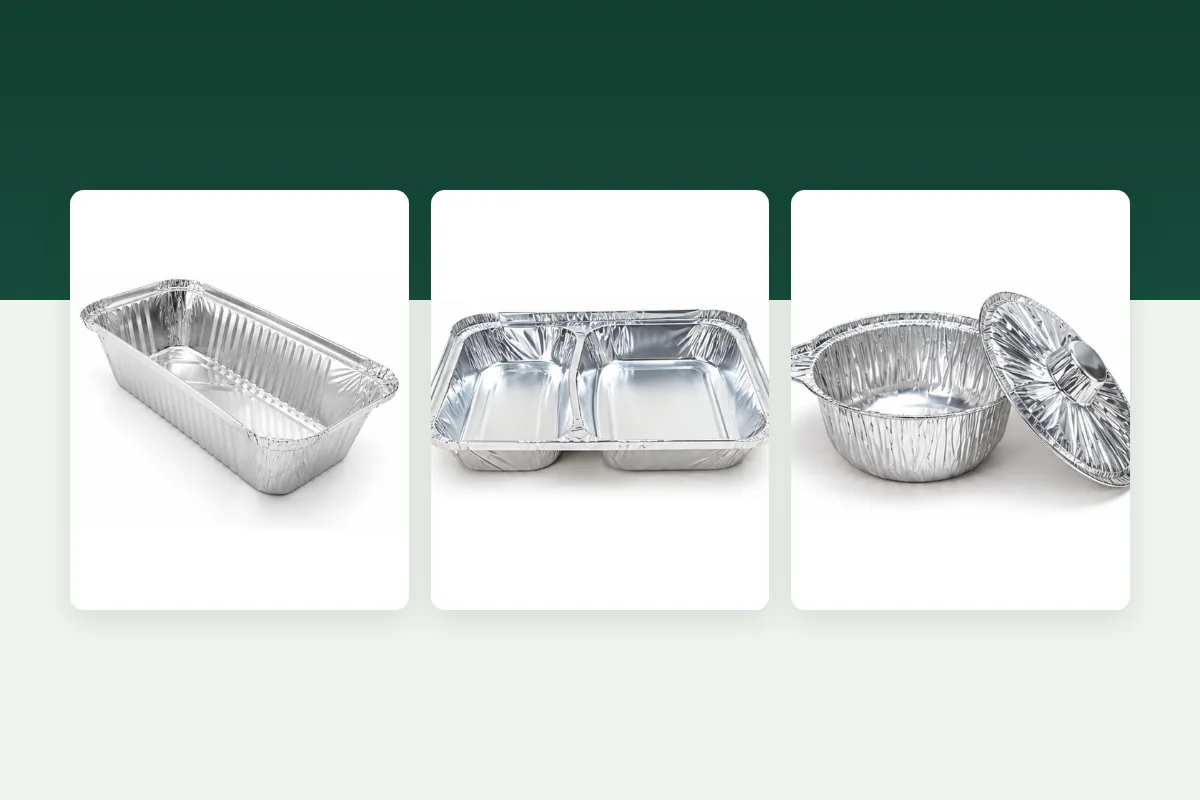
Our aluminum foil packaging range includes silver and gold containers, trays, pots and lids, and household and foodservice rolls. The aluminum foil catalog lists dimensions and packing; it states that thickness, alloy and OEM configuration are confirmed with the quotation. The catalog does not state whether a model is coated. If coating matters for your use, ask about it for the specific model and tell us the food you plan to pack. We will tell you what we can supply and what documentation exists, and we will not assume.
Bring the food into the enquiry
Most foil enquiries list a model and a quantity. For anything acidic or salty, add the food and how it is used. Say whether it is cooked, held hot or stored, and for how long. Send YIYUAN the model, the dish and the holding conditions, and we will discuss coating, labelling text and alternatives before you order.
Prepared by YIYUAN NEW MATERIALS. Updated October 27, 2026. Summarises the cited BfR, Council of Europe and industry sources; the worked example is hypothetical. This is not legal advice; check the rules of your market.