
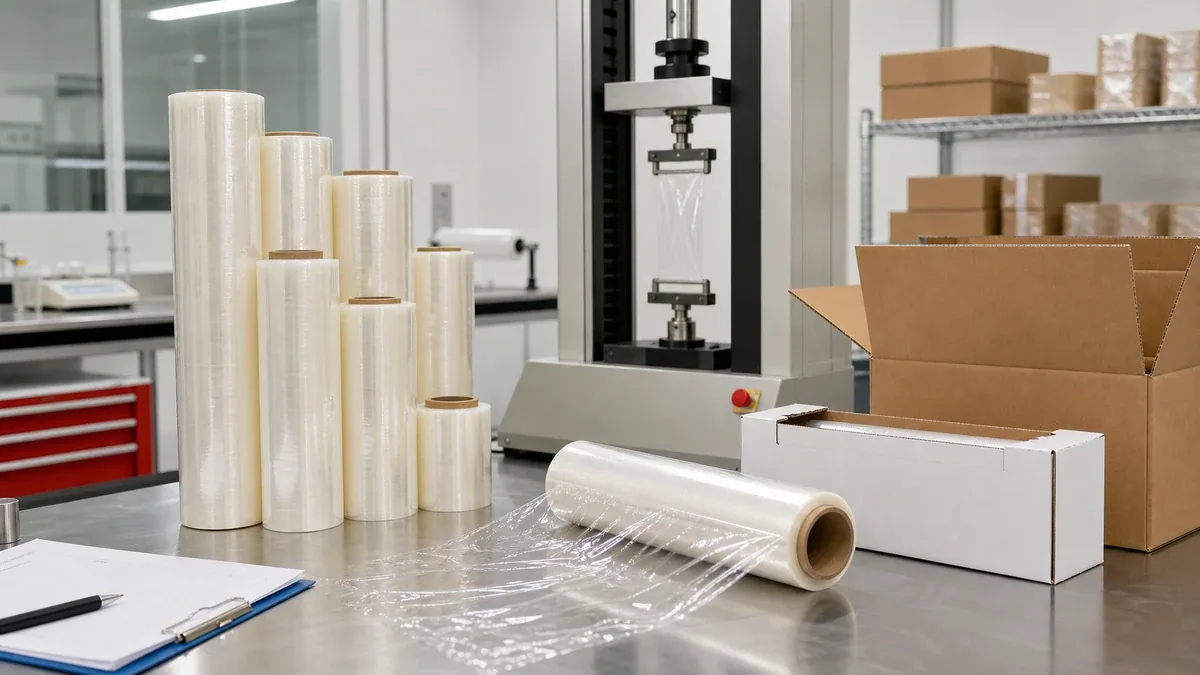
An outer carton can survive a drop and still deliver unusable retail boxes. Heavy film rolls concentrate load, cutters can move, and the lowest cartons on a pallet see a different risk from the top layer. Test the final pack, then open it and inspect what the customer will actually use.
Questions hidden by a simple “pass” result
Does a clean outer carton mean the product passed? Not necessarily. Check crushed cores, shifted cutters, split retail-box seams, roll-edge damage, and label condition inside the carton.
Can one generic drop height cover every order? The method should reflect final gross weight, handling route, orientation, and buyer acceptance rules. Confirm the roll and case configuration against the commercial roll range before setting the test.
Define the Pack Before Defining the Test
Carton dimensions, roll orientation, pieces per carton, gross weight, board construction, dividers, inner bags, and pallet method determine how forces reach the product. Final retail boxes can fail even when the outer carton still looks acceptable, so inspection needs both carton and product acceptance points.
| Test Input | What to Fix Before Testing | Post-Test Check |
|---|---|---|
| Carton configuration | Final dimensions, closure, board, quantity, orientation | Opening, corner crush, seam, puncture, shape |
| Product load | Final roll, core, retail box, cutter, and gross weight | Roll profile, core, box, cutter fixing, labels |
| Handling route | Manual handling, conveyor, pallet, parcel, or mixed route | Damage relevant to the expected distribution steps |
| Stacking | Cartons per layer, layers, pallet pattern, storage duration | Compression, lean, lower-carton and product deformation |
| Evidence | Sample IDs, photos, condition, sequence, acceptance points | Traceable result rather than a pass label |
Why outer appearance is not enough: A dropped carton has only a dented corner, but the cutter boxes inside shift and several blades loosen. If the review records only carton condition, the real customer-facing damage is missed.
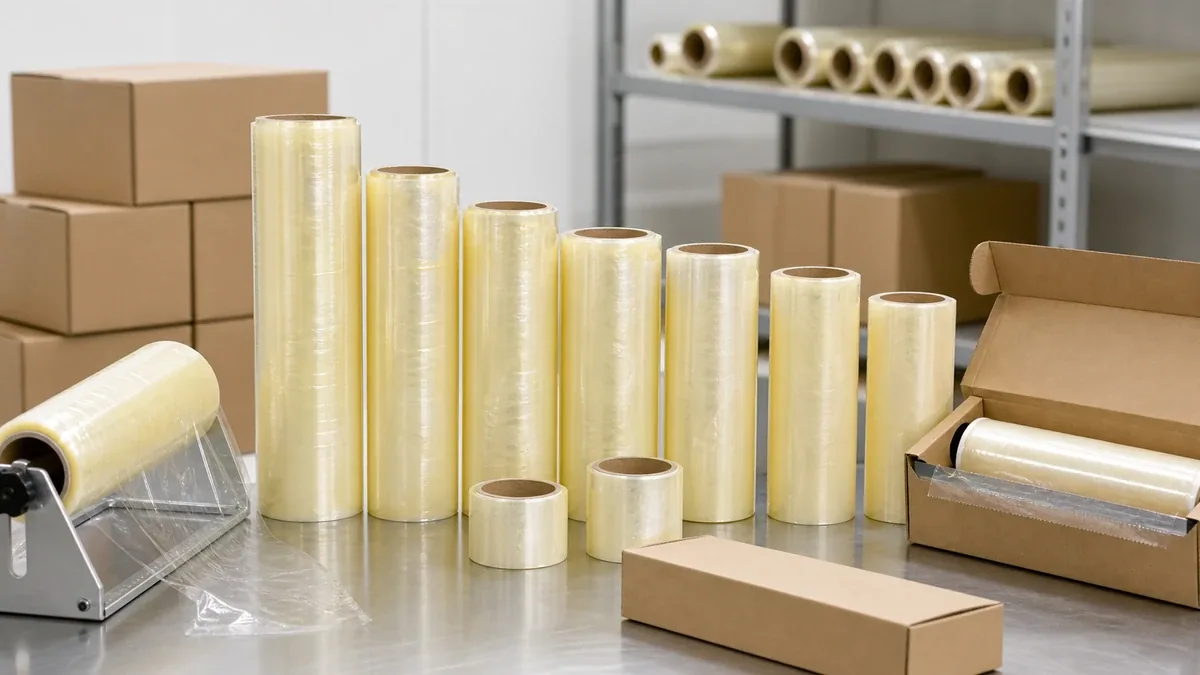
Compression and Stacking Need Time and Load Context
Warehouse stacking and pallet transport create sustained loads that differ from a brief impact. Define the final pallet pattern, number of layers, storage condition, and which cartons will be opened afterward. Lower-layer cartons and rolls deserve attention because they carry more load.
A test can compare carton options, but the result should not be extended to a heavier pack, different board, taller pallet, or wetter environment without review. Keep the exact tested configuration with the approval record.
Plan Handling Tests Around Real Orientations
Cartons may land on a face, edge, or corner during handling. The buyer and test provider should decide the sequence, height or severity, sample quantity, and acceptance criteria using an appropriate protocol for the distribution route. This article does not prescribe a universal drop height or standard.
- Photograph all carton faces, corners, closure, and labels before testing.
- Identify every carton and the products inside it.
- Use final gross weight and internal packing.
- Record each orientation and event in sequence.
- Open cartons after testing and inspect rolls, cores, cutter boxes, blades, and labels.
- Run functional cutting and unwinding checks on selected affected products.
- Keep damaged and unaffected references for corrective-action review.

Connect the Test to Pre-Shipment Inspection
Once the carton is approved, production inspection should confirm the same dimensions, board, internal arrangement, quantity, gross weight, closure, and pallet plan. A laboratory or sample test does not help if bulk packing quietly changes. The existing guide to cling film carton packing and loading covers the commercial data that should match.
Record Failure by Severity and Location
Separate cosmetic carton marks from damage that affects sale, use, identification, or product quantity. Record where damage occurred and how often it appeared. Corrective action may involve carton board, dimensions, dividers, roll orientation, empty space, closure, pallet pattern, or handling controls rather than one blanket “stronger carton” request.