
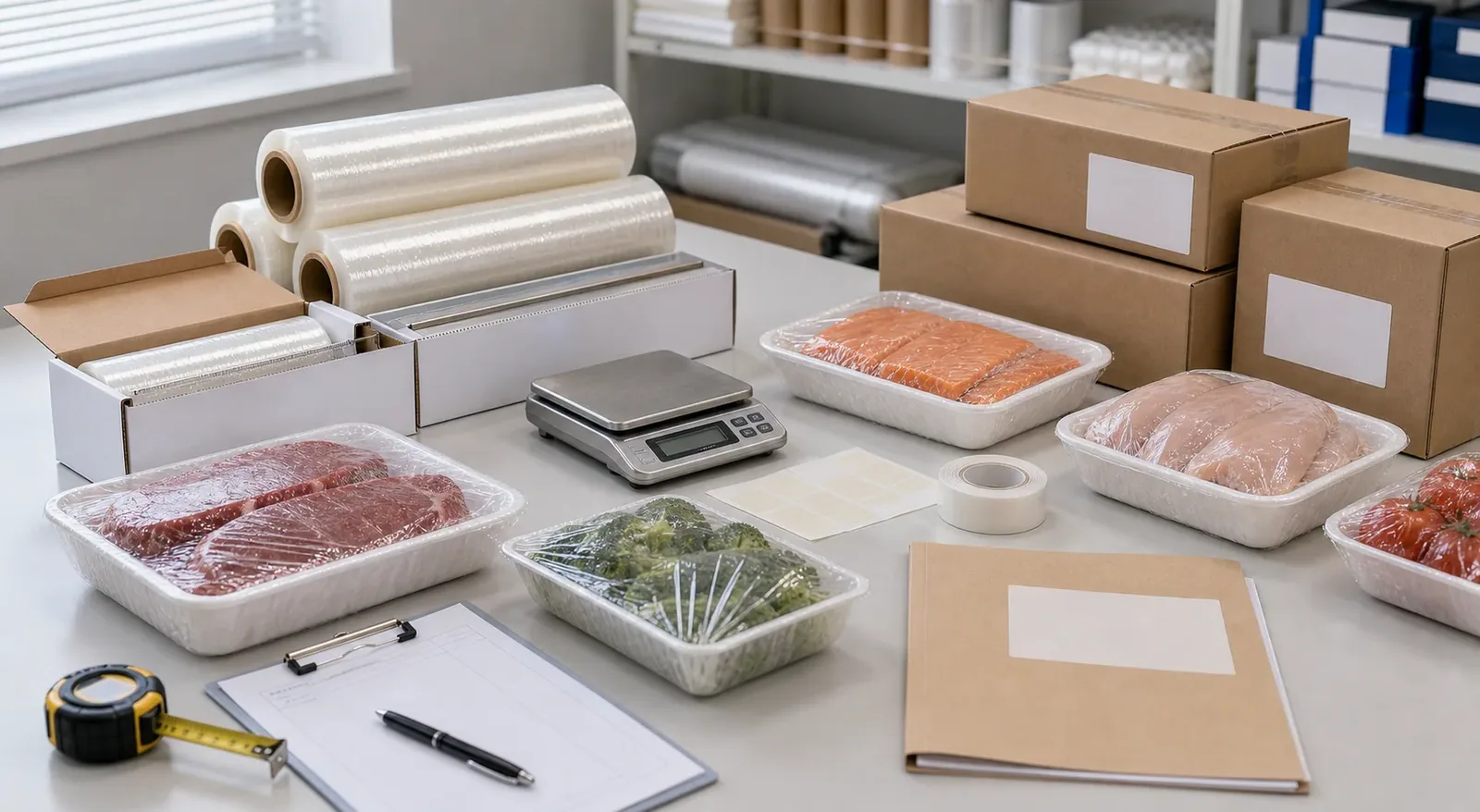
A clear roll and a strong first pull do not prove that a cling film sample is ready for import. The useful test starts with the quote sheet, then moves to the trays, cutter box, storage conditions, carton labels, and working speed the customer will actually use. This checklist turns that review into a repeatable approval record.
- First-time importers should test cling film samples with real trays, containers, cutter boxes, and packing details.
- Do not approve a sample from clarity alone. Check cling, stretch, tearing, odor, roll rotation, box strength, and carton data.
- The sample specification should match the quoted width, thickness, length, roll weight, and core size.
- Keep an approved sample or photo record for pre-shipment comparison.
- Ask what product documents or test reports are available before bulk production, especially for regulated or retail markets.
Why First-Time Importers Need a Real Sample Test
Many first orders fail because the buyer approves a sample too quickly. The film may look clear in an office, but tear during kitchen use. It may cling to one tray but not another. It may cut well as a loose roll but perform poorly inside a weak cutter box. These details affect customer complaints after import.
A real sample test should copy the buyer’s sales channel. Restaurant suppliers should test fast kitchen handling. Supermarket suppliers should test tray display and edge hold. Rewinders should test roll weight, winding quality, core size, and conversion behavior. The sample test should answer how the product will work, not only how it looks.
Working example: A new importer tests a cling film sample only by pulling it by hand. The bulk order later receives complaints because the cutter box blade pulls the film and the carton labels do not match the local SKU system. A full sample approval checklist would have caught both issues.
Match the Sample Against the Quote Sheet
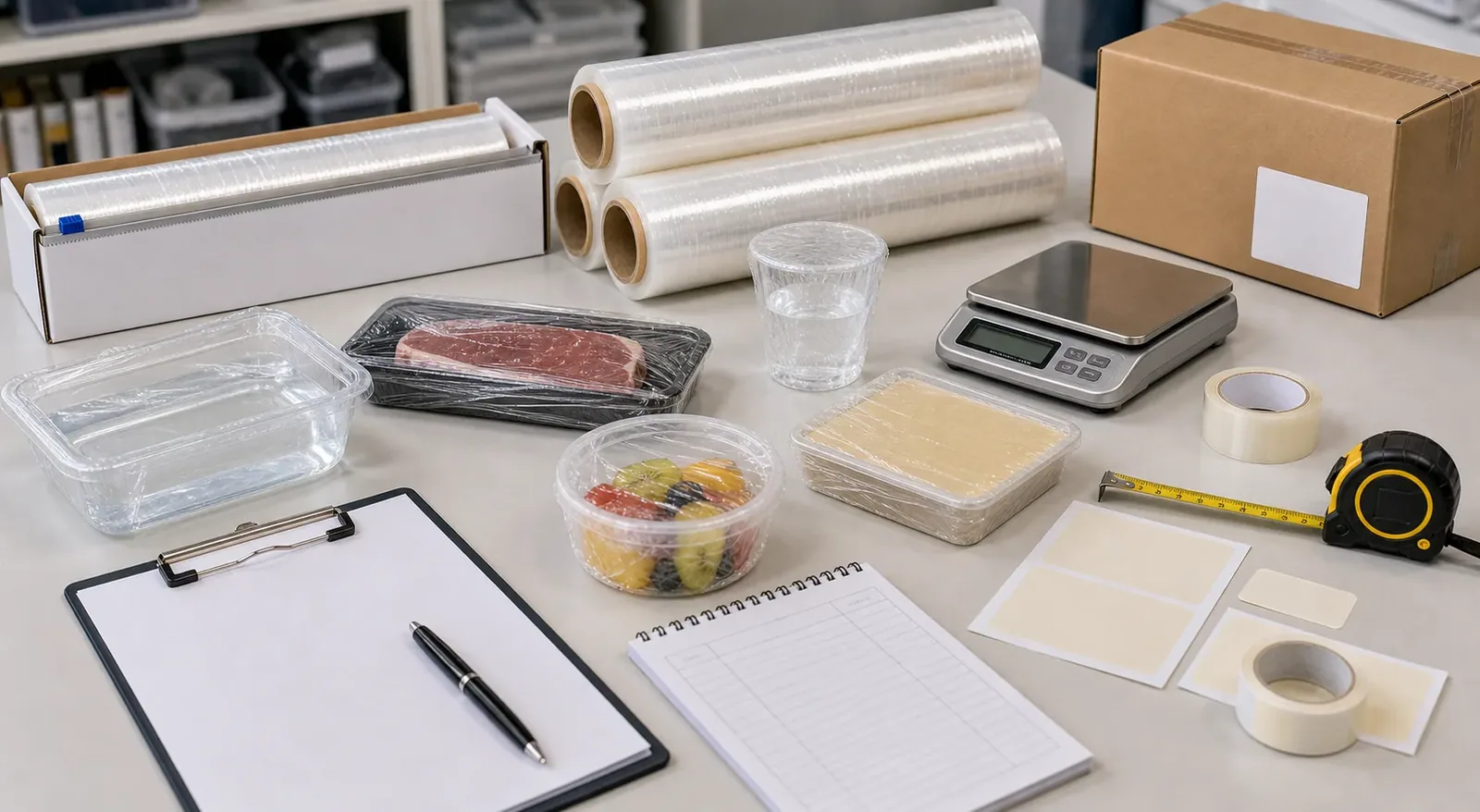
The sample should represent the product being quoted. If the sample is a different width, thickness, roll length, roll weight, core size, box structure, or carton packing, the buyer may approve one product and receive another. Before testing performance, check whether the sample matches the quotation basis.
| Sample Field | Buyer Check | Why It Matters |
|---|---|---|
| Width | Measure the roll or confirm from label | Wrong width changes tray fit and packaging size. |
| Thickness | Confirm target micron or agreed tolerance | Thin film may reduce cost but affect tearing and feel. |
| Roll length | Confirm the quoted length basis | Short rolls create customer complaints and unfair price comparison. |
| Roll weight | Weigh sample roll when useful | Weight helps check material quantity and compare suppliers. |
| Core size | Check dispenser, cutter box, or rewinding fit | Wrong core can make the roll unusable in the buyer’s equipment. |
| Packaging | Review cutter box, retail box, refill roll, or jumbo packing | Packaging affects user experience and carton planning. |
Test Cling, Stretch, Tear, and Clarity Together
Cling strength is important, but it should be tested together with stretch and tearing behavior. A film that clings strongly may still tear too easily during fast wrapping. A film that stretches well may not hold the tray edge. Clarity should be checked after the film is applied, not only while it is still on the roll.
- Wrap common trays, bowls, prep containers, and food packs from the target channel.
- Check whether the film holds the tray edge after handling and storage.
- Pull the film at normal user speed and check if it tears unevenly.
- Review clarity under kitchen, store, or display lighting.
- Check odor and touch feel if the buyer’s customers are sensitive to sensory issues.
- Repeat the test with several users when possible, not only one person.
Cutter Box Samples Need Separate Approval
If the order uses cutter boxes, the box and blade should be approved separately from the film. A good film can still feel poor if the blade pulls the film, the roll does not rotate smoothly, or the box bends after repeated use. Treat the cutter box as part of product quality.
Cut repeatedly
Cut the film many times and check whether the blade stays fixed and cuts cleanly.
Check strength
Pull from normal user angles and check whether the box bends, opens, or twists.
Check rotation
Make sure roll diameter, core size, and pull-out opening allow smooth use.
Carton Sample and Label Checks
Many buyers test the roll but ignore the carton. This is risky for import orders. Cartons protect product during shipping, warehouse receiving, and local distribution. Weak cartons can damage retail boxes. Unclear carton labels can create wrong SKU delivery after arrival.
Ask for carton dimensions, pieces per carton, gross weight, net weight, carton mark, pallet option, and label format when relevant. For mixed orders, each width, roll length, material, and packaging style should be easy to identify.

Review Documents Before Bulk Production
When food-contact or inspection documents matter for the destination market, ask what documents can be provided for the exact product and material. A broad claim is not enough. Review product specification, available reports, sample description, and shipment needs together.
Buyers can review available files such as YIYUAN’s inspection / test report PDF, while still confirming which product, sample, material, and market the document supports.
Keep an Approved Sample Record
An approved sample record is useful when production is ready. It gives the buyer, supplier, and inspection team one reference point. The record does not need to be complicated, but it should be clear enough to compare bulk goods against the approved version.
- Keep one physical approved sample when shipping cost and timing allow.
- Keep photos of roll label, box, blade area, carton label, and carton packing.
- Record key specs: material, width, thickness, length, weight, core, and packing.
- Record accepted sample date and any allowed changes before mass production.
- Use the sample record for pre-shipment photo or inspection review.
- Update the record if artwork, carton packing, or roll specification changes.
First-Time Importer Sample Approval Checklist
- Confirm sample matches the quoted product specification.
- Test film on real trays, containers, food packs, or kitchen workflow.
- Check cling, stretch, tear resistance, clarity, odor, and touch feel.
- Test cutter box blade, box strength, roll fit, and pull-out behavior if boxed.
- Check carton dimensions, carton weight, quantity per carton, and carton labels.
- Ask what food-contact, test report, inspection, or shipment documents are available.
- Keep approved sample photos and notes for production comparison.
Buyers can review the full cling film product category before sending sample requirements, especially if they are comparing commercial rolls, PVC fresh wrap, cutter boxes, and jumbo rolls.
Sample-testing questions
Is hand-stretch testing enough for cling film?
No. Hand stretching is only one check. Buyers should also test tray edge hold, tearing during normal use, roll rotation, cutter box performance, carton packing, and sample consistency.
What should I check on a cutter box sample?
Check blade position, blade fixing, box board strength, opening direction, roll fit, pull-out behavior, barcode, artwork, and carton protection.
Should I keep an approved cling film sample?
Yes. Keep a physical sample or detailed photo record so bulk production can be compared against the approved reference before shipment.
When should importers ask for test reports?
Ask before deposit payment if documents are important. The report should be reviewed against the exact product, material, sample, order, and destination market.
Build a sample test around your real use
For a useful sample discussion, share the target tray or container, roll dimensions, cutter format, packing style, and the checks that matter most to your customer channel.