
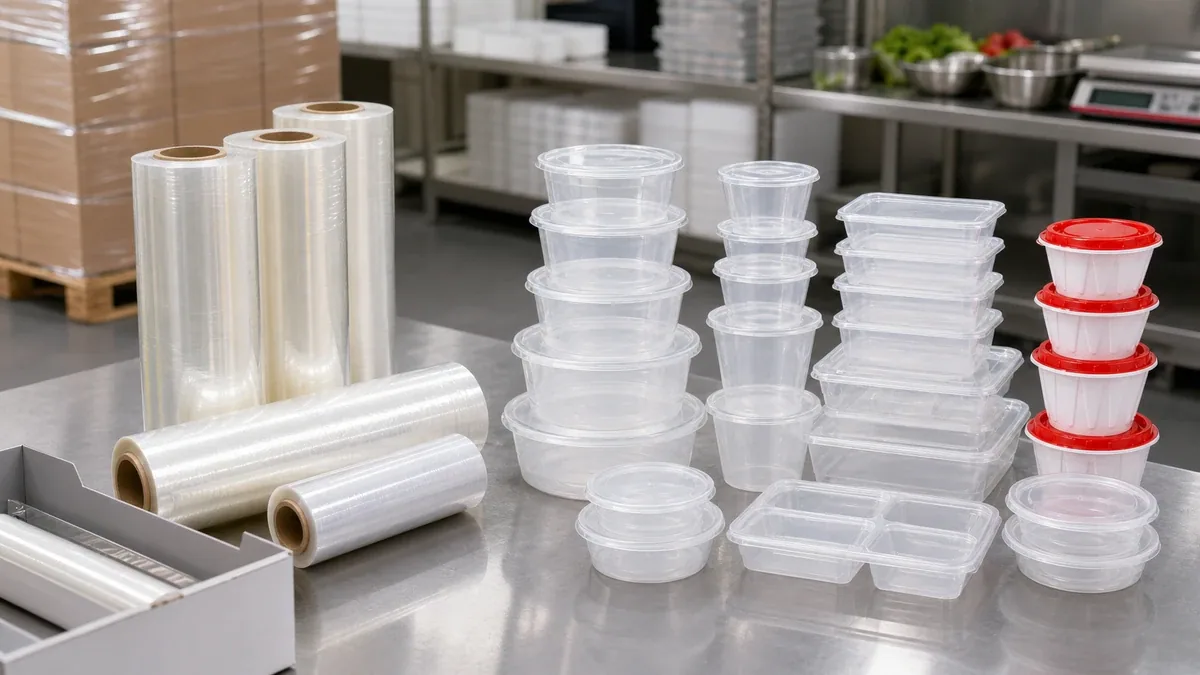
Clear rolls are easy to misidentify in a short RFQ. A request for “stretch cling film” can reach a food-wrap supplier or a pallet-film supplier, and both may return plausible-looking prices. The first sentence should say what the film will touch and what job it must do.
Start With What the Film Will Touch
The first line of the RFQ should identify the use. Food wrap may contact food or cover food-contact containers, so buyers need product- and market-specific food-contact documentation questions. Pallet film is specified around load stability, wrapping equipment, pallet geometry, and transport. Do not assume a document for one use supports the other.
| RFQ Area | Food Cling Film | Pallet Stretch Film |
|---|---|---|
| Primary use | Food, trays, bowls, prep containers, retail or food service | Cartons, pallets, logistics loads |
| Typical handling | Cutter box, dispenser, manual food wrapping, rewinding | Hand or machine pallet wrapping |
| Key fit question | Tray hold, cutting, clarity, roll and core fit | Load, wrapping pattern, equipment, containment |
| Packaging | Retail box, food-service roll, refill roll, jumbo conversion roll | Industrial roll and palletized supply |
| Documents | Exact food-contact product, use, sample, and destination market | Logistics and product requirements for the intended load |
RFQ failure pattern: A trading company asks for “stretch film for food pallets” without explaining whether the film will wrap food trays or stabilize cartons. Suppliers quote different products, so price, thickness, core, and test documents cannot be compared.
Roll Specifications Also Follow the Use
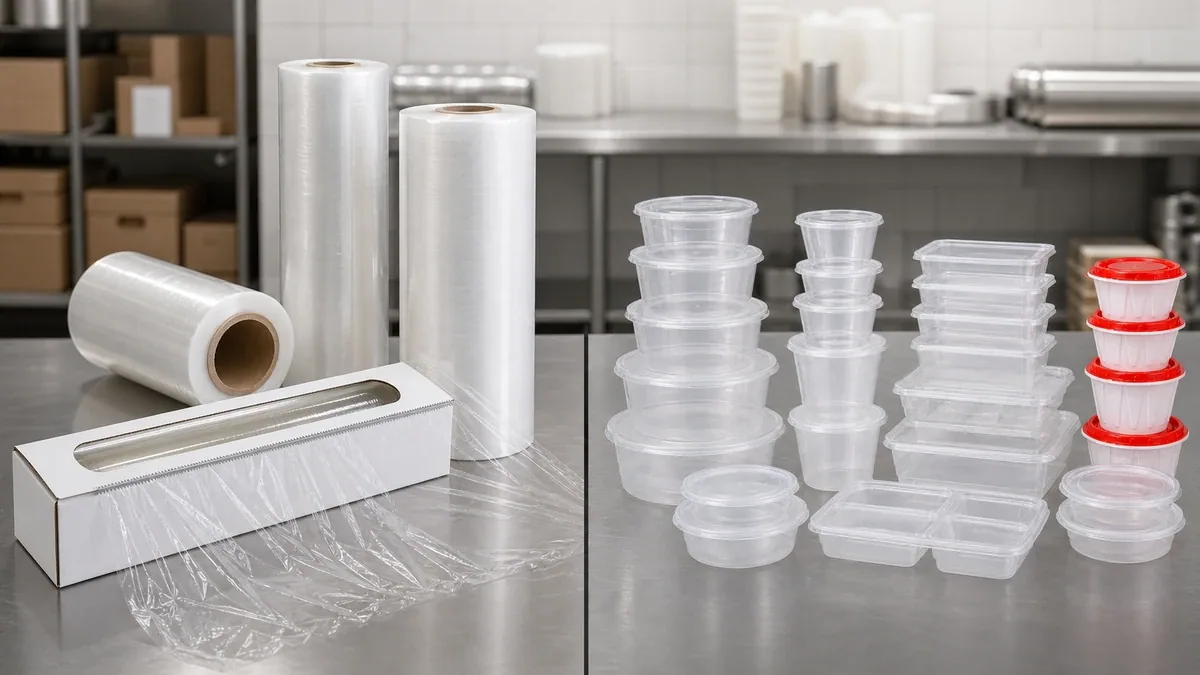
Food cling film buyers commonly need width, length or net weight, thickness, core, material, cutter or dispenser format, carton packing, and sample performance on the intended tray. Pallet-film buyers need a different load and equipment brief. A familiar width or micron value does not make the products interchangeable.
Use Photos to Remove Ambiguity
Attach a photo of the current roll, box or dispenser and a second photo showing how the film is used. Remove confidential labels if needed, but leave the roll proportions, core, packaging, and application visible. Photos help the supplier understand the category before technical follow-up begins.
A Clear Food-Film RFQ
- State “food cling film” or “fresh wrap” and describe the target channel.
- List the intended food, tray, bowl, container, or kitchen workflow.
- Provide material preference if confirmed; otherwise ask for product options without making claims.
- Specify width, thickness basis, length or weight basis, core, roll diameter, and packaging.
- Explain cutter box, dispenser, or rewinding-equipment fit.
- State destination market and exact document questions.
- Attach product and use photos, quantity, and sample request.
The complete cling film RFQ checklist provides the field-level template. Current food-wrap products are listed under the cling film category.
Where buyers still get the terminology crossed
Can pallet stretch film be accepted if it wraps a tray well? No. Physical cling does not establish suitability for food contact. Product identity, intended use, and destination-market evidence must match the food-wrap application.
Which details remove the ambiguity fastest? Include a use photo, food or logistics application, roll dimensions, core, dispenser or wrapping machine, and document request. For food wrap, start with the formats shown on YIYUAN’s cling film product page.