
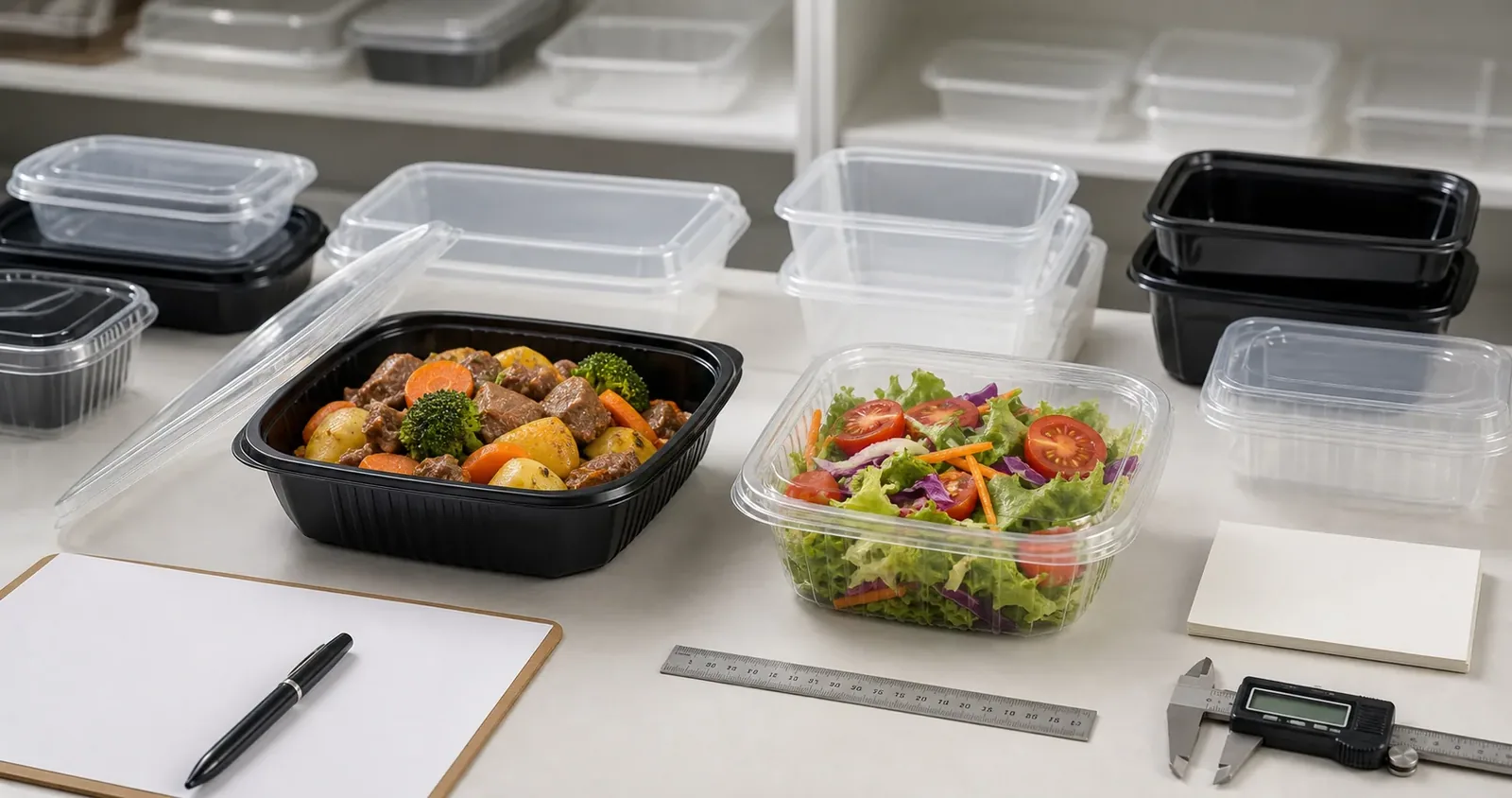
Material is a starting point, not the decision. A hot rice meal in a delivery bag and a chilled fruit cup in a display case create different demands on the base, lid, clarity, closure, and labeling. Define the food and handling route first, then compare complete PP and PET samples under those conditions.
- PP food containers are commonly reviewed for hot food, takeaway meals, meal prep, and microwave-related use cases where the exact product supports it.
- PET food containers are commonly reviewed for cold deli, salad, fruit, bakery, and clear display packaging.
- Buyers should not choose by material name alone; they should test food temperature, lid fit, leak risk, stacking, clarity, and transport handling.
- Microwave, freezing, food-contact, and recycling claims should be confirmed by product design, document review, and local market rules.
- Sample testing should include real food, real lids, real delivery bags, and the buyer’s display or storage condition.
Material names alone do not establish an approved use condition. The FDA organizes food-contact reviews by the substance, food type, and condition of use; the European Commission likewise applies food-contact rules to materials and articles placed on the EU market. Confirm the exact base, lid, intended use, supplier guidance, and destination-market requirements.
Start With Food Temperature, Not Material Habit
Many buyers ask for PP or PET because that is what their previous supplier used. A better starting point is the food condition. Will the container hold hot rice, curry, pasta, grilled food, soup, salad, cut fruit, cold deli, or bakery items? Will it be microwaved by the end user? Will it sit in a cold display? Will it travel in a delivery bag for 30 minutes?
These questions matter because the container and lid work as a system. A material that looks good in a showroom may fail when the food is hot, oily, heavy, or transported under pressure.
Where the risk appears: A takeaway packaging buyer asks for a clear PET container because the food looks better inside. After sample testing, the buyer realizes the program includes hot rice and sauce. The project is changed to a PP container with a matching lid for the hot-food route, while PET remains an option for cold deli packs.
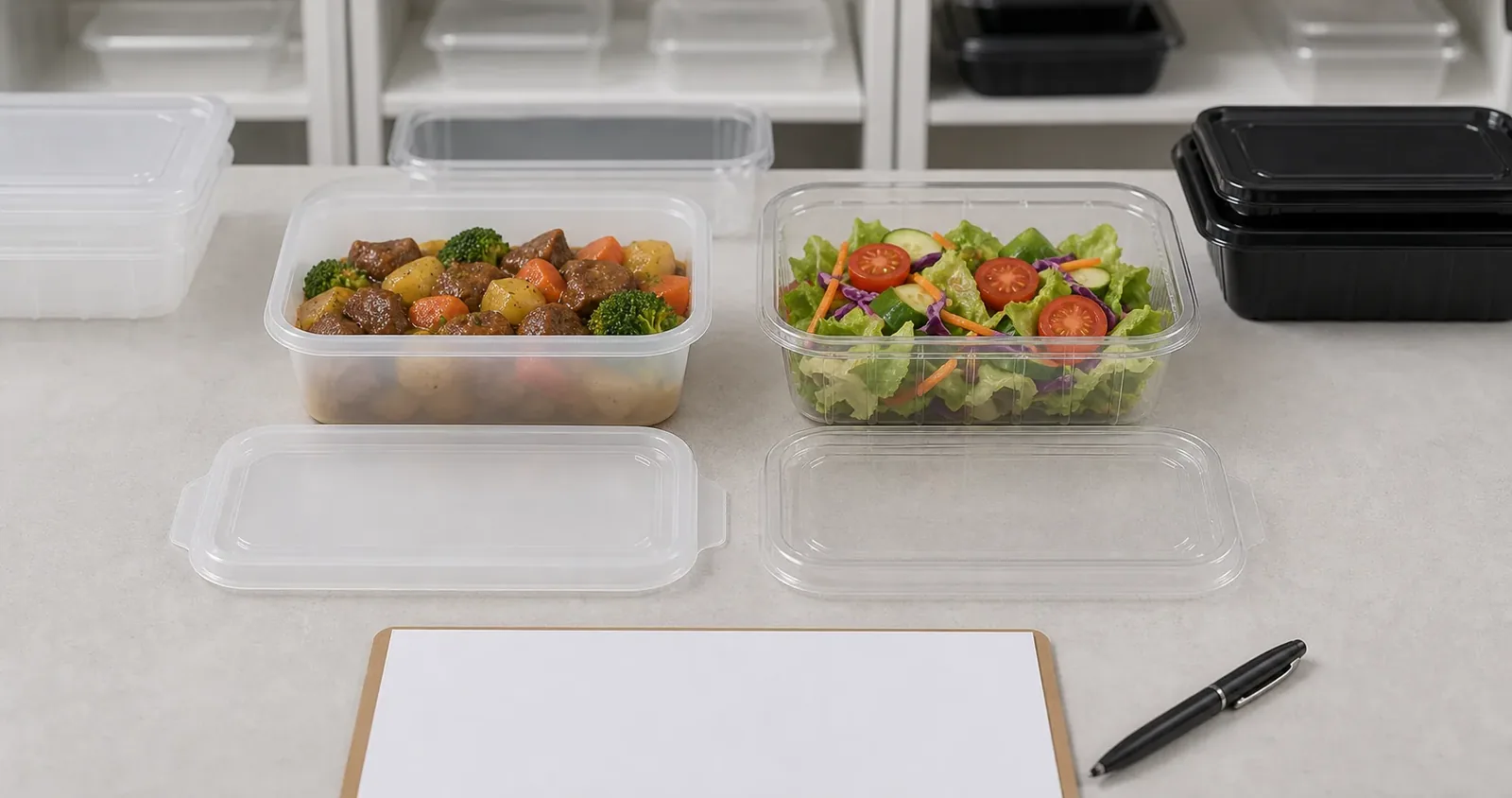
PP Food Containers: Typical Buyer Checks
PP is often discussed for hot food containers, takeaway meals, bento boxes, and meal prep programs. Buyers may ask about microwave use, oil resistance, lid fit, stacking, and transport handling. The exact performance depends on product design, wall thickness, lid structure, manufacturing quality, and the food condition.
Avoid writing broad claims before reviewing the exact product. If microwave-related wording is needed, confirm whether the product design, label, and documents support that wording in the target market.
PET Food Containers: Typical Buyer Checks
PET is often selected for cold deli, salad, fruit, bakery, and clear display packaging. It gives good visibility, which helps supermarket and grab-and-go presentation. Check clarity, lid closure, stack strength, anti-crack behavior, label area, and cold storage handling.
PET should not be chosen only because it looks clear. If the food is hot or oily, or if the customer may microwave it, the buyer needs a different review path and should confirm exact use limits before ordering.
| Buyer Need | PP Review Focus | PET Review Focus |
|---|---|---|
| Hot meal | Heat handling, lid fit, deformation, meal weight. | Usually not the first choice unless exact product is suitable. |
| Cold salad or fruit | Possible, but clarity may be lower. | Clarity, display look, lid closure, cold handling. |
| Delivery | Leak risk, stack pressure, bag fit, hot food behavior. | Crack risk, lid security, cold food display and transport. |
| Retail display | Label space, stack shape, product style. | Transparency, shelf appearance, label area, stack stability. |
| Microwave-related program | Confirm product design and market-compliant wording. | Do not assume microwave suitability from material name. |
Lid Fit Can Decide the Better Material
Some buyers focus on the base container and forget the lid. A poor lid fit can cause leaks, loose closure, cracked corners, or poor stacking even when the base material is suitable. Sample testing should include the exact lid planned for bulk production.
Check closure
The lid should close consistently without excessive force or loose corners.
Check edges
Test sauce, condensation, tilted handling, and delivery-bag movement.
Check transport
Test filled containers stacked in cartons, delivery bags, and cold displays.
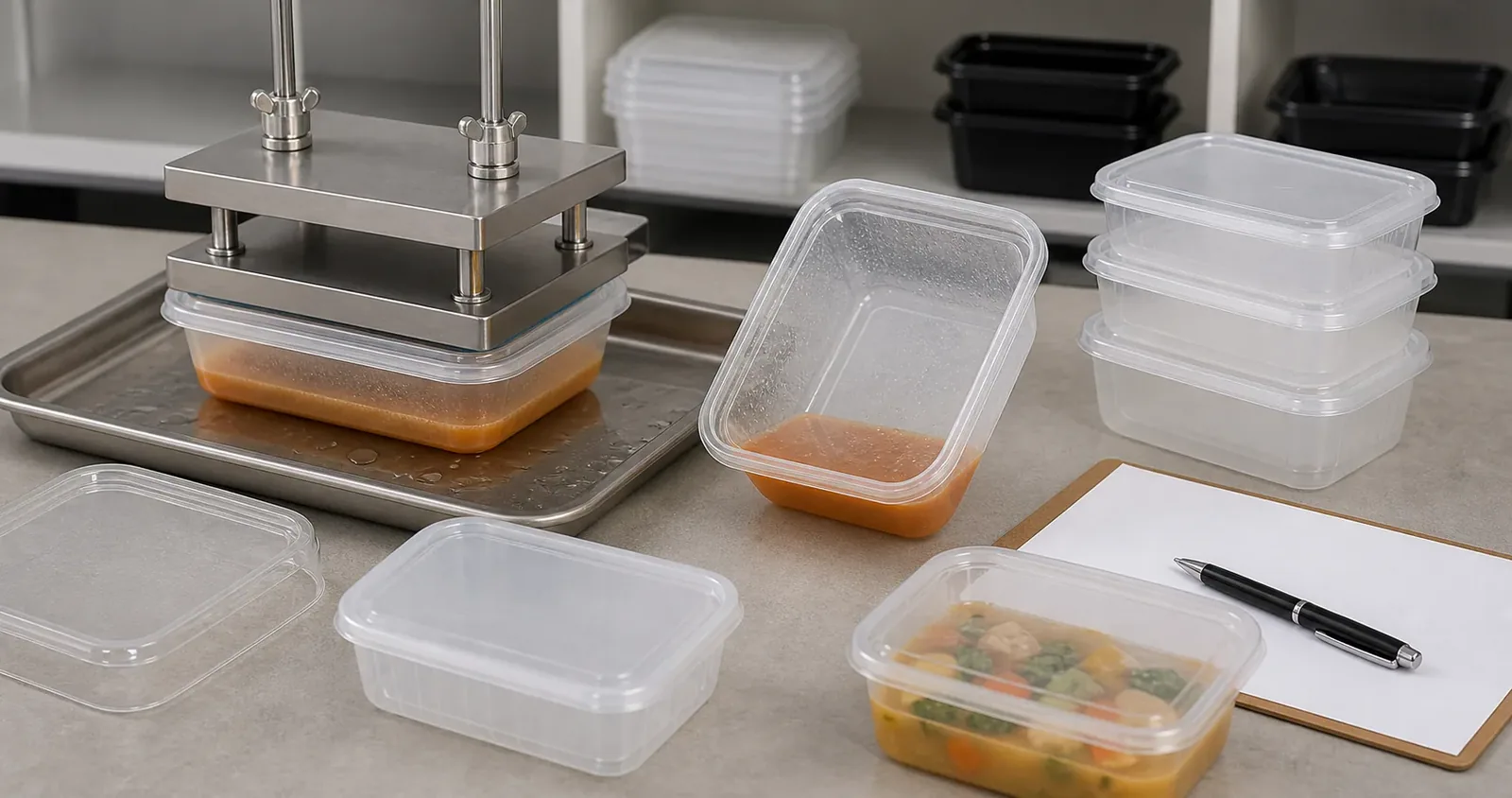
Hot Food Checks for PP Containers
When reviewing PP containers for hot food, buyers should test with real food weight and realistic temperature. Check whether the base warps, whether the lid loosens, whether steam affects closure, and whether the container remains practical for delivery or takeaway handling.
- Fill the container with the expected hot food weight.
- Close the exact matching lid after filling.
- Check base deformation after holding time.
- Test stacking pressure while containers are filled.
- Review label, claim, and document wording before using microwave-related text.
Cold Display Checks for PET Containers
For PET containers, buyers should test clarity under store lighting, lid security after cold storage, cracking during handling, and label placement. A container may look clear when empty but show pressure marks, lid gaps, or stacking problems when filled and displayed.
- Check clarity with the actual food and display lighting.
- Test lid closure after cold storage and repeated handling.
- Check whether corners crack during packing or shelf replenishment.
- Confirm label area and barcode placement.
- Review carton packing to prevent deformation during shipment.
Sample Testing Before Bulk Orders
Request samples of the base and lid together. If the project includes several sizes, test each size. If the order includes hot and cold food lines, test the materials separately instead of assuming one container can cover every menu item.
Buyers can compare PP Bento Container options, review PET Deli Container options, or send sample requirements through the YIYUAN contact page.
PP and PET questions
Can PET containers be used for hot food?
Do not assume it. Confirm the exact product design, intended temperature use, supplier guidance, and destination-market requirements before using PET for hot food.
Are PP food containers microwave safe?
Some PP products are designed for microwave-related use, but buyers must confirm the exact container, lid, label wording, and local market requirements before making claims.
Why is lid fit important?
Lid fit affects leaks, stacking, transport handling, shelf appearance, and customer experience. The base and lid should be tested together.
Should I test with real food?
Yes. Test with real food weight, sauce, temperature, cold storage, delivery bags, and stacking conditions that match the buyer’s use case.
Test the complete base-and-lid set
Share the food type, fill temperature, holding time, display or delivery route, lid preference, and claim requirements when selecting samples.