
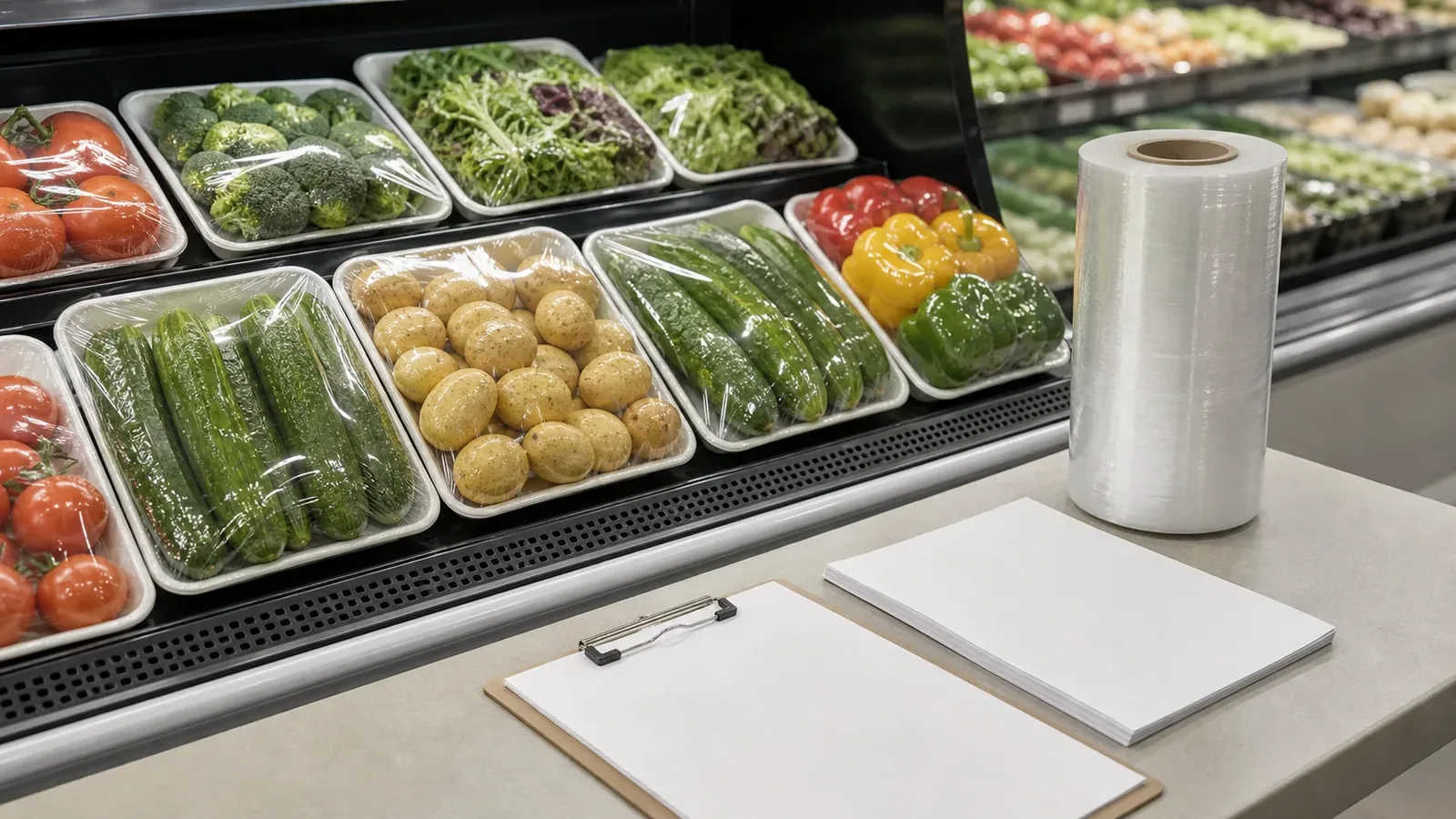
Produce wrap has two jobs at once: hold the tray through handling and keep the food visible in the display. A roll can look excellent at the sample table yet show loose corners, glare, or moisture problems after several hours around chilled produce. The relevant sample test uses the buyer’s trays, food mix, wrapping station, and display conditions.
- Supermarket produce wrap should be tested on real fruit and vegetable trays before bulk ordering.
- Tray fit, clarity, edge hold, stretch, tearing, and moisture appearance affect shelf presentation.
- Anti-fog expectations should be stated clearly and tested under real cold display conditions.
- Roll width, packaging format, carton labels, and store handling should be checked with the sample.
- Food-contact documents and report relevance should be confirmed for the exact material and destination market.
Why Produce Tray Wrap Is a Display Product
Fresh produce packaging has a strong visual job. Shoppers need to see fruit, vegetables, and prepared produce clearly before buying. If the film wrinkles, clouds, loosens at corners, or shows moisture badly, the product may look less fresh even when the food is acceptable.
Produce trays also vary widely. Cut fruit trays, mushrooms, vegetable mixes, berries, and prepared produce packs may use different tray sizes and depths. Buyers should not approve one sample after wrapping only one tray type.
Purchase scenario: A supermarket supplier wants one fresh wrap SKU for cut fruit and vegetable trays. The buyer tests the film under office light and it looks clear. Before ordering, the buyer still needs to check display lighting, cold shelf moisture, tray edge hold, and staff wrapping speed.
Tray Fit Comes Before Price
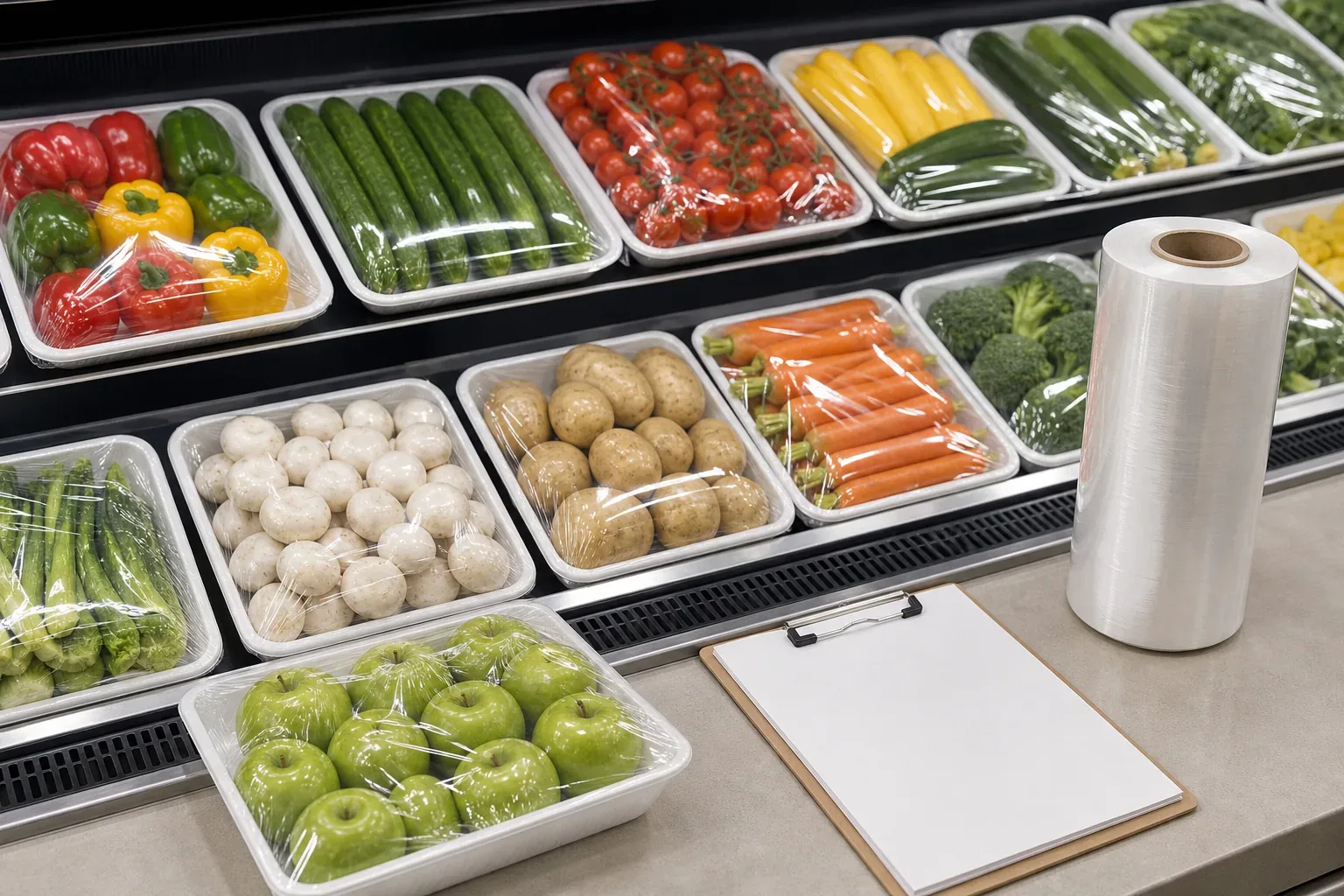
Tray fit means the film covers the tray neatly without excessive overlap, loose edges, or tearing at corners. A lower price is not useful if the film creates waste or poor shelf appearance. Test roll width and stretch against the real produce tray range.
| Produce Pack | What to Test | Buyer Risk |
|---|---|---|
| Cut fruit trays | Clarity, moisture appearance, edge hold, and seal neatness | Cloudy film or loose corners reduce shelf appeal. |
| Vegetable trays | Stretch over uneven shapes and tray depth | Film may wrinkle or tear during fast wrapping. |
| Berry packs | Light handling, width control, and visibility | Over-wide rolls may create waste and messy overlap. |
| Mixed produce packs | Edge grip after cold storage | Moisture and tray shape can change display quality. |
Clarity Should Be Checked After Wrapping
Clear film on the roll does not automatically mean clear shelf display. Check wrapped trays under store lighting and expected cold conditions. Tray color, moisture, food texture, and light reflection can all change the final appearance.
YIYUAN’s PVC Fresh Wrap can be reviewed for supermarket tray wrapping projects where cling, clarity, and stretch are key requirements. Buyers should still test the sample with their own tray types.
Moisture and Anti-Fog Expectations
Fresh produce can release moisture, and cold display conditions may create fogging or visible droplets. Buyers should be careful with anti-fog wording. Anti-fog performance depends on formulation, food type, storage temperature, humidity, display time, and test method.
If anti-fog behavior is required, include it in the RFQ and test samples under real store conditions. Do not assume every fresh wrap has the same moisture behavior. For regulated markets, ask which documents can support the exact product and destination market.
Check later
Review wrapped trays after storage, not only immediately after wrapping.
Check moisture
Cut fruit, leafy vegetables, and mixed packs may behave differently.
Check wording
Anti-fog or food-contact claims should match sample testing and available documents.
Roll Width and Store Wrapping Workflow
Roll width should match the produce department’s tray range and wrapping station. A narrow roll can reduce waste on small packs but may require more work on larger trays. A wider roll can cover larger trays quickly but may be harder to control on small produce packs.
Test roll width with the actual cutter box, dispenser, or wrapping machine if one is used. For broader supermarket fresh wrap decisions, the PVC fresh wrap supermarket guide can help compare general fresh counter requirements.
Store Handling and Carton Labels
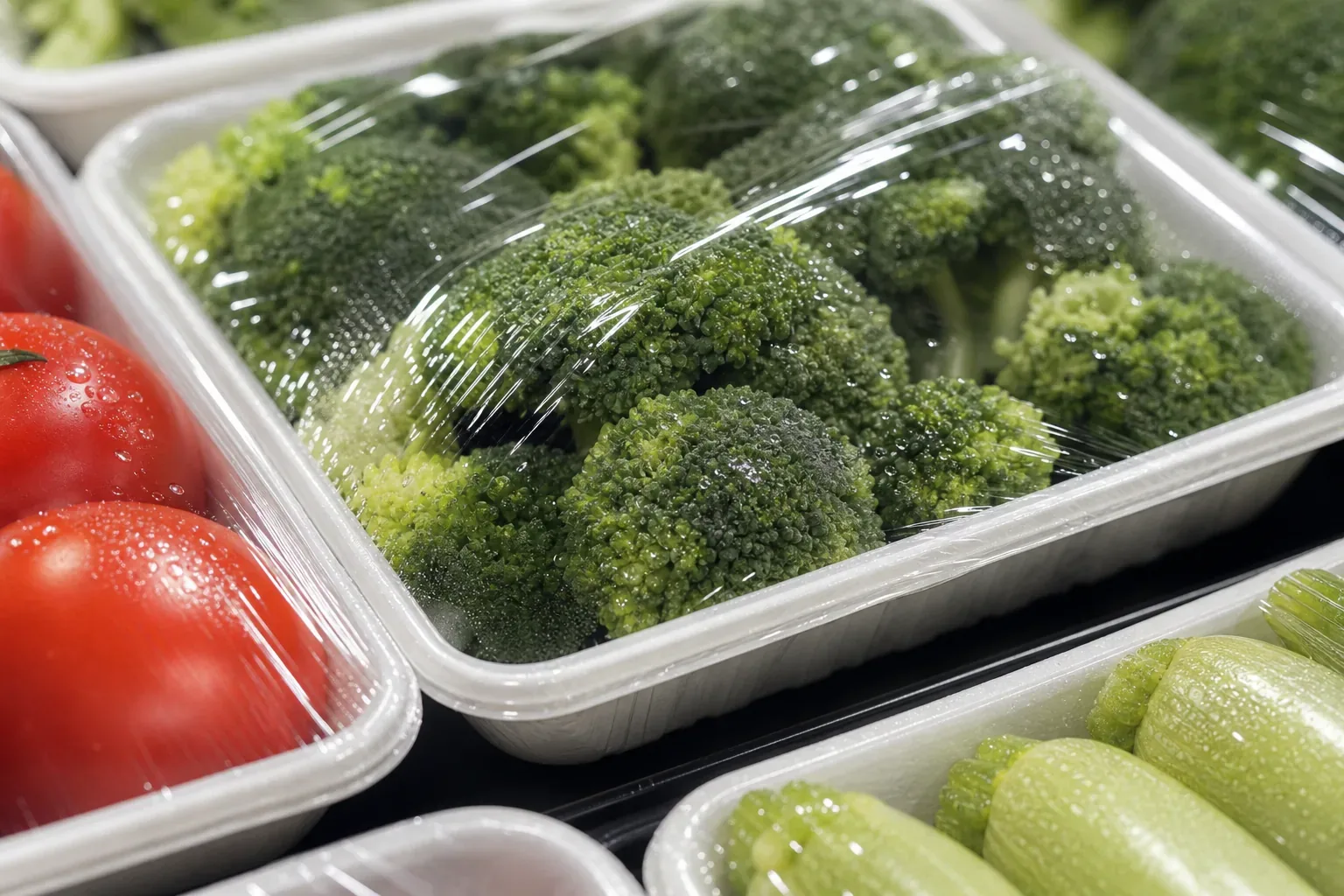
Fresh wrap rolls move through distributor warehouses, store receiving areas, and produce prep rooms. Cartons should protect roll edges and make SKU identification simple. If cartons are weak or labels are unclear, store staff may damage boxes or mix widths during daily replenishment.
- Confirm roll width, roll length, thickness target, core size, and roll weight.
- Check whether the roll is used in a cutter box, dispenser, or wrapping station.
- Ask for carton dimensions, pieces per carton, gross weight, and net weight.
- Confirm carton label fields: material, width, length, SKU code, and shipping mark.
- Check whether mixed widths need separate cartons or stronger labels.
- Keep approved sample photos for repeat-order comparison.
Sample Testing Checklist for Produce Buyers
Supermarket buyers should prepare actual trays and produce types before sample testing. The sample should be judged by shelf result and staff workflow, not only by touch feel.
- Wrap cut fruit, vegetable trays, berry packs, and mixed produce trays if they are part of the range.
- Check clarity under store lighting and after cold display storage.
- Review corner hold, edge seal, wrinkles, tearing, and film waste.
- Test wrapping speed with the staff or method used in the produce department.
- Check moisture appearance and anti-fog behavior where required.
- Ask what product specifications, test reports, or food-contact documents are available.
Produce-wrap questions
How should buyers test produce tray wrap samples?
Test samples on real fruit and vegetable trays under store lighting and cold display conditions. Check clarity, edge hold, moisture appearance, tearing, and wrapping speed.
Does every PVC fresh wrap have anti-fog performance?
No. Anti-fog behavior should be confirmed by product discussion, sample testing, and relevant documents for the exact product and use condition.
What roll width should supermarket produce suppliers choose?
Choose width by tray range and wrapping workflow. Test small and large trays before deciding on a standard roll width.
What documents should produce wrap importers ask for?
Ask what product specifications, food-contact documents, inspection files, or test reports are available for the exact material, sample, and destination market.
Test the film under store lighting
Provide tray dimensions, produce types, display temperature, wrapping method, and roll format when requesting a produce-wrap sample review.