
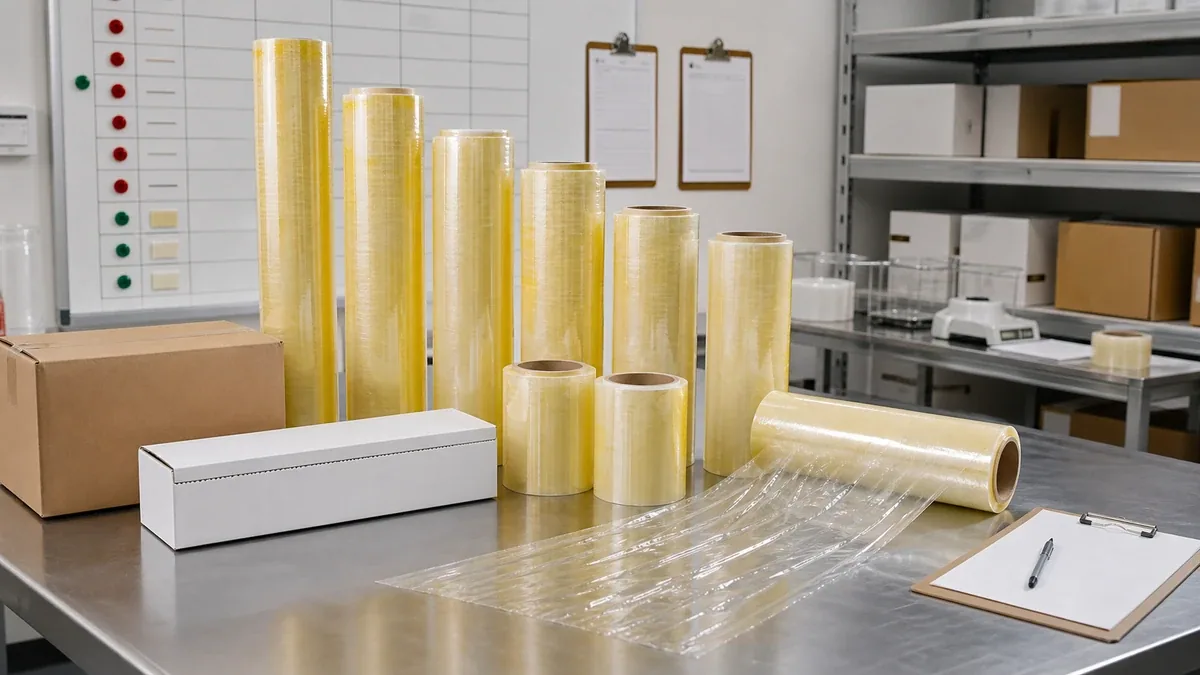
Repeat-order risk hides behind an unchanged SKU name. Resin or additive sources, core, cutter, board, printing, carton, site, or test method can move while the commercial description stays the same. A useful agreement says which changes need notice, evidence, and reapproval before production.
Questions to put into a change request
Does “equivalent material” avoid reapproval? No. If the approved record identifies a different input, source, or performance basis, equivalence is a claim that needs evidence and a documented decision.
Should every change trigger a full retest? Not automatically. Classify the effect on identity, food contact, function, appearance, packing, and customer use. Keep the controlled baseline tied to the actual commercial roll format.
How much advance notice is enough? Set a practical review window in the supply agreement and state what must accompany the notice. Notice without an updated formulation reference, affected lots, reason, risk review, and proposed evidence does not support an approval decision.
Classify Changes by What They Can Affect
| Change Area | Possible Effect | Typical Review |
|---|---|---|
| Formula or raw material | Food-contact status, tack, odor, clarity, unwind, strength | Technical documents, compliance review, sample and tests |
| Film dimensions | Quantity, wrapping result, dispenser and box fit | Specification, dimensional trial, quotation |
| Core or winding | Fit, roll stability, unwind, shipment deformation | Loaded-roll fit and functional approval |
| Retail box or cutter | Cutting, safety, artwork, barcode, shelf presentation | Structure sample, print proof, user trial |
| Master carton or pallet | Count, compression, freight, receiving | Pack drawing, loading plan, transport review |
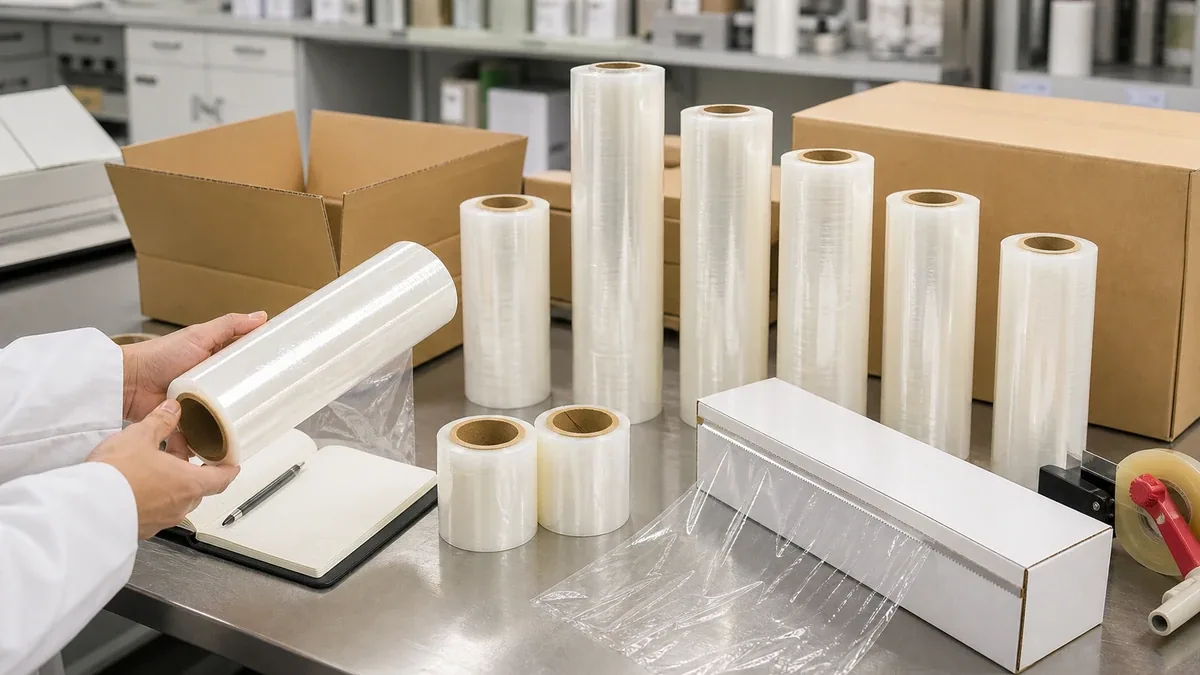
Define Notice Before a Change Happens
The supply agreement should state which changes require advance written notice, the information that must accompany the notice, and how much review time the buyer needs. Include manufacturing-site transfers and changes initiated by upstream suppliers. “Equivalent material” is still a change if the approved record identifies a different input.
Use a Change Request With Evidence
- Current and proposed specification or component
- Reason, affected SKUs, sites, lots, and planned effective date
- Technical and compliance impact assessment
- Documents, drawings, reports, and declarations to replace
- Sample quantity and comparison-test plan
- Artwork, barcode, carton, quotation, and lead-time effect
- Disposition of old materials, mixed inventory, and transition lots
Reapprove Only What the Risk Requires
A spelling correction on an outer shipping mark does not need the same review as a formulation or thickness change. Define levels that trigger document review, dimensional measurement, packing trial, wrapping trial, laboratory work, artwork proof, or full first-article approval. The decision and rationale should be recorded rather than left in chat messages.

Update the Entire Control Chain
After approval, replace the specification, drawing, bill of materials reference, artwork, inspection instruction, supplier declaration, test report index, warehouse identification, and retain sample that the change affects. Mark obsolete versions so they cannot return on the next order. The thickness approval method and repeat-order control record should follow the new revision.
Control the transition lot: State whether old and new materials may appear in one production run or shipment. If mixing is allowed, require clear lot identification and enough samples to compare both versions.