
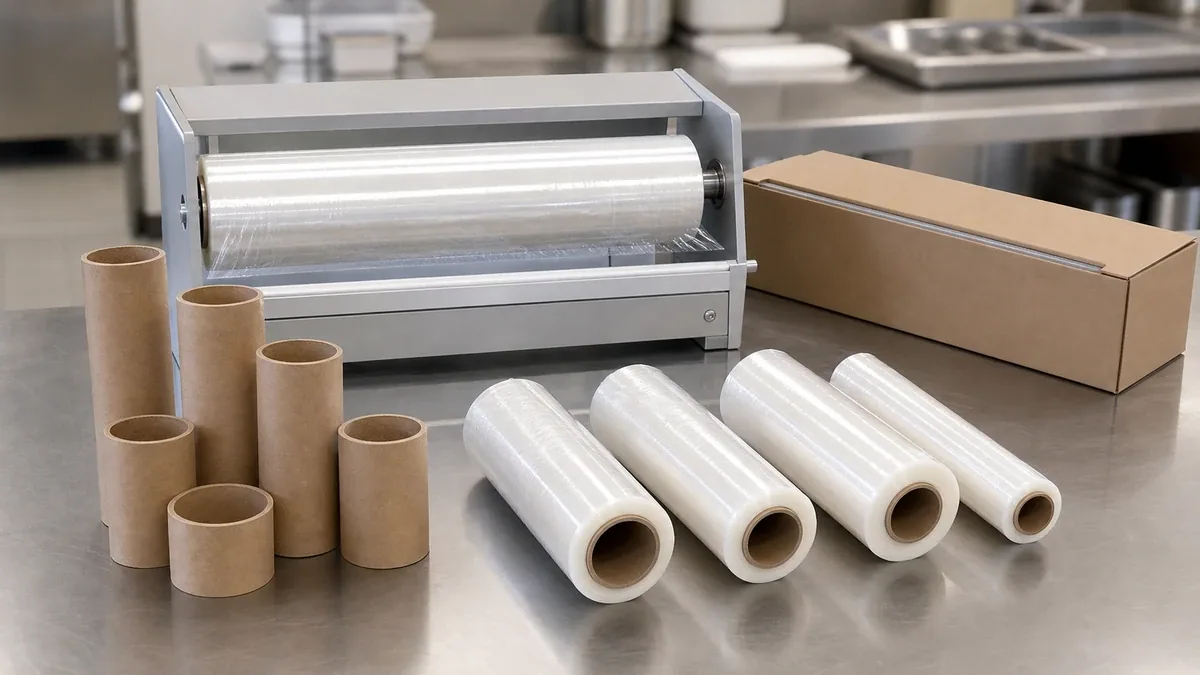
The frustrating compatibility failure is not a roll that is obviously too wide. It is a roll that fits the spindle, then rubs the box wall, walks sideways, or crushes its core after a few pulls. Core approval therefore needs the loaded roll and the actual dispenser, not an isolated inner-diameter number.
Core Size Means More Than One Diameter
Buyers often specify only an inner diameter. That is important, but the equipment also sees the outer diameter, core length, end shape, wall construction, and roll overhang. A core that fits the spindle can still rub against the dispenser wall or shift from side to side.
| Core Field | Buyer Check | Failure if Missed |
|---|---|---|
| Inner diameter | Measure and test on the real spindle or holder. | The roll may not load or may rotate poorly. |
| Core length | Compare with film width, box opening, and equipment guides. | Excess overhang or a short core can affect alignment. |
| Wall strength | Inspect before and after normal transport and use. | Crushed or oval cores can jam the roll. |
| End condition | Check clean cuts, dust, burrs, moisture, and deformation. | Damaged ends can create friction or contamination concerns. |
| Film alignment | Check whether the film is centered on the core. | Uneven overhang can rub or telescope during use. |
Test the Loaded Roll, Not an Empty Core
An empty core may look round and strong but deform under the weight and winding pressure of a full roll. Approve a loaded sample at the target roll diameter and weight. Place it in the intended dispenser, pull film from the start and middle of the roll, and look for rubbing, lateral movement, noise, or uneven rotation.
Working example: A restaurant distributor changes to a larger roll while keeping the old dispenser. The core diameter still fits, but the loaded roll diameter contacts the housing and becomes hard to pull. The problem is equipment clearance, not film cling.
Core Strength and Export Packing Are Connected
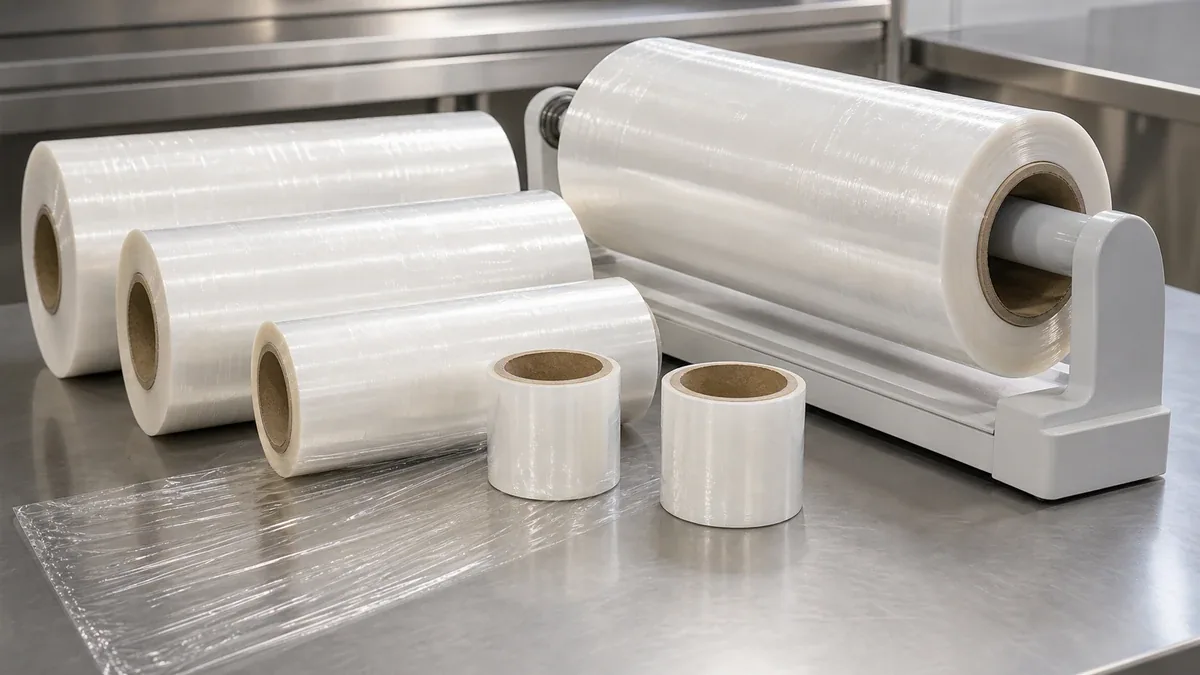
Carton compression, pallet straps, moisture, and unsupported roll weight can affect cores during shipment. Ask how rolls are oriented, separated, and protected inside the carton. At incoming inspection, check the first rolls from damaged cartons before stock is distributed.
The core record should stay with the cutter-box and roll-fit approval. Use the detailed cutter box checklist when the core, roll, opening, and blade must work as one retail pack.
What to Put in the Specification
- Core material or construction as agreed for the product.
- Inner diameter, core length, and any relevant dimensional tolerance.
- Target film width, loaded roll diameter, and roll weight or length.
- Allowed film and core overhang or alignment condition.
- Reference cutter box, dispenser, spindle, or rewinding equipment.
- Packaging orientation and protection against crushing and moisture.
- Sample photos and a physical approved roll where practical.
YIYUAN’s Commercial Cling Film Roll can be discussed against the buyer’s dispenser and packing requirements rather than a core diameter alone.
What buyers usually discover during the fit test
Why can two cores with the same inner diameter behave differently? Wall construction, length, moisture, end shape, roll overhang, and loaded-roll weight all change how the core rotates and survives use.
Is a drawing enough for approval? A drawing narrows the risk, but a working trial catches rubbing, side play, and cutter-box interference. Match the equipment dimensions to the chosen format on YIYUAN’s commercial roll page before approving the bulk core.