
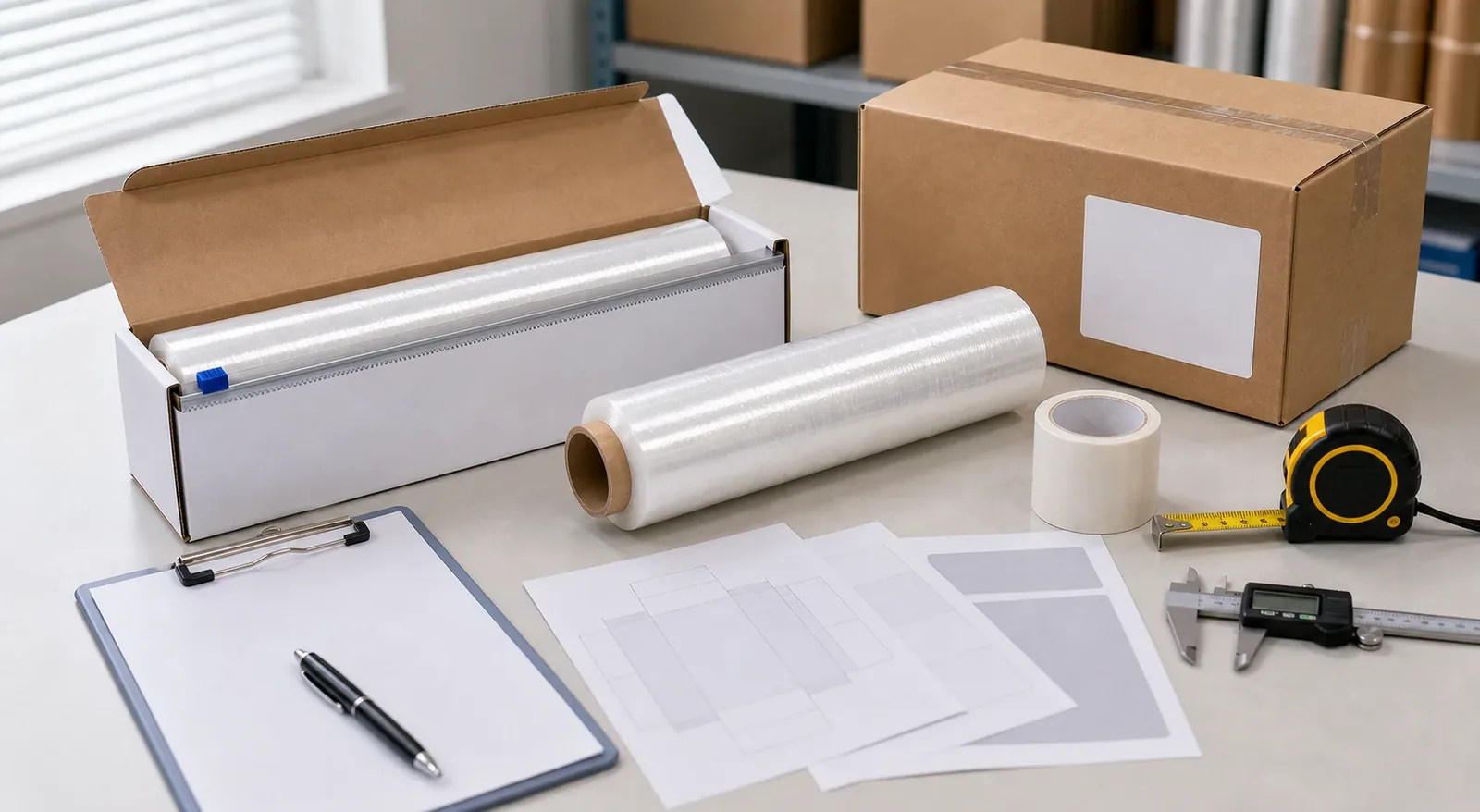
A cutter box can make acceptable film feel like a poor product. If the blade sits too far back, the board flexes, or the roll rubs against the opening, users blame the film even when the film itself is not the cause. Review the blade, box, and roll as one working system before approving graphics or bulk printing.
Why Cutter Box Quality Affects the Whole Product
For restaurant supply and private-label retail, the cutter box is not only packaging. It is the tool the customer uses every day. Staff pull film from the box, press it against the blade, move it across counters, and store it in busy kitchens. If the box is weak, the entire product feels cheap even if the film itself is acceptable.
Many complaints come from the packaging system rather than the film material. The box can twist, the blade can move, the roll can rub inside the box, or the opening can wrinkle the film before cutting. These problems should be tested before mass printing or bulk shipment.
A common failure pattern: A private-label importer approves a nice artwork proof on screen but never tests the real box. After shipment, customers complain that the blade pulls the film and the box opens during use. The problem was not the artwork; it was missing physical sample approval.
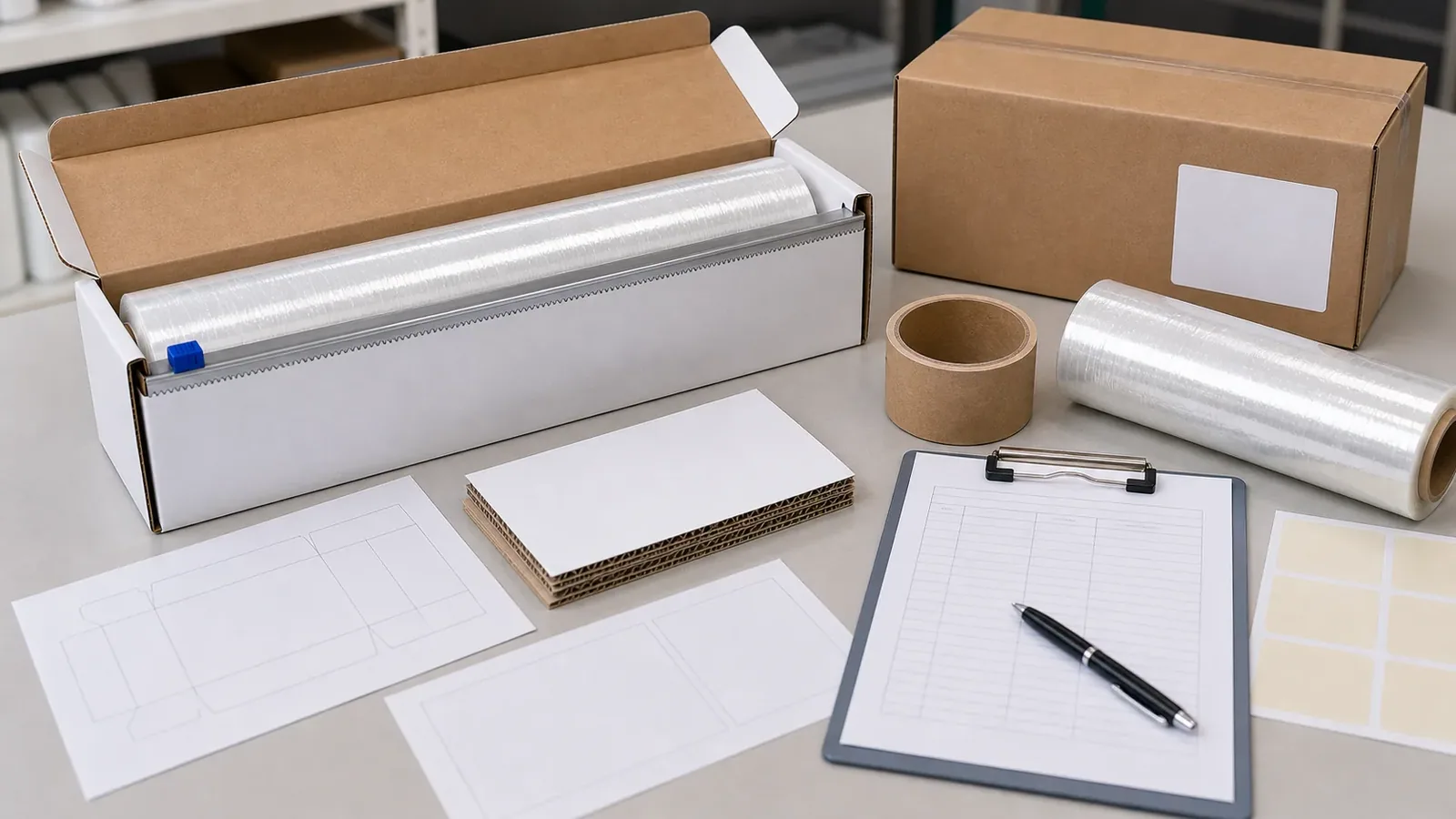
Blade Position and Cutting Feel
The blade should cut the film cleanly without forcing the user to pull too much material. Check blade position, edge direction, fixing method, and whether the blade stays stable after repeated cutting. A blade that cuts well once may still fail after normal use.
| Blade Check | How to Test | Buyer Risk |
|---|---|---|
| Position | Pull film across the blade from normal use angles | Wrong position can make cutting uneven or slow. |
| Fixing | Cut repeatedly and check whether the blade moves | A loose blade can create returns or safety concerns. |
| Cutting feel | Cut quickly and slowly with practical user force | Users may waste film if the cut is not clean. |
| Transport protection | Check blade area after carton packing simulation | Blade or box damage may happen before customer delivery. |
Box Strength and Board Structure
Box strength matters because cutter boxes are handled repeatedly. Check board thickness, folding quality, flap fit, glue position, opening direction, and whether the box remains square when the film is pulled. A box that looks clean in a product photo may still deform during kitchen use.
For private-label packaging, design should not weaken the structure. A larger window, unusual opening, or changed blade area may affect function. Review artwork and physical structure together, not separately.
Repeated pulls
The box should hold shape after many cuts, not only during the first sample check.
Shelf condition
The box should protect the roll and arrive without crushed corners or dirty surfaces.
Artwork fit
Dieline, barcode, opening direction, blade area, and claims should match the physical sample.
Roll Fit: Width, Diameter, Core, and Opening
Roll fit is a hidden but important issue. The roll must fit the box length, internal space, core position, roll diameter, and pull-out opening. If the roll is too tight, it may not rotate. If the opening is too narrow, the film may wrinkle before it reaches the blade. If the core shifts, the roll may drag inside the box.
Test the actual roll inside the actual box. This is especially important when changing roll length, thickness, core size, or roll weight from a previous order.
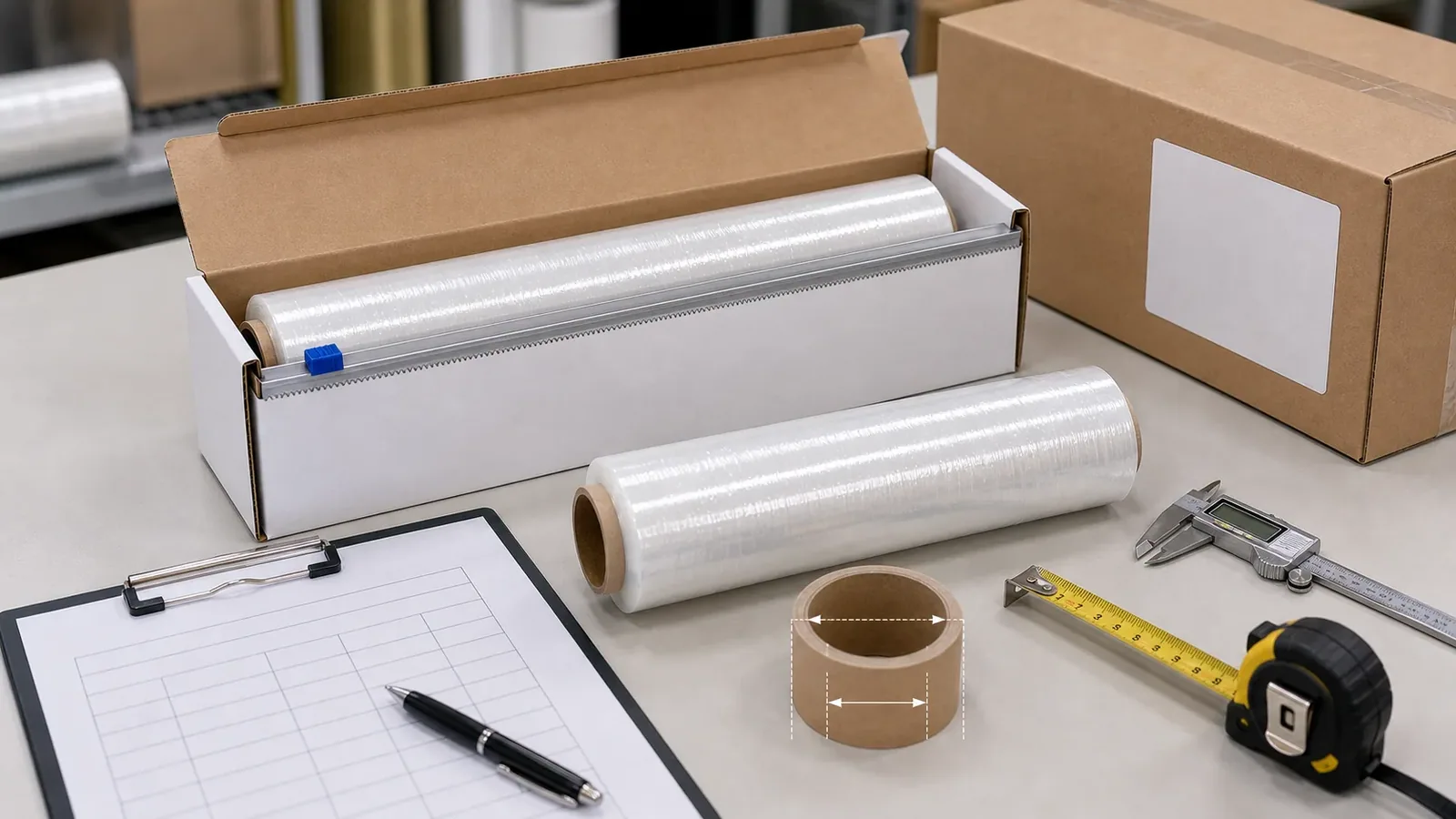
Slide Cutter, Metal Blade, or Serrated Edge?
Different markets may prefer different cutting structures. Some buyers want a simple serrated edge. Some prefer a fixed metal blade. Others ask about slide cutter style packaging. The right choice depends on channel, cost target, user expectation, and order quantity. Buyers should not choose a blade style only from a photo; they should test sample handling.
When comparing options, ask how the blade or cutter affects MOQ, packaging cost, lead time, carton protection, and private-label artwork. A more complex cutter may improve user experience but can add cost or require more detailed approval.
Private-Label Artwork Approval
Private-label cutter boxes need both visual approval and functional approval. A screen proof can check logo, color, barcode, text, and layout. It cannot prove roll fit, cutting feel, box strength, or carton protection. Request a physical mockup or printed sample when order risk is high.
- Confirm dieline, opening direction, blade position, glue area, and box size.
- Check artwork text, barcode, language, product claims, and warning text where relevant.
- Confirm roll width, roll length, core size, and roll diameter against box structure.
- Approve carton marks, carton quantity, carton dimensions, and mixed SKU labels.
- Keep an approved sample or signed photo record for production comparison.
Carton Packing and Box Protection
Cutter boxes can be damaged during export if cartons are weak, overpacked, or poorly arranged. Ask how many cutter boxes are packed per carton, how boxes are oriented, whether blade areas are protected, and whether carton strength is suitable for shipping and warehouse handling.
For restaurant supply distributors, carton labels should make receiving easy. Width, roll length, material, box style, barcode, and SKU code should be clear enough for warehouse staff to separate orders without opening every carton.
Sample Approval Checklist
- Pull film slowly and quickly to check roll rotation and film control.
- Cut at least 20-30 times to test blade stability and cutting consistency.
- Check box board, corners, glue, flap fit, and opening direction after repeated use.
- Measure roll width, roll weight, core size, roll diameter, and box dimensions.
- Cover real trays or containers to confirm film behavior.
- Inspect printed box, barcode, carton mark, carton dimensions, and carton strength.
- Compare bulk production photos or inspection samples against the approved sample.
Buyers can compare roll formats from Commercial Cling Film Roll and product options such as PVC Fresh Wrap before confirming the cutter box structure.
Cutter-box approval questions
Why does blade quality matter for cling film buyers?
Blade quality affects cutting speed, film waste, user experience, and repeat complaints. Poor cutting can make a good film feel difficult to use.
How can buyers check cutter box strength?
Open, close, pull, and cut repeatedly. Check whether the box bends, twists, opens unexpectedly, or loses blade stability during normal handling.
What causes cutter box cling film to pull badly?
Common causes include tight roll diameter, poor core fit, narrow pull-out opening, weak box structure, blade misalignment, or uneven winding.
Should private-label buyers approve only the artwork proof?
No. Artwork approval should be combined with physical box approval, roll fit testing, blade checks, barcode review, carton marks, and sample cutting tests.
The broader cling film sample checklist shows how the cutter-box result fits into full roll and carton approval.
Approve the working box before the printed box
Share the target roll dimensions, cutter preference, board requirement, artwork stage, and carton plan so the sample can be reviewed as a complete pack.