
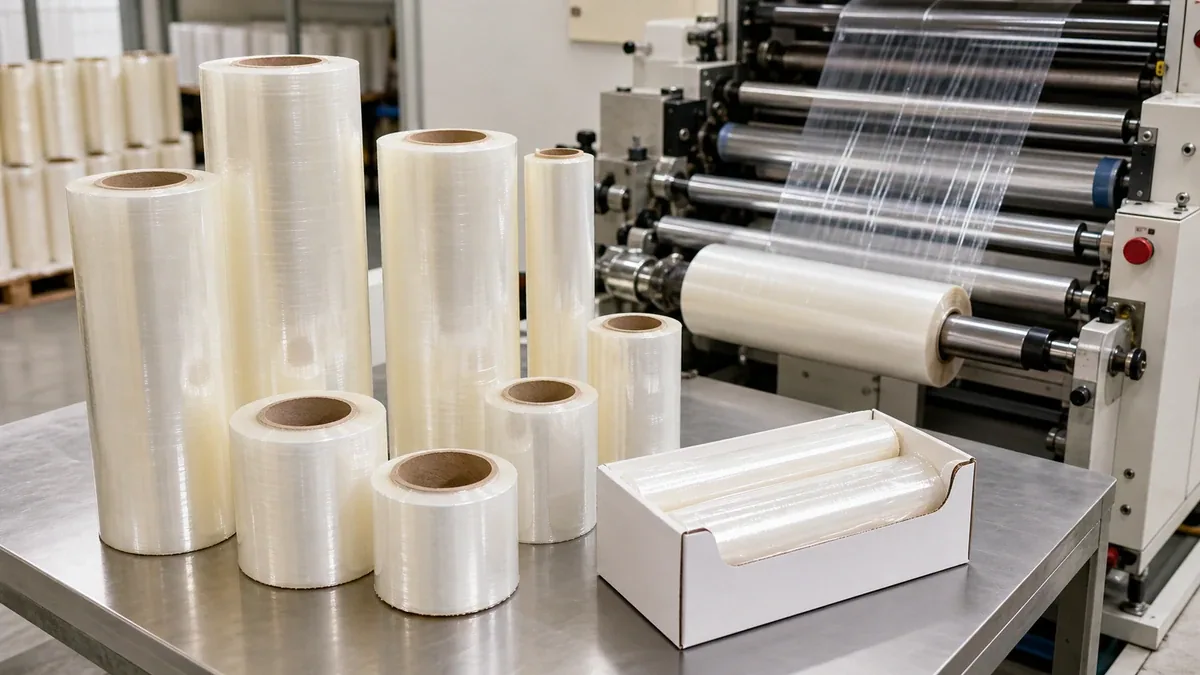
Jumbo-roll economics begin after the film becomes saleable finished rolls. Edge trim, splice handling, startup waste, lane layout, core changes, and rejected rewinds all sit between purchased kilograms and invoiced output. Review the slit plan before comparing jumbo-roll prices.
Questions that expose hidden conversion loss
Is the widest jumbo roll automatically the most efficient? No. It may leave unusable trim or exceed stable machine settings. Lay out the actual finished widths, lanes, knife allowance, and edge trim.
How should trial yield be reported? Reconcile input mass with good finished rolls, approved trim, startup waste, splices, retains, and rejected material. Use YIYUAN’s roll and jumbo-roll scope only to define the offered format; the converter’s machine trial provides the yield evidence.
Map the Jumbo Width to Finished Rolls
Start with the approved usable width rather than the maximum measured film width. Lay out finished-roll widths, the number of lanes, required edge trim, and any gap or knife allowance used by the converter. A plan that fits mathematically may still be unsuitable for stable cutting or acceptable edges on the available machine.
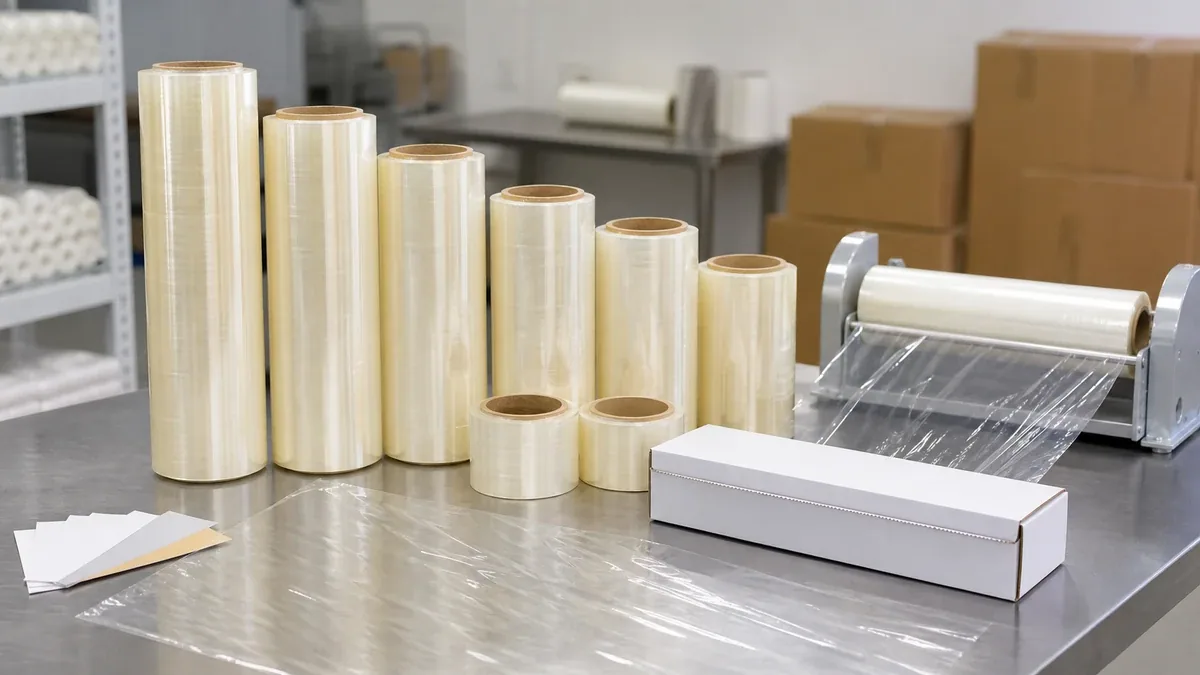
| Yield Factor | Evidence to Capture | Commercial Effect |
|---|---|---|
| Usable width | Width readings and edge condition through the roll | Number of lanes and trim waste |
| Splices | Location, marking, joining method, permitted count | Stops, rejects, or short finished rolls |
| Winding | Tension behavior, telescoping, wrinkles, blocking | Machine speed and finished-roll quality |
| Changeovers | Core setup, startup length, tail loss | Recurring conversion waste |
| Finished rejects | Reason code, quantity, and recoverability | Saleable output and labor cost |
Agree How Splices Will Be Managed
Clarify whether splices are allowed, how they are identified, and how many may occur in an agreed roll length. The converter needs a workable detection and disposition rule. An unmarked splice can reach a retail roll; a rule that rejects an entire jumbo roll for any splice may create unnecessary cost. The right policy depends on the finished product and equipment.
Run a Controlled Conversion Trial
Record the jumbo roll ID, starting weight, width, material description, machine, knife setup, line speed range, tension settings, core specification, operator, and environmental conditions that matter to the trial. Keep the output separated by roll ID so defects can be traced back.
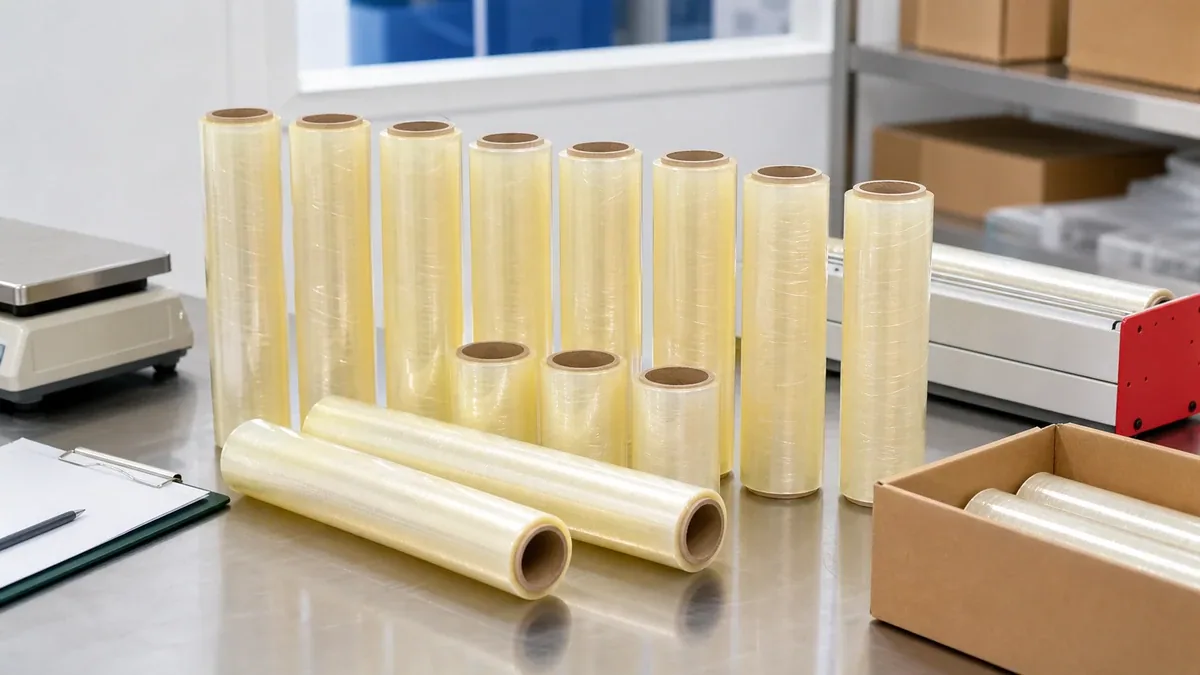
Inspect finished width, length or net film quantity, winding profile, edge quality, core alignment, unwind behavior, and wrapping performance. Problems such as telescoping can originate in the incoming roll, storage, machine setup, or rewinding process. The related winding tension and edge-damage review helps structure the investigation.
Reconcile Material, Not Just Roll Counts
Finished-roll count alone is misleading when roll specifications vary. Reconcile the known input with finished film, edge trim, startup and tail waste, splice-related loss, samples, rejected rolls, and recoverable material. Use consistent weight boundaries: cores and packaging should not drift in and out of the calculation.
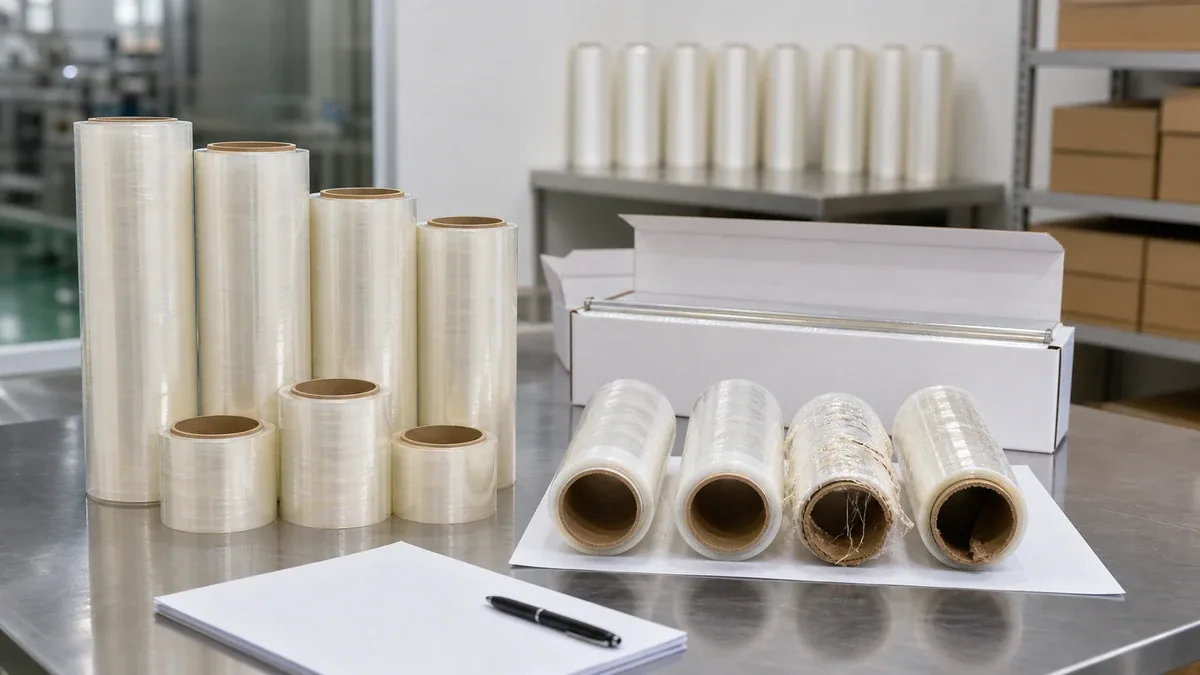
Investigate changing yield: If the same slit plan produces different output across lots, compare actual jumbo width, thickness profile, winding condition, splice records, storage, and machine settings before treating the variance as a purchasing issue.
Data to Include in a Jumbo-Roll RFQ
- Material and intended food-wrapping application
- Nominal and usable width with measurement method
- Thickness target, tolerance, and profile expectations
- Roll weight, core dimensions, winding direction, and handling method
- Splice policy and identification
- Finished-roll sizes and conversion equipment constraints
- Trial quantity and approval evidence