
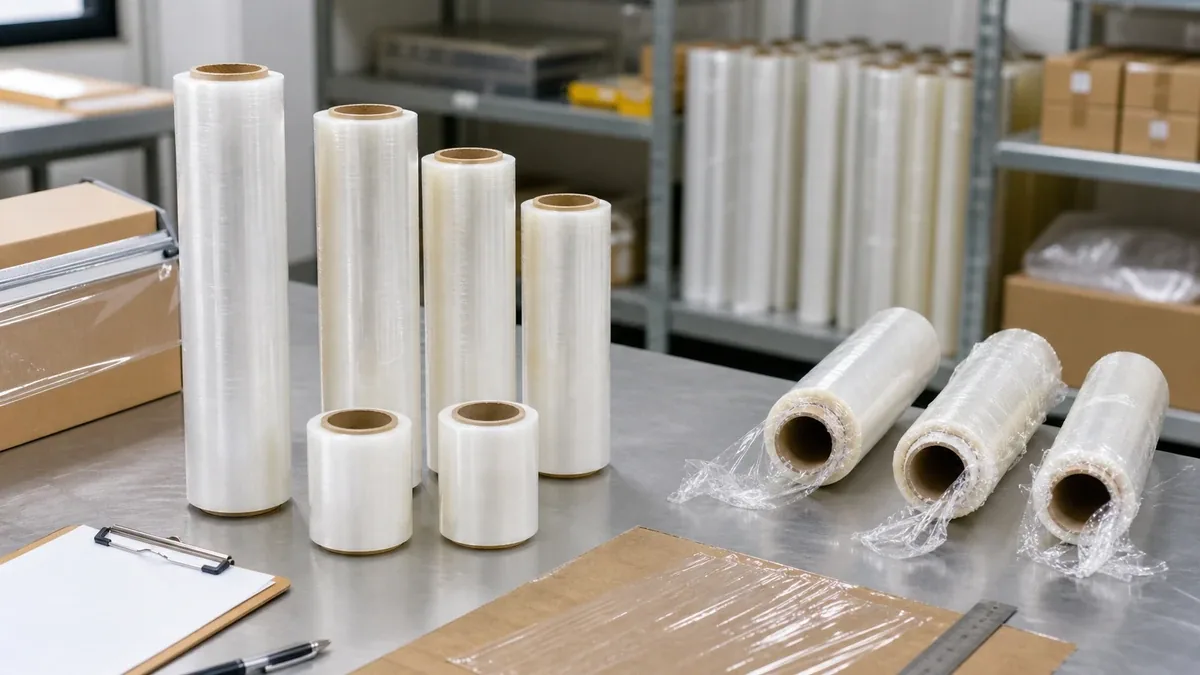
Telescoping tells only half the story. The shift may have started during winding, under carton pressure, or after a pallet moved in transit. Before asking for a process change, record the unopened carton, roll position, core, edges, and what happens during unwinding; that sequence is far more useful than a single close-up of the defect.
- Inspect roll profile, edge condition, core alignment, and firmness before use.
- Compare the start, middle, and later portion of a selected roll.
- Separate production winding symptoms from carton or pallet damage.
- Record the roll, carton, pallet, lot, storage, and unwind setup with photos.
Questions that help separate winding from transit damage
Does a firm roll mean the winding tension is correct? No. Hand pressure is subjective and can miss tight bands, loose layers, or a core problem. Compare profile measurements, unwind behavior, and rolls from different carton positions.
What evidence should reach the supplier first? Send the lot and carton identity, profile views, unopened-pack photos, and a continuous unwind video. The ordered dimensions can be checked against the commercial cling film specification, but the cause still has to be established from the affected stock.
What Telescoping and Edge Damage Look Like
Telescoping describes layers shifting sideways so the roll no longer has a flat, aligned profile. Edge damage can appear as crushed, nicked, wrinkled, or uneven film at one or both sides. A roll can also look aligned while being wound too loosely or too tightly for smooth use.
| Observation | What to Record | Next Check |
|---|---|---|
| Layers shifted sideways | Direction, amount, roll and carton location | Core alignment, winding profile, carton pressure, pallet shift |
| Crushed roll edge | Impact point, carton damage, pallet position | Export packing and receiving evidence |
| Loose outer layers | Start condition and change during unwind | Roll handling, winding consistency, packaging restraint |
| Hard or jerky unwind | Roll position, dispenser, start-middle-end behavior | Blocking, winding tension, core rotation, storage condition |
| Wrinkled film from one side | Edge, width position, repeat frequency | Slit edge, roll alignment, damage, user pull angle |
Failure pattern: A pallet arrives with several rolls leaning in the same direction and damaged cartons on one side. Before treating the issue as a winding defect across the production lot, the importer checks pallet shift, strap pressure, affected carton positions, and unaffected retain samples.
Inspect Before and During Unwinding
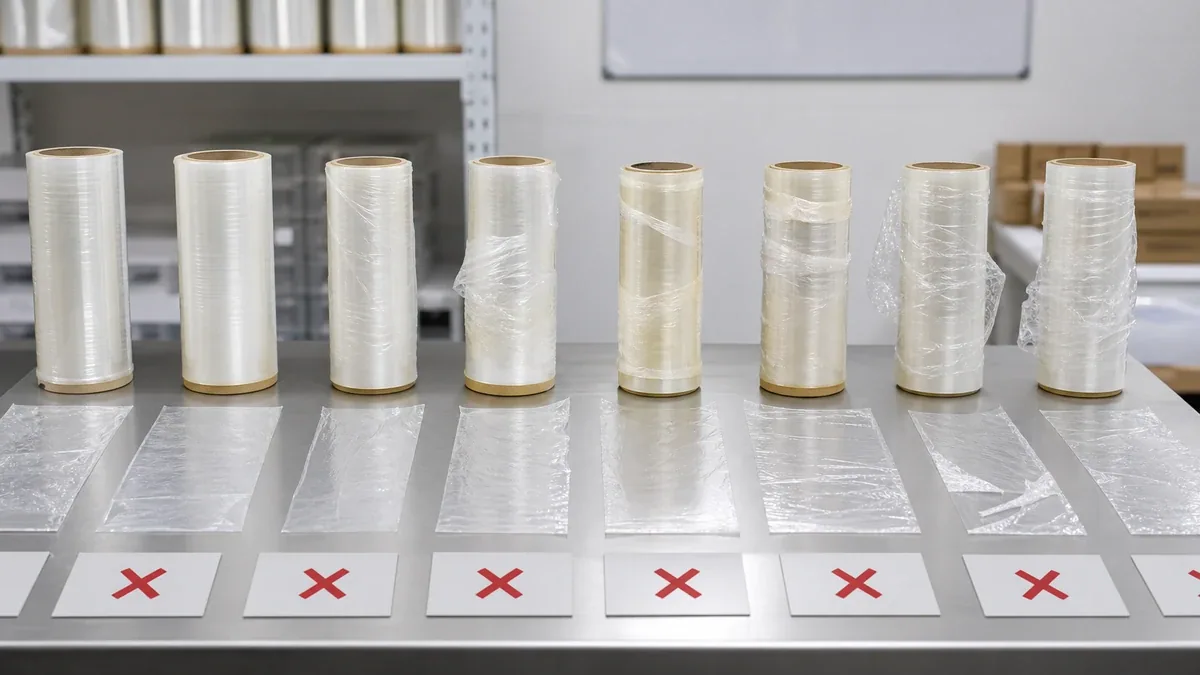
Start with the unopened carton and roll profile. Photograph carton corners, roll orientation, core ends, and visible edge condition. Then use the approved dispenser or a controlled roll stand. Pull at a consistent working speed and observe whether the roll tracks straight, rotates freely, and maintains its profile.
- Record whether the issue is visible before the protective bag is removed.
- Check more than one roll from different cartons or pallet locations.
- Observe the first pulls, then repeat after part of the roll has been used.
- Note whether the film pulls evenly across the full width.
- Check the emptying roll for core movement, looseness, or layer shift.
- Keep the complaint roll and carton label until the review is closed.
Do Not Diagnose Winding From Firmness by Hand Alone
Squeezing a roll can be a quick comparison, but it is not a controlled winding test. Hand pressure varies by operator and roll diameter. A buyer gets stronger evidence from profile measurements, labeled sample comparisons, repeat unwinding, core condition, and defect frequency across the lot.
Thickness and winding also should not be confused. A roll that feels firm is not automatically thicker, and a roll that feels soft is not automatically short. Use the separate methods for thickness approval and roll quantity verification.
Separate Production, Packing, and Handling Evidence
Production records and retain samples help show whether the roll left the line with the same profile. Packing photos show orientation and support inside the carton. Loading and arrival photos show pallet movement, water exposure, compression, or impact. None of these proves the cause alone, but together they narrow the investigation.
Write Acceptance Around Use and Evidence
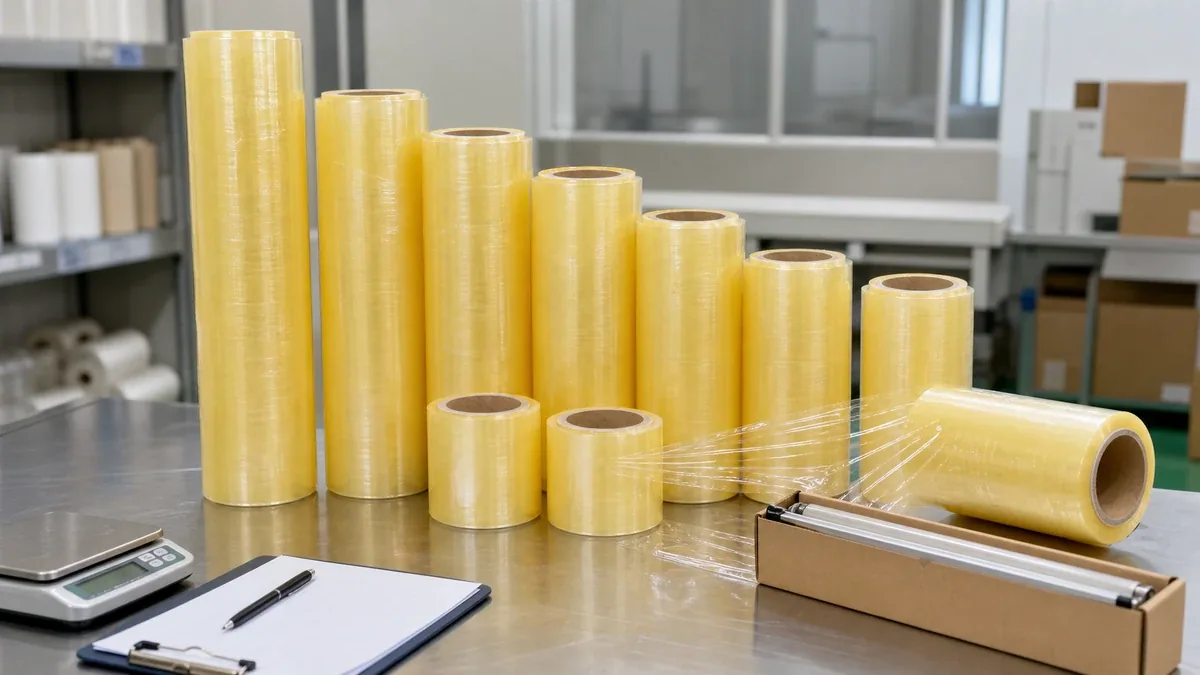
A quality agreement can describe unacceptable telescoping, crushed edges, unusable wrinkles, or unwind failure, but the description needs a reference method and severity. Define the sample size, visual setup, dispenser, length of unwind, photo requirements, and escalation process. Avoid relying on vague language such as “tight winding” without a shared reference.