
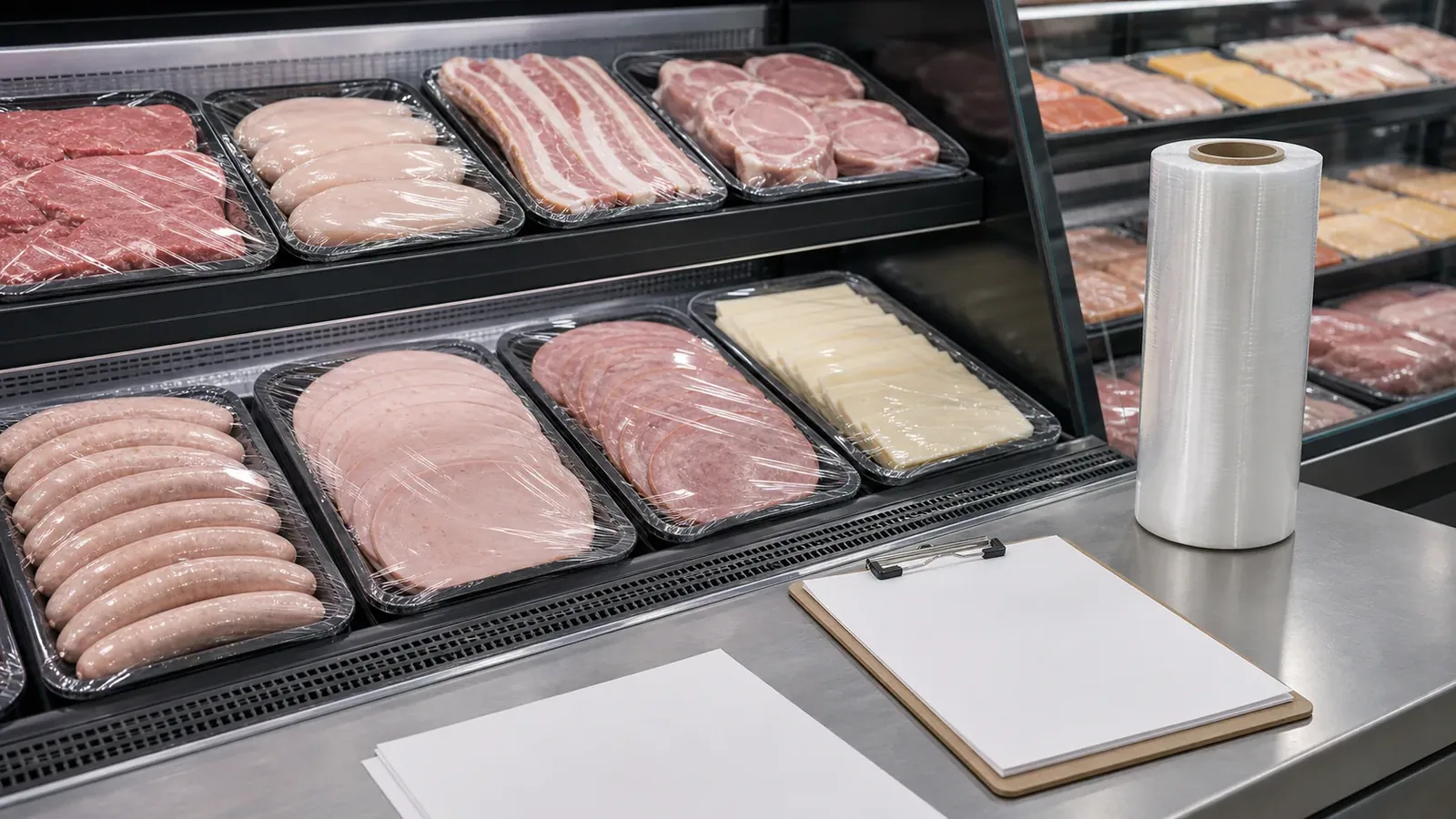
Meat and deli trays expose weaknesses that an empty-tray test misses. Liquid at the rim, cold storage, sharp tray corners, and rapid counter wrapping can change edge hold and tear behavior. A buyer needs to see the wrapped pack after handling and display time, not only immediately after the film is applied.
Why Meat and Deli Tray Wrap Needs Separate Testing
Meat and deli trays are different from dry produce packs. They may include moisture, oil, protein surface texture, dark tray colors, absorbent pads, and refrigerated display lighting. These details can change how the film looks and performs after wrapping.
A fresh wrap that looks good on fruit trays may not behave the same on meat or deli trays. Test the exact food category and tray style before approving bulk orders.
Where the risk appears: A supermarket supplier wants one wrap for meat trays and deli packs. The sample looks clear on the roll, but the buyer still needs to test edge hold on foam trays, clarity under chilled lighting, and whether moisture affects shelf appearance after several hours.
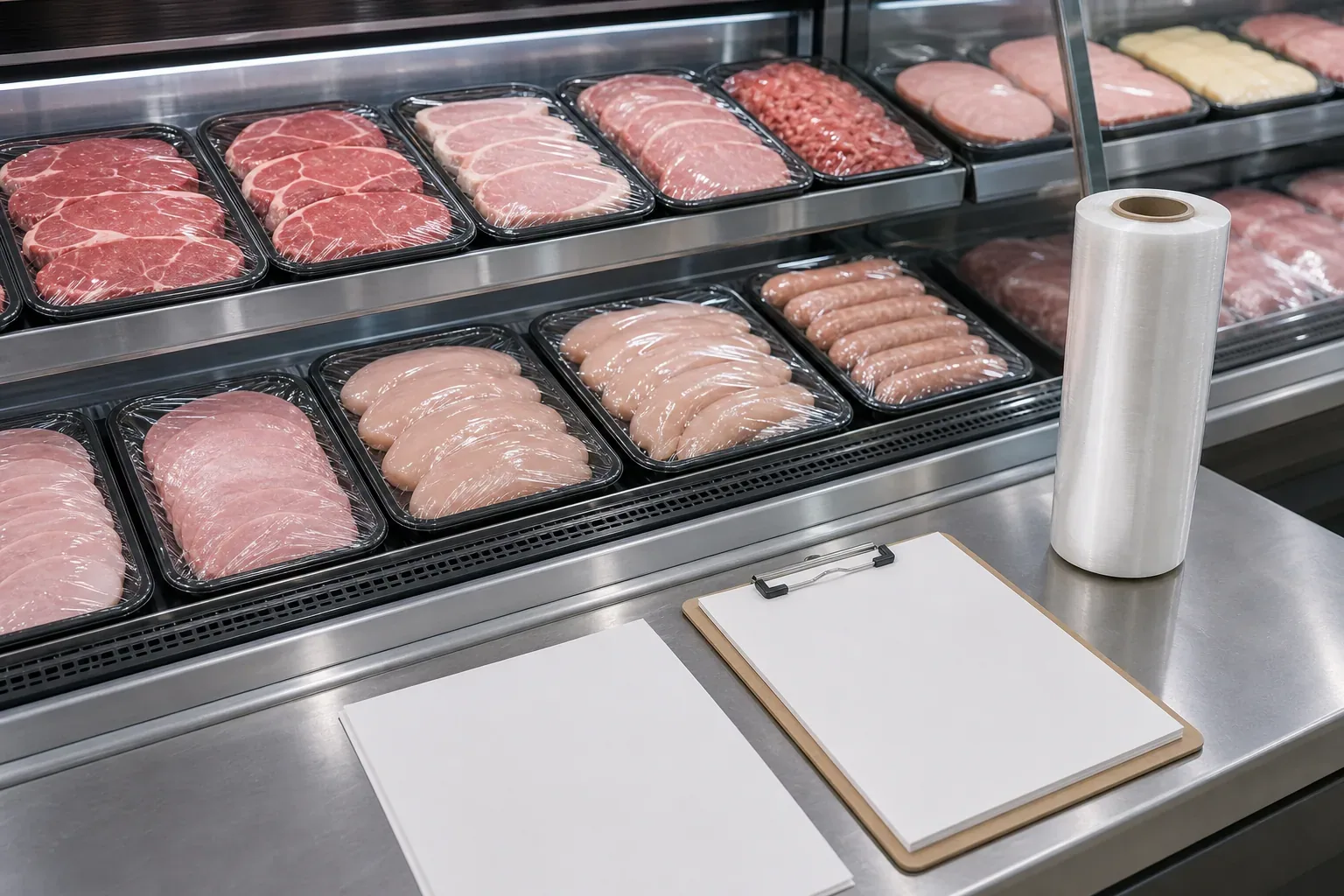
Tray Edge Hold and Corner Coverage
Meat and deli trays often have corners, raised edges, and pads that change the wrapping tension. The film should stretch over the tray and hold the edge without pulling back too quickly. Loose edges make the pack look unfinished and may create customer complaints in retail display.
| Tray Type | What to Test | Buyer Risk |
|---|---|---|
| Fresh meat trays | Edge hold, pad area, corner stretch, and clarity | Film may loosen or show moisture poorly in cold display. |
| Deli food trays | Cling on different tray shapes and food surface height | Uneven wrapping can make prepared food look less clean. |
| Cheese or sliced food packs | Transparency, wrinkles, and shelf handling | Wrinkles can block product view and label placement. |
| Seafood or wet products | Moisture appearance and tray edge grip | Condensation or liquid appearance can reduce shelf appeal. |
Clarity Under Refrigerated Lighting
Clarity should be checked after wrapping and after the tray has been placed in cold display. Refrigerated lighting, dark trays, absorbent pads, and moisture can change the visual effect. Compare wrapped samples inside the actual or similar display environment.
YIYUAN’s PVC Fresh Wrap can be reviewed for supermarket tray wrapping projects where cling, stretch, and visual display are important. Buyers should still confirm whether the sample is suitable for their exact tray and market.
Moisture, Liquid, and Surface Contact Checks
Meat and deli packs can create more visible moisture than dry products. Test how the film looks after storage, not only immediately after wrapping. This does not mean the film solves every shelf-life issue. It means the buyer should understand how the package appears under realistic conditions.
Review after storage
Check wrapped trays after the expected display period, not only right after wrapping.
Check visibility
Meat pads, tray color, and lighting can affect how clean the tray looks.
Keep wording careful
Do not turn sample appearance into broad food safety or shelf-life claims.
Stretch and Tear Behavior During Fast Wrapping
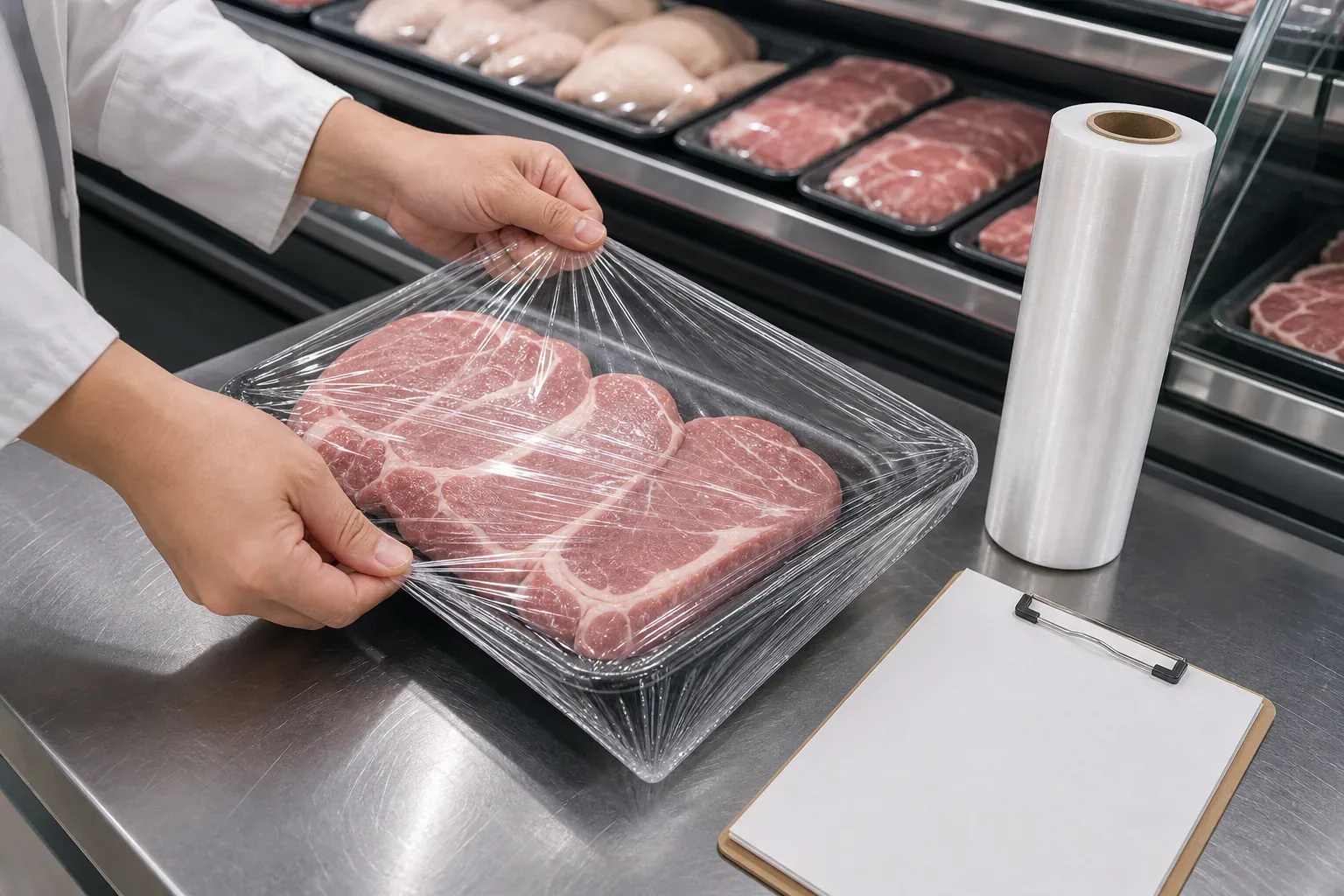
Supermarket staff may wrap many trays per shift. A film that tears during slow testing may be rejected quickly. A film that only works when pulled gently may still create waste during real store operations. Ask staff to wrap samples at practical speed.
Test several tray sizes, including small deli trays and larger meat trays. Check whether the film stretches around corners without tearing and whether it holds after the tray is moved to the display case.
Roll Width and Wrapping Station Fit
Roll width should match the tray range and wrapping station. A narrow roll may save film on small deli packs but require extra handling for larger meat trays. A wider roll can be faster for large trays but may be wasteful on small packs.
Check whether the roll will be used by hand, cutter box, dispenser, or wrapping machine. Core size, roll diameter, and winding quality should match the equipment or box format.
Carton Packing and Store Handling
Meat and deli wrap rolls often move through cold-chain-related warehouses, store receiving, and department prep areas. Cartons should protect the roll and make SKU identification easy. If a store uses several widths, carton labels should prevent wrong roll selection during busy shifts.
- Confirm roll width, length, thickness target, roll weight, and core size.
- Check packaging style: refill roll, cutter box, machine roll, or retail box.
- Ask for carton dimensions, pieces per carton, gross weight, and net weight.
- Confirm carton label fields for material, width, length, SKU code, and shipping mark.
- Check whether pallet packing or mixed-width separation is needed.
- Keep approved sample photos for repeat-order comparison.
Sample Testing Checklist Before Importing
- Wrap real meat, deli, cheese, seafood, or prepared food trays from the target channel.
- Check clarity under refrigerated display lighting and after storage time.
- Review tray edge hold, corner coverage, stretch, tearing, and wrinkles.
- Test wrapping speed with store staff or the expected wrapping method.
- Check moisture or liquid appearance without making unsupported shelf-life claims.
- Confirm roll specs, carton packing, sample records, and available documents before deposit.
For produce rather than meat or deli packs, use the separate produce tray fresh-wrap checks.
Use the actual tray and holding time
Send tray material and dimensions, food type, expected display time, wrapping speed, and carton format to define a realistic cold-display sample check.