
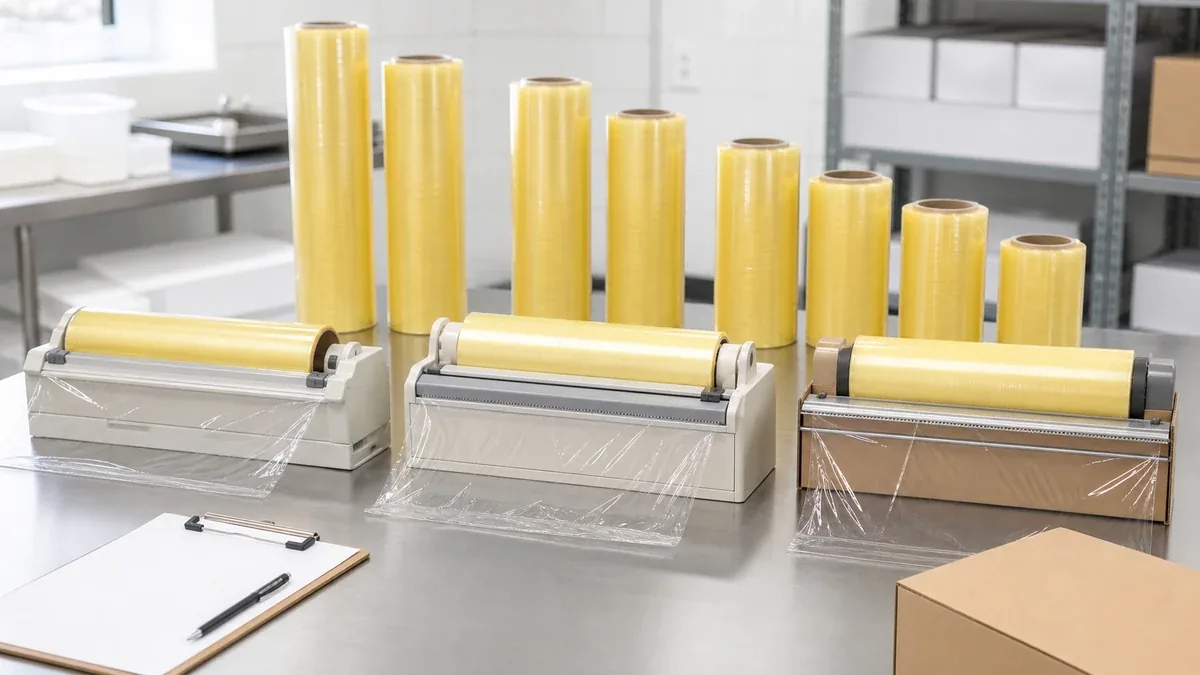
Cutter approval belongs to the loaded package, not to a loose accessory on a sample table. A blade that looks clean in a photo may flex the box, expose an edge, or become awkward after repeated pulls. Follow the user’s full motion—open, pull, hold, cut, and store—with the final roll inside.
Define the User and Wrapping Station First
A restaurant employee pulling film many times per shift has a different workflow from a household retail customer. Counter space, one-hand use, glove use, pan size, roll weight, storage, and local expectations all affect the cutter review. The supplier needs that context before proposing a box structure.
| Cutter Format | Buyer Review | Project Effect |
|---|---|---|
| Fixed serrated blade | Position, fixing, exposed edge, cutting angle, wear | Box strength, installation, carton protection, user instructions |
| Slide cutter | Rail alignment, slider travel, end stops, repeated cuts | Dieline, assembly, extra components, sample approval |
| Plastic cutter feature | Rigidity, edge condition, attachment, cut consistency | Material and structure choice, tooling or component supply |
| Separate dispenser | Roll clearance, spindle, cutter, cleanability, stability | Roll and core spec, customer equipment, shipping format |
This table is not a safety ranking. The final design and label wording need product-specific and destination-market review. The goal at sourcing stage is to identify which functional, packaging, and approval questions belong to each option.
Project failure pattern: Artwork is approved before the slide-cutter prototype arrives. The cutter rail needs more board area, so the box opening and printed layout must change. A physical structure approval before final graphics would have avoided the revision.
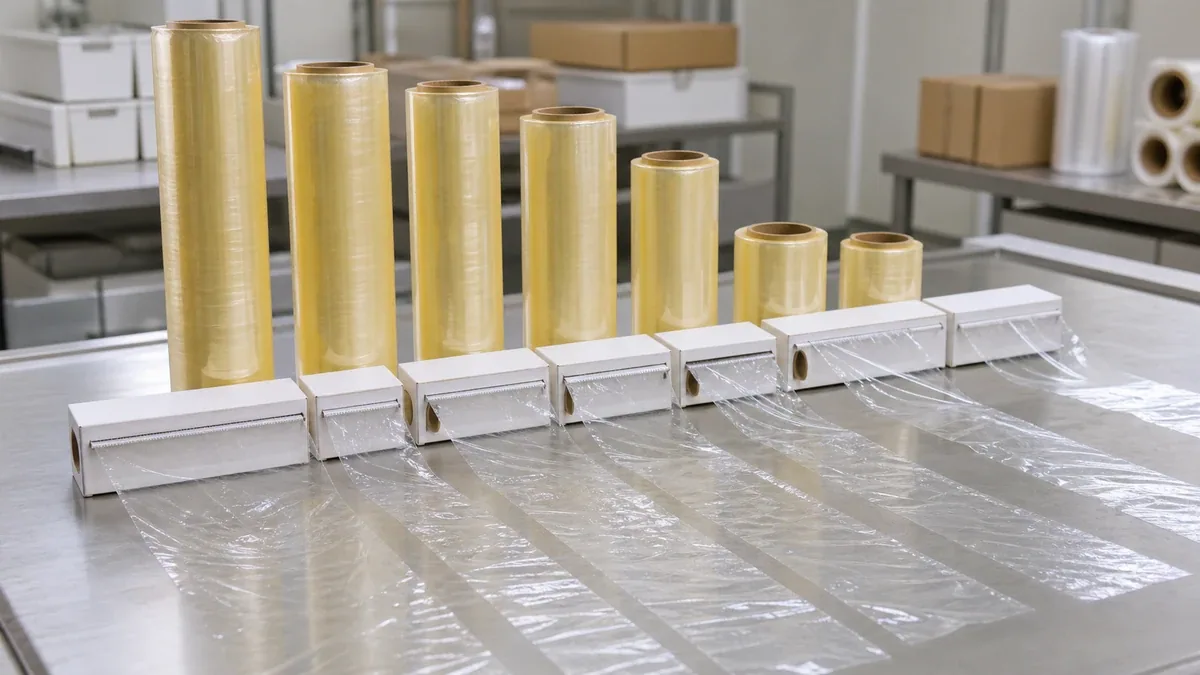
Questions a product photo cannot answer
Which cutter is safest? There is no universal answer from material alone. Review exposed edges, user access, fixing strength, one-hand use, local requirements, and what happens when the box is damaged.
Can the cutter be approved before the box artwork? The mechanism can be screened early, but final approval needs the printed board, folds, opening, roll, and shipping pack. Use the commercial roll specification to keep roll weight and dimensions in the prototype.
Run a Repeated Cut Test
One successful cut proves very little. Load the target roll, place the box or dispenser on the working surface, and repeat pulls and cuts from realistic angles. Observe clean separation, film bunching, box movement, cutter movement, rail sticking, and whether the user needs excessive force.
- Use the final roll width, diameter, core, and approximate loaded weight.
- Test the cutter at the start and after repeated use.
- Include left- and right-handed handling where the customer base requires it.
- Check whether the film edge remains usable for the next pull.
- Inspect the cutter fixing, box folds, opening, and internal roll contact.
- Record user observations separately from measurable failures.
Review the Cutter With the Box Structure
The cutter transfers force into the box. Board thickness alone does not determine whether the pack works; folds, glue, opening geometry, internal support, cutter location, and roll clearance all contribute. A strong-looking box can still twist if the user pulls from an unsupported angle.
Use the broader cutter-box checklist to connect the cutter choice to roll fit, artwork, carton protection, and sample records.
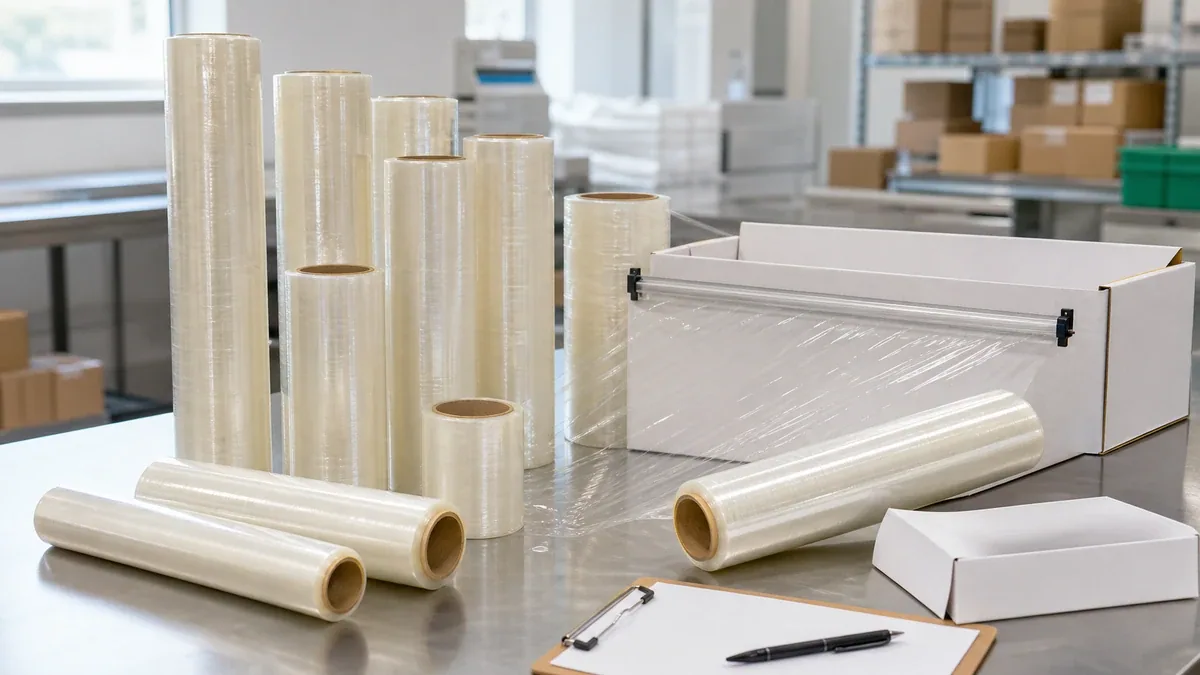
Account for Packing and Replacement Components
Extra cutter components may need protection from pressure and movement in the master carton. Ask whether components are installed before shipping, supplied separately, or require assembly. Confirm how missing, loose, or damaged components will be identified during inspection and incoming receiving.
Approval Gates for a Private-Label Box
- Approve the target film and loaded roll dimensions.
- Approve the plain structural box and working cutter.
- Approve the dieline only after the structure is stable.
- Review artwork, barcode, claims, instructions, and cutter-related layout.
- Approve a printed functional sample, not only a flat proof.
- Confirm master-carton protection and pre-shipment checks.
When a pre-cut format may remove the cutting step, compare the separate guide to perforated and continuous food-service film.