
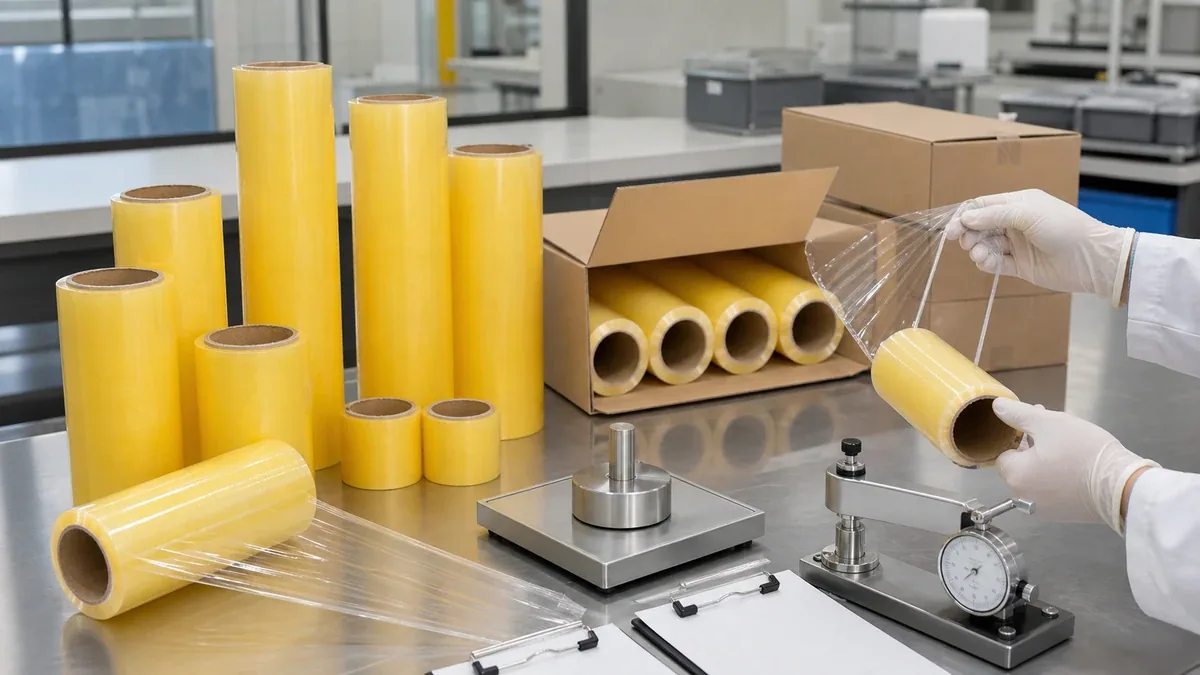
Cutter boxes usually fail after they leave the flat-sample stage. Humidity softens the board, the loaded roll twists the structure, and repeated pulling tests the glue and cutter alignment. A print proof can approve color; it cannot approve the box as a working dispenser.
Board Strength Comes From the Complete Structure
Board grade and thickness matter, but folds, flute or paper construction where applicable, grain direction, coating, glue area, opening shape, internal support, and cutter fixing also affect performance. The target roll weight and diameter change the load carried by the box.
| Area | Sample Check | Visible Risk |
|---|---|---|
| Long panels | Pull film repeatedly from normal angles. | Bow, twist, collapse, or opening deformation. |
| End flaps | Load the final roll and handle the box by both ends. | Opening, tearing, or roll movement. |
| Glue and folds | Inspect before and after conditioning and use. | Seam lift, delamination, or poor closure. |
| Cutter area | Repeat cuts and inspect fixing and board support. | Loose cutter, crushed board, changed cutting angle. |
| Surface | Review rubbing, moisture marks, print scuffing, and labels. | Poor shelf presentation or unreadable code. |
Humidity Testing Needs an Agreed Condition
“Humidity resistant” is too vague for approval. Define where the product will be stored, how long the sample will be conditioned, whether cartons remain closed, and which box functions will be checked afterward. The test should represent the distribution route without turning one short trial into a universal climate guarantee.
Warehouse scenario: Retail boxes pass the first office test but remain in a humid distribution warehouse before sale. Some end flaps soften and the roll shifts during pulling. The next approval adds conditioned box testing with the final roll and master carton.
Test Use After Conditioning
- Use the final board construction, glue, cutter, roll, and protective packing.
- Record the conditioning environment and duration rather than saying “humid test.”
- Inspect dimensions, seams, folds, end flaps, surface, and cutter fixing.
- Pull and cut film repeatedly on the expected work surface.
- Compare with an unconditioned approved reference.
- Place conditioned boxes back into the master carton to check fit and handling.
Connect Retail Box and Master Carton Approval
The master carton protects the retail box from compression, moisture, vibration, and handling. A retail box should not be made stronger merely to compensate for an underspecified export carton without comparing both costs and functions. Record pieces per carton, orientation, dividers, carton dimensions, pallet pattern, and arrival checks.
The cutter-system guide covers the functional differences that affect box design. Buyers can review the Commercial Cling Film Roll when defining a loaded box sample.
What to ask before approving the board
Is board grammage enough to compare boxes? No. Grain direction, folds, coating, glue area, opening, cutter fixing, and the loaded roll all affect performance.
How long should a humidity trial run? Use a condition and duration relevant to the destination and distribution route, then test the complete box immediately afterward. Keep the roll weight and diameter tied to the chosen commercial cling film format.