
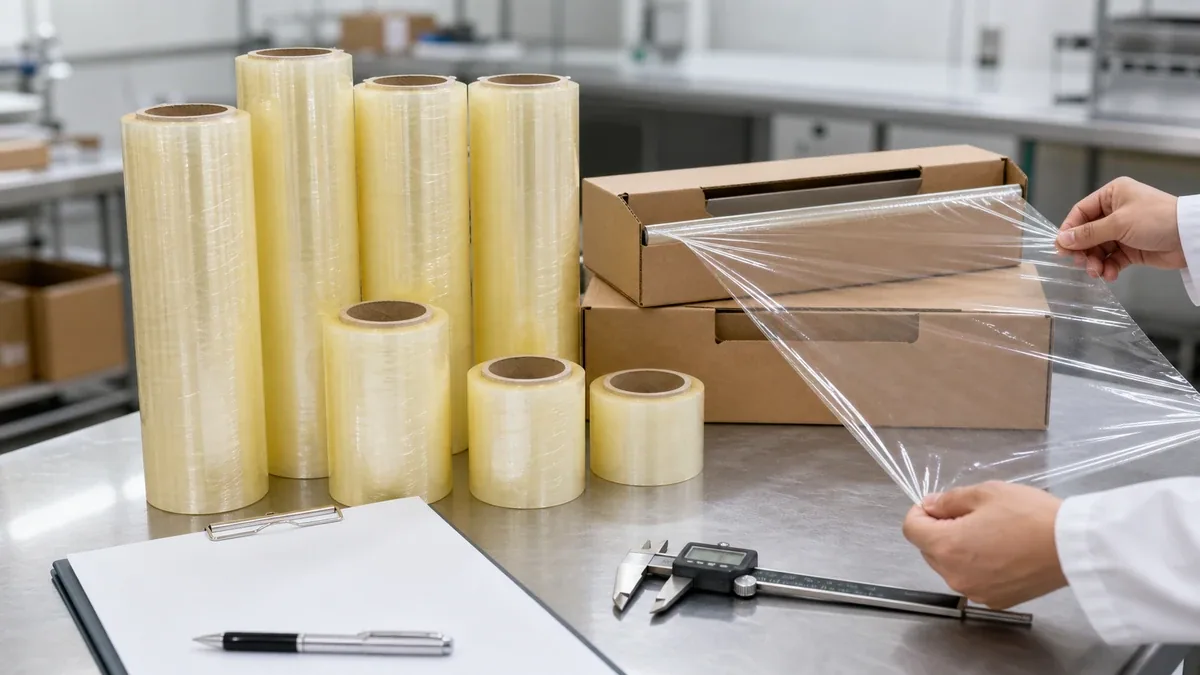
“Same as the approved sample” is not an inspection rule. A sample cannot explain which fields are fixed, which may vary, how numbers are measured, or how packaging revisions are controlled. A short approval agreement should turn the reference roll into decisions production and inspection teams can repeat.
Separate Fixed Fields From Variable Results
Material identity, intended use, roll format, approved artwork revision, core type, pieces per carton, and required declarations may be fixed. Thickness, width, length, net film weight, unwind force, roll diameter, color, and print position may have agreed ranges or methods. Do not apply a tolerance to a field that must remain exactly identified, such as SKU or artwork version.

Questions that turn a sample into a usable agreement
Should every visible difference have a numeric tolerance? No. Some fields need an approved visual reference or functional test; others, such as SKU and artwork revision, may be fixed identity fields.
Can the PE sample report define bulk acceptance? No. Its results apply to its identified submitted sample. Use the commercial roll scope, approved physical sample, test method, sampling plan, and signed tolerances to control production.
What happens when a result is close to the limit? The agreement should say whether to repeat the same measurement, expand sampling, hold the lot, run a functional check, or request a deviation. Deciding the rule after seeing the number creates avoidable negotiation.
| Control Type | Example | Approval Evidence |
|---|---|---|
| Fixed identity | Material, SKU, core type, artwork revision | Controlled specification and signed file |
| Measured tolerance | Thickness, width, length, core and pack dimensions | Method, tool, locations, individual limits |
| Functional acceptance | Unwind, cut, tray wrapping, dispenser fit | Defined trial and approved reference |
| Visual acceptance | Roll face, print, box, carton appearance | Reference photos and defect boundary samples |
Define How Every Number Is Measured
A tolerance without a method can create two correct but conflicting results. State sample conditioning, tool, resolution, measurement points, core deduction, rounding, and whether a check is destructive. For thickness, use the agreed logic in the cling film thickness approval method.
Approve Function on a Named Application
Document the tray or container, food or controlled surface, dispenser, wrap method, cutter, storage condition, and observation time. “Good cling” or “easy unwind” is not transferable across all surfaces and operators. Store a short test instruction with the approved result.
Control Sample and Packaging Versions
Label the approved roll, core, cutter box, artwork proof, master carton, and retain sample with date and revision. Photograph relevant features and state where physical retains are stored. If an approved sample ages or is damaged, replace it through a recorded comparison rather than silently swapping references.
Agree Sampling and Escalation
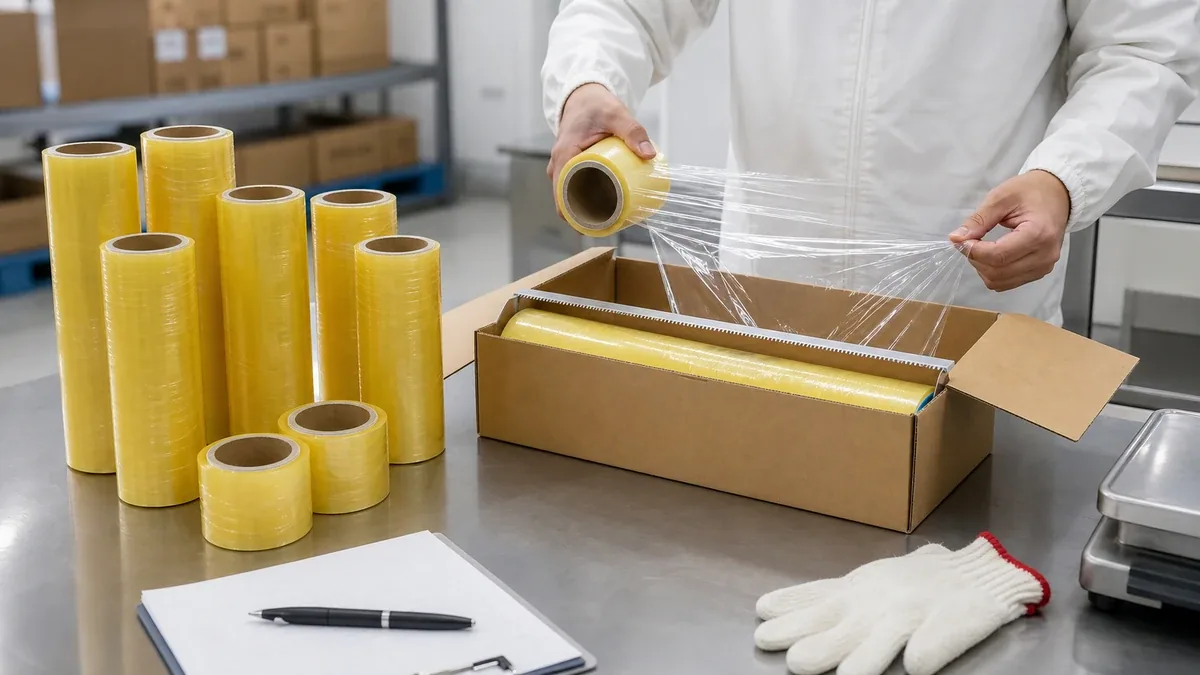
Define lot boundaries, selection across cartons or production time, destructive-test quantities, defect classification, and acceptance rules. Also state what happens when results fall outside a limit: hold, expanded inspection, rework, concession, replacement, or rejection. Concessions should identify quantity, lot, duration, and whether the specification changes.
Do not use the golden sample as a hidden specification: If a feature matters commercially, describe or measure it. The physical sample supports the agreement; it should not carry every unstated expectation.