
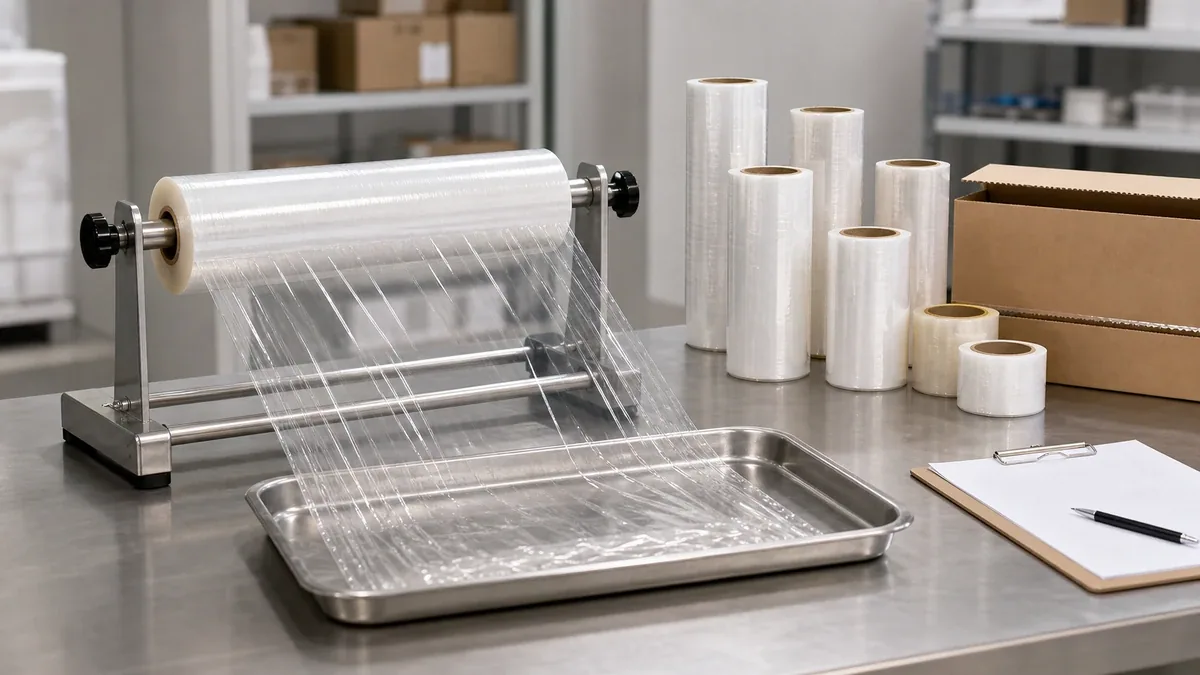
Kitchen users often describe two different failures with the same sentence: “the film is too sticky.” One may be blocking between layers on the roll; the other may be strong tack on the tray. A useful trial records release from the roll and hold on the intended surface as separate observations.
Useful Cling and Roll Blocking Are Different
Cling describes how the applied film behaves on the intended surface. Blocking describes layers resisting separation on the roll. A buyer can receive film that holds a tray well but is frustrating to unwind, or film that unwinds easily but does not hold a specific wet or textured rim. The two observations belong in the same trial, but should be recorded as different results.
What this looks like in use: Restaurant staff pull quickly from a cutter box. The first section releases normally, but later the roll jerks and the box shifts across the counter. A tray test alone would miss the unwind problem; a loose-roll test might miss the effect of the box and blade.
Use One Setup for Start, Middle, and Later Checks
A consistent setup makes change over the roll easier to see. Use the approved box, dispenser, or roll stand; keep the pull direction and speed as stable as practical; and record which part of the roll is being tested. If the buyer changes the blade, box angle, operator, and tray at the same time, the result becomes difficult to interpret.
| Stage | Observe | Record |
|---|---|---|
| Roll start | Outer-layer condition, initial release, edge alignment | Protective packing, storage time, first-pull video |
| Early use | Smoothness, noise, box movement, film wrinkles | Dispenser, cutter, user speed, tray type |
| Middle | Change in release, layer blocking, roll profile | Approximate roll position and repeated pulls |
| Later use | Core rotation, remaining roll stability, edge behavior | Core fit, looseness, telescoping, damaged sections |
| Applied film | Tray edge hold, stretch, tear, clarity | Surface material, moisture, temperature, hold time |
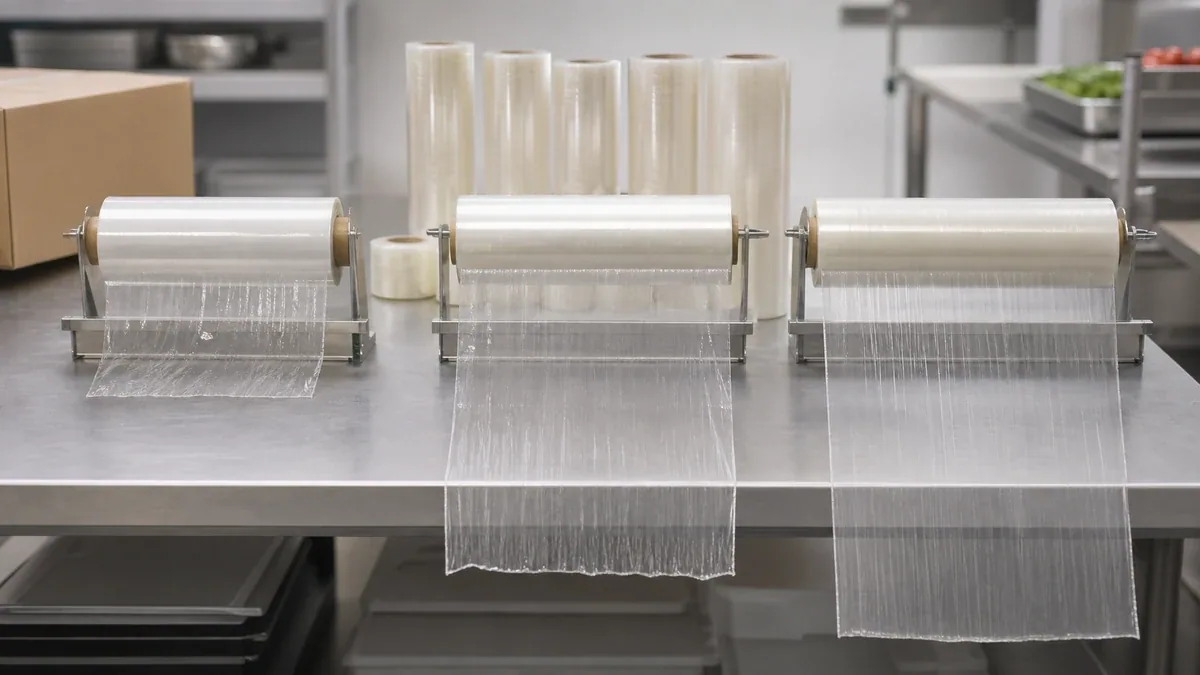
The questions behind a “too sticky” complaint
Can easy unwind and strong tray hold exist together? Yes. They are different behaviors, influenced by formulation, winding, storage, pull setup, tray material, moisture, and overlap. Test both in the same controlled trial.
What should be held constant between samples? Use the same dispenser, pull direction and speed, tray, moisture condition, overlap, and observation time. Identify the roll format from the current commercial range so the comparison is tied to a specific product.
Storage and Packing Can Change the Observation
Heat, pressure, time, carton compression, and roll orientation can affect how a sample arrives and releases. Compare a complaint roll with a retained or unaffected roll from the same order where possible. Record warehouse condition and carton location rather than assuming the formulation changed.
Visible layer shift, crushed edges, or poor tracking may indicate a separate winding or transit issue. Use the guide to winding tension, telescoping, and edge damage before changing tack requirements.
Test Tack on Relevant Surfaces
After unwind behavior is recorded, apply the film to the trays and containers used by the target customer. Clean and wet rims, smooth and textured surfaces, cold and room-temperature conditions, and different wrapping tension can produce different results. The sample record should state the actual surface rather than only “good cling.”
- Use the same film section for comparable tray tests.
- Record tray material, surface condition, moisture, food, and temperature.
- Check immediate edge hold and behavior after the intended holding period.
- Separate tearing at the blade from tearing during stretch or corner wrapping.
- Repeat with more than one user if the channel involves fast manual wrapping.
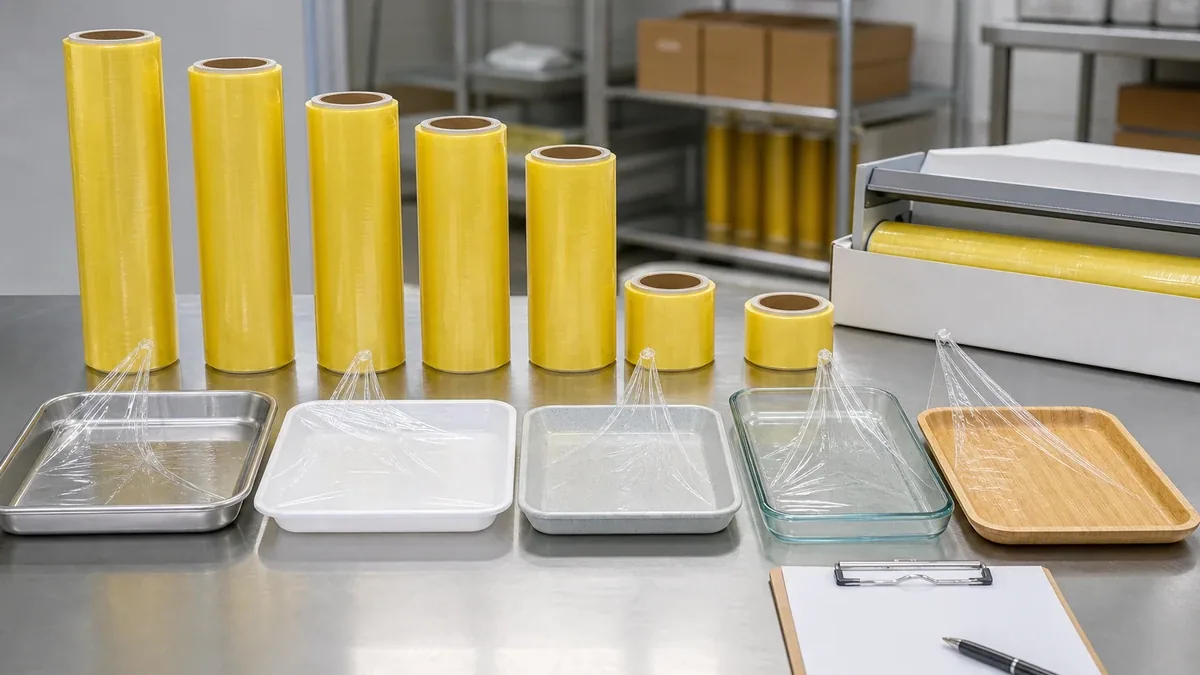
Set an Approval Record That Can Be Repeated
The record can combine a short unwind sequence with tray tests. Keep the roll label, film specification, box and cutter version, storage condition, operator notes, sample video, and accepted tray result. This gives production and inspection teams a reference that is more useful than subjective terms such as “easy unwind” or “high cling.”