
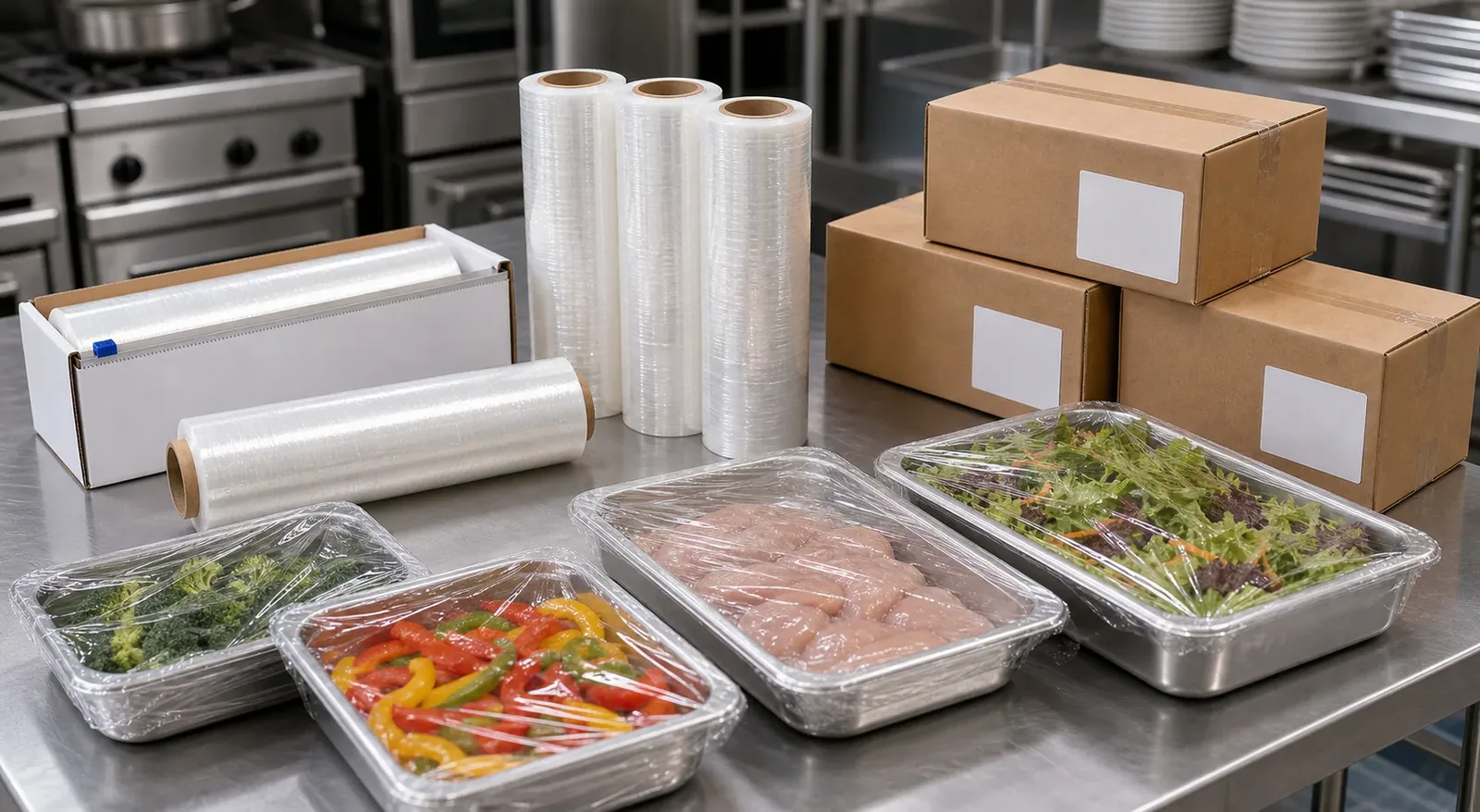
Restaurant film is judged during a busy shift: one hand on the pan, one hand pulling the roll, and little patience for a box that moves or collapses. Width, cutting format, roll yield, shelf space, and carton strength all show up in daily use. A restaurant-supply order therefore needs a kitchen test, not a household-film comparison.
- Restaurant buyers should choose commercial cling film rolls by real kitchen use, not by roll price alone.
- Roll width, roll length, thickness, cutter box strength, and carton packing affect daily kitchen performance.
- Samples should be tested on prep pans, trays, bowls, catering containers, and the actual cutter box or dispenser format.
- Food-service distributors should plan SKUs by customer type, storage space, carton size, and reorder consistency.
- A bulk order RFQ should include roll specs, packaging style, carton data, sample needs, lead time, and document requirements.
Why Restaurant Plastic Wrap Needs Different Checks
A restaurant roll is pulled many times per shift. Staff may wrap prep pans during mise en place, cover bowls in cold storage, protect ingredient containers, and prepare catering trays. The film is judged by speed, tear behavior, edge hold, and whether the roll is convenient on a busy counter.
This makes commercial kitchen film different from a small household roll. A roll that looks fine in a simple office test may fail in a restaurant if it is too narrow, hard to cut, loosely wound, or packed in a box that collapses after repeated pulls.
What this looks like in an order: A food-service distributor wants one SKU for independent restaurants and hotel kitchens. Test roll width on prep pans, cutter box use at normal speed, carton strength for warehouse handling, and whether the roll format is easy for customers to reorder.
Choose Roll Width by Kitchen Containers
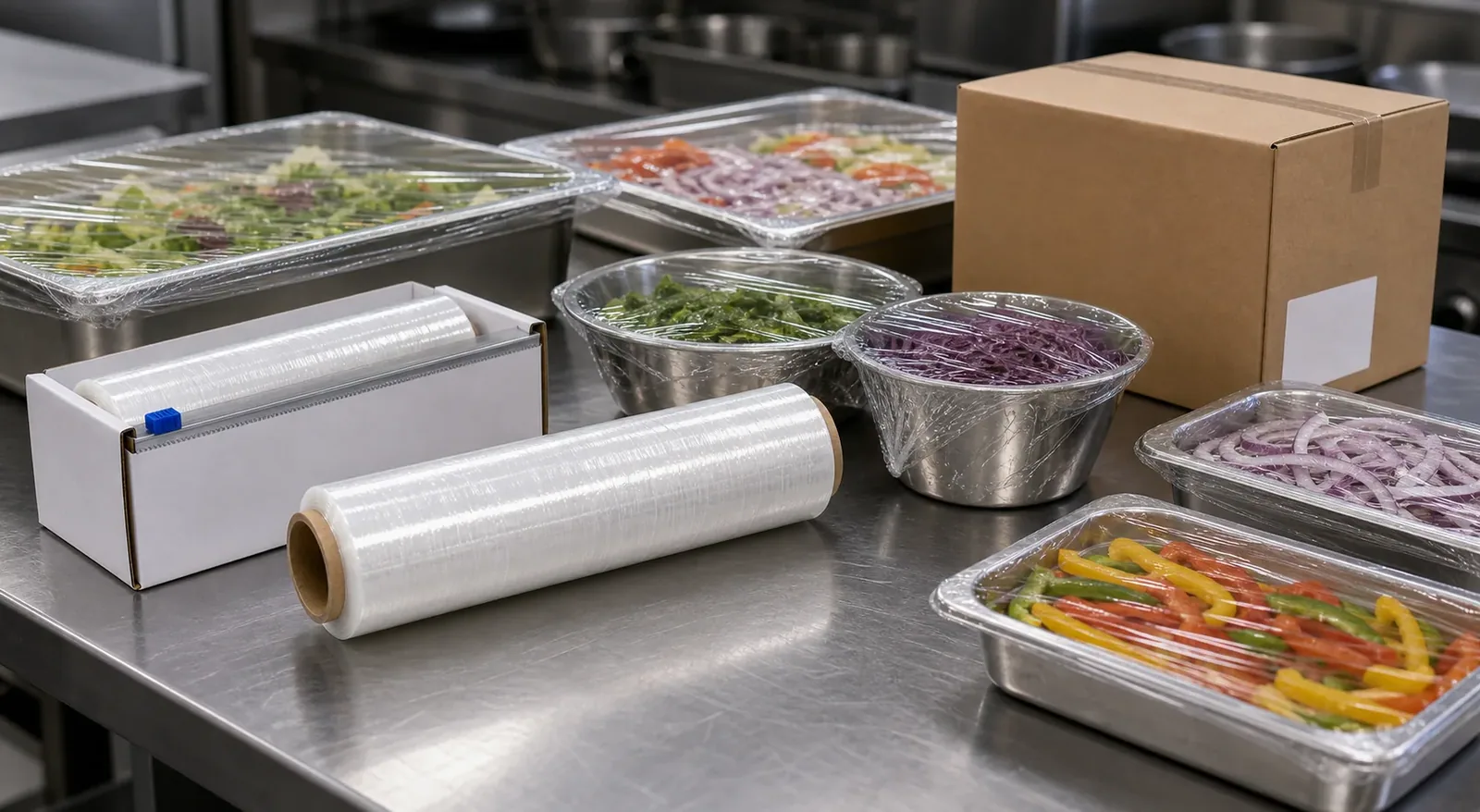
Roll width should match the containers that restaurant customers use most often. A narrow roll can be easier for small bowls and compact prep boxes, but it may require extra passes on large trays. A wider roll can cover catering pans faster, but it may create waste when used on smaller containers.
| Customer Type | Common Use | Buyer Check |
|---|---|---|
| Independent restaurants | Prep bowls, ingredient boxes, small trays | Check handling comfort and film waste on common container sizes. |
| Catering kitchens | Large pans, event trays, batch preparation | Check whether one pass covers larger trays without excessive overlap. |
| Hotel kitchens | Mixed prep, buffet support, cold storage | Balance width, roll length, dispenser fit, and storage space. |
| Restaurant distributors | Repeated resale to different kitchen types | Choose formats that are easy to explain, stock, and reorder. |
Buyers can review YIYUAN’s Commercial Cling Film Roll as a starting point, then test samples against their customer container list.
Roll Length, Thickness, and Kitchen Waste
Restaurant customers notice how long a roll lasts. If a roll name sounds familiar but the actual length is shorter, the distributor may receive complaints after repeat orders. Thickness also affects feel, tearing, stretch, and material cost. Define a stable specification rather than changing length or thickness only to chase a lower price.
For bulk orders, compare usable length, roll weight, film behavior, and carton packing together. A longer roll may reduce replacement frequency in the kitchen, but it should still rotate smoothly and fit the cutter box or dispenser.
Clean tear
Uneven tearing slows prep work and wastes film during busy service periods.
Stable length
Customers reorder by familiar roll formats, so length and roll feel should remain stable.
Carton efficiency
Carton size, quantity, and gross weight affect landed cost and warehouse handling.
Cutter Box or Refill Roll?
Some restaurant customers prefer cutter box rolls because they are ready to use. Others already have dispensers and prefer refill rolls. The buyer should understand the local channel before confirming packaging. Cutter boxes may improve convenience, but the blade, box board, opening direction, and roll fit must be tested. Refill rolls may reduce packaging cost, but only if the end users have compatible dispensers.
- Ask whether target customers use boxed rolls, loose refill rolls, or dispensers.
- Test cutter box blade position, box strength, and pull-out behavior if boxed.
- Confirm roll core size and roll diameter against dispensers if refill roll.
- Check whether private-label packaging is needed for resale.
- Confirm carton packing and labels for each packaging style.
Carton Packing for Food-Service Distribution
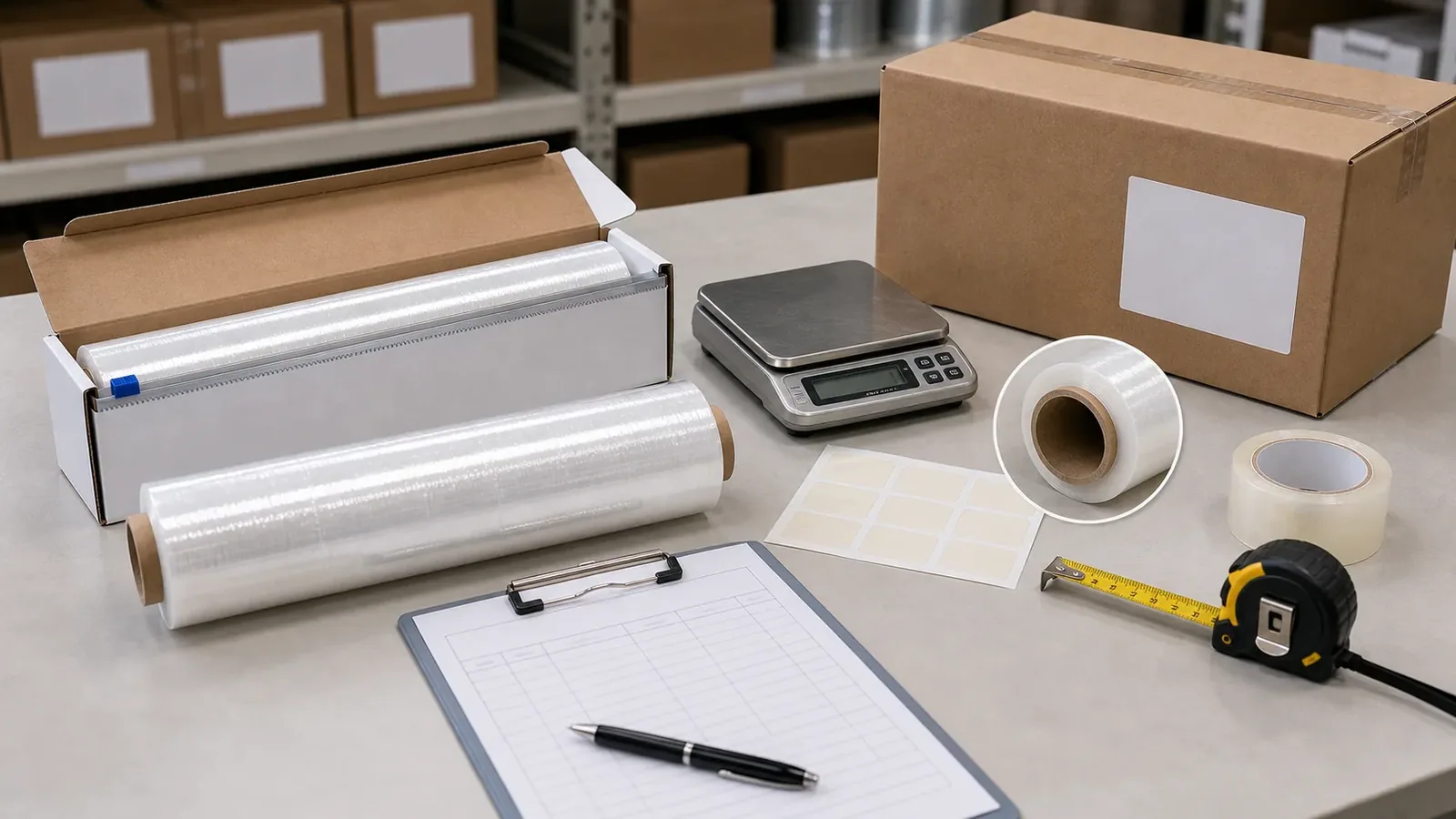
Restaurant supply cartons move through import warehouses, local delivery vans, storerooms, and customer receiving areas. Weak cartons can damage boxes before the roll reaches the kitchen. Large cartons may be inefficient for warehouse shelves or delivery routes. Unclear labels can create wrong SKU picking.
Before bulk orders, buyers should ask for pieces per carton, carton dimensions, gross weight, net weight, carton mark, pallet option, and mixed SKU label rules. This is especially important when the order includes several widths or packaging styles.
Sample Testing in Real Kitchen Conditions
Sample testing should copy actual restaurant handling. Buyers should not test only by pulling the film slowly in an office. Ask kitchen staff or experienced salespeople to use the roll on real prep containers at normal speed. Test both film and packaging.
- Cover stainless pans, plastic prep boxes, bowls, deli trays, and takeaway containers.
- Check cling, stretch, clarity, tearing behavior, and odor during repeated use.
- Test cutter box or dispenser performance with the actual roll format.
- Check whether the roll rotates smoothly after several pulls.
- Review carton label, carton strength, and storage fit.
- Keep approved samples or photos for production comparison.
Food-Service SKU Planning
Distributors should plan commercial cling film rolls as repeatable SKUs. Too many similar sizes can confuse sales teams and warehouse staff. Too few sizes may not fit customer needs. A practical range often starts with the most common widths and packaging formats, then expands after customer feedback.
When building the first order, consider whether the buyer needs one standard roll, several widths, private label boxes, mixed cartons, or a trial order before container volume. MOQ and lead time may change when printing or custom packaging is added.
RFQ Fields for Bulk Restaurant Orders
- Target customer: restaurant, catering, hotel kitchen, distributor, or supermarket prep.
- Roll width, length, thickness target, roll weight target, and core size.
- Packaging style: cutter box, refill roll, retail box, private label, or jumbo roll.
- Cutter box requirements: blade type, box board, artwork, barcode, and carton mark.
- Carton quantity, carton dimensions, gross weight, net weight, and pallet requirement.
- Sample needs, trial order quantity, bulk order target, and production lead time.
- Available test report, food-contact document, or inspection document requirements.
Questions from food-service buyers
Should restaurant suppliers buy cutter box rolls or refill rolls?
Cutter box rolls are ready to use and easier for resale. Refill rolls can work when customers already have dispensers. Test both if the channel is mixed.
How should catering suppliers test cling film samples?
They should test samples on real catering trays, pans, bowls, and prep boxes at normal working speed, including cutting, wrapping, edge hold, and carton handling.
Why do restaurant plastic wrap quotes differ so much?
Quotes may differ because width, length, thickness, roll weight, core size, box structure, carton quantity, carton strength, and document support are not the same.
Can commercial cling film rolls be private labeled?
Private-label packaging may be available depending on order quantity, artwork, box structure, barcode, carton marks, and production schedule.
Before comparing restaurant SKUs, use the cling film sample testing checklist to define a repeatable kitchen trial.
Match the roll to the kitchen, not the catalog
Send the pan sizes, preferred roll format, expected daily use, storage limits, and carton requirements. Those details are more useful than asking for a generic restaurant roll.