
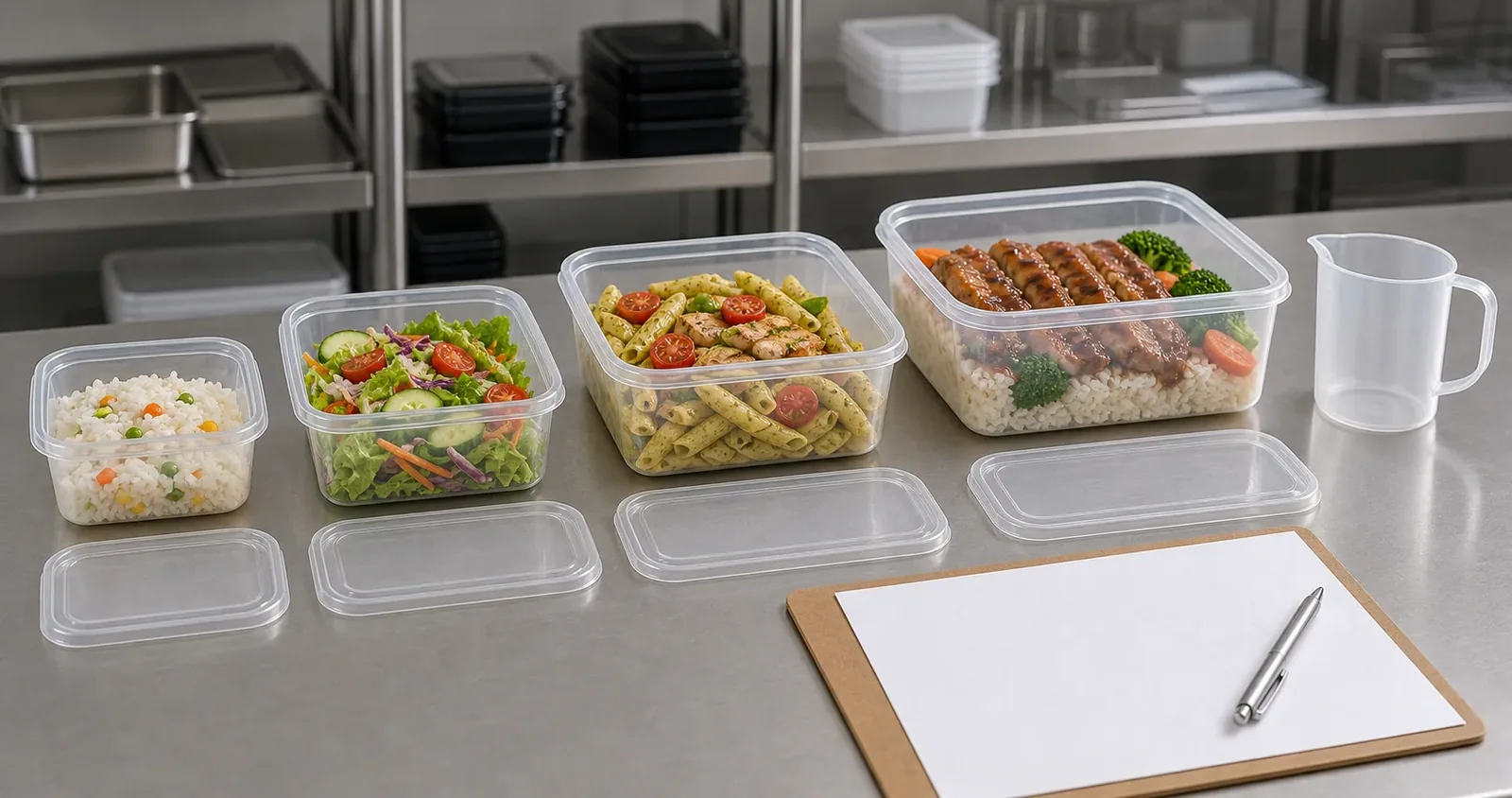
A 750 ml label does not show whether the noodles fit, the garnish clears the lid, or the packed meal stacks without pressure. Internal dimensions, usable fill line, lid shape, compartment layout, and portion weight matter as much as nominal capacity. Test the menu first; use water only as a secondary measurement.
- Food container size should be selected by real meal portion, usable volume, lid height, base shape, and delivery handling.
- 500ml, 750ml, and 1000ml containers can perform differently depending on shape, depth, compartment design, and lid fit.
- Meal prep buyers should test portion control, stacking, reheating claims, label area, and freezer or cold storage needs where relevant.
- Takeaway buyers should test sauce, rice, noodles, fried food, heavy meals, delivery-bag fit, and courier movement.
- Carton packing and nested height affect freight cost, warehouse space, and container loading.
Nominal Capacity Is Only the Starting Point
A 750ml container does not automatically fit every 750ml meal. Usable space can be affected by rim design, bottom shape, wall angle, lid dome, and how the food sits inside. Rice and salad do not fill the same way. Soup, curry, fried food, pasta, and meal prep portions all need different checks.
Request samples and test the actual menu. The right size is the one that holds the portion neatly, closes securely, looks good to the customer, and survives transport.
Working example: A meal prep brand plans to use a 750ml container for all menu items. During sample testing, rice bowls fit well, but pasta with sauce needs more headspace and salads look compressed. The buyer keeps 750ml for rice meals and adds a wider 1000ml option for salad and pasta lines.
Common Size Ranges and Buyer Use Cases
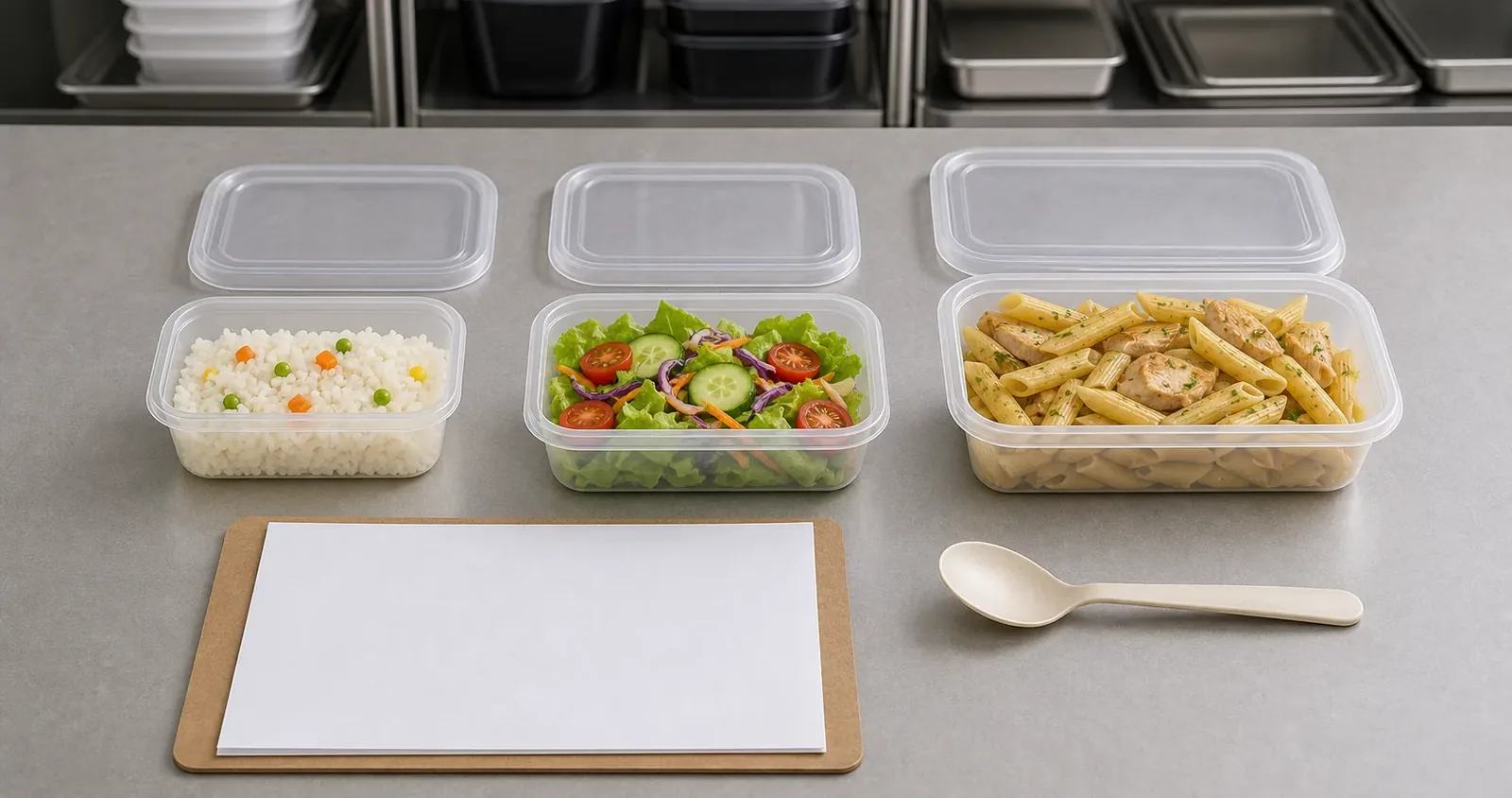
The exact product range depends on supplier tooling, material, and market demand, but buyers commonly compare small, medium, and larger meal containers for different food programs. The table below shows how to think about size during sourcing.
| Size Range | Typical Review Use | Buyer Check |
|---|---|---|
| Around 500ml | Side dishes, small meals, snacks, rice portions, deli items. | Check whether the portion looks full without forcing the lid. |
| Around 750ml | Standard meal prep, takeaway rice meals, pasta, mixed dishes. | Check headspace, sauce movement, and stack pressure. |
| Around 1000ml | Larger meals, salads, noodles, family portions, premium meal prep. | Check bag fit, lid strength, carton volume, and customer price point. |
| Multi-compartment | Bento, diet meals, sauce separation, protein and side portions. | Check compartment volume, lid contact, and cross-mixing risk. |
| Custom size | Brand-specific menu or retail shelf program. | Check mold cost, MOQ, lead time, sample approval, and carton plan. |
Inner Dimensions Matter as Much as Capacity
Two containers with similar capacity can fit food differently. A deep narrow container may work for rice bowls but make salads look less appealing. A wider shallow container may present food better but use more carton space. Ask for top size, bottom size, height, lid height, and usable internal shape.
For retail or delivery programs, also check label area and sleeve fit. A container that holds food correctly may still be difficult to brand if the lid shape leaves no clean label area.
Meal Prep Size Checks
Meal prep buyers usually care about portion control, stacking, reheating-related claims, freezing or cold storage where relevant, and customer presentation. The container should keep the meal organized and consistent from kitchen packing to customer delivery or pickup.
Test real menu
Use cooked food portions, not water volume alone, to judge the container.
Check separation
Confirm protein, rice, vegetables, and sauce do not cross-mix too easily.
Check stacking
Test filled containers in refrigerators, freezers, cartons, and delivery bags where relevant.
Takeaway and Delivery Size Checks
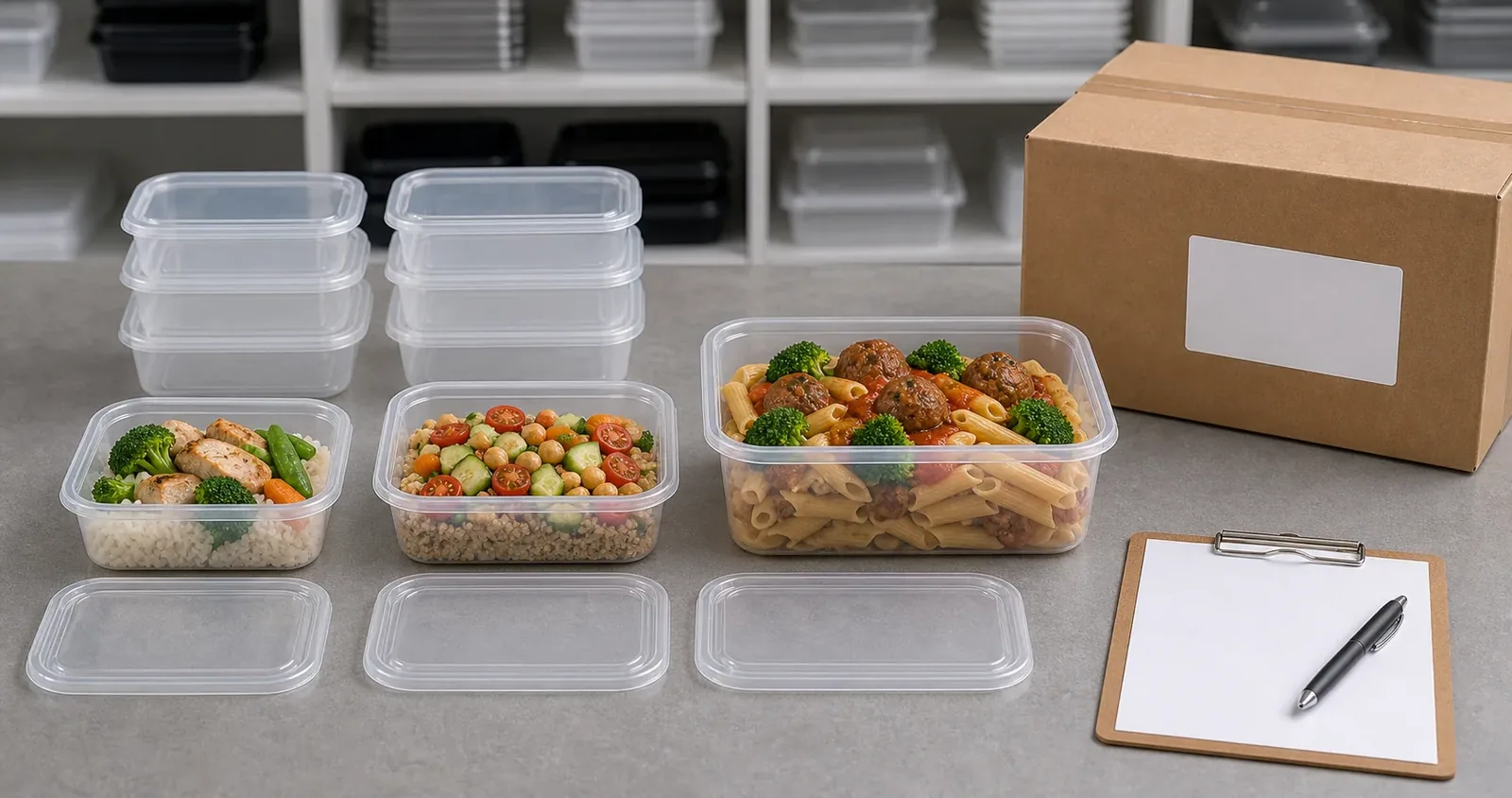
Takeaway containers must survive fast packing, lid closure, bagging, courier movement, and customer opening. A container that works on a table may fail in a delivery bag if it is too tall, too loose, or too heavy when filled.
- Test rice, noodles, sauce, fried food, salad, and heavy meal options separately.
- Close the exact matching lid at normal kitchen speed.
- Put filled containers into the real delivery bag size.
- Stack filled containers and check lid pressure.
- Tilt and move the bag to check sauce movement and lid security.
- Check whether the portion looks generous without overfilling.
Carton Packing and Freight Cost
Container size also affects carton packing. Larger bases, taller lids, separated lids, sleeves, and compartment shapes can increase carton volume. Ask for nested height, pieces per carton, carton dimensions, gross weight, and 40HQ or pallet planning where relevant.
If the order includes several sizes, ask whether bases and lids are packed together or separately. Warehouse teams need clear carton marks so they can match lids and bases correctly.
Questions to Send With a Size Inquiry
- What food will be packed: rice, noodles, salad, soup, curry, fried food, or mixed meal?
- Is the food hot, cold, chilled, frozen, or reheated by the customer?
- What portion weight or menu photo should the container match?
- Is a flat lid, dome lid, clear lid, or sealing option required?
- Does the container need compartments?
- What delivery bag, shelf, or refrigerator space must it fit?
- What carton quantity, pallet method, or warehouse limit must be considered?
Buyers can review custom disposable food containers, compare PP bento container options, or send menu photos and target portions through the YIYUAN contact page.
Container-size questions
Is 750ml enough for meal prep?
It depends on the menu. Rice meals may fit well, while salads, pasta, or larger portions may need wider or larger containers with more headspace.
Why do two 1000ml containers look different?
Shape, depth, bottom size, wall angle, rim, and lid height can make containers with similar capacity perform differently with real food.
Should I test containers with water?
Water can help check volume, but buyers should also test cooked food, sauce, stacking, delivery movement, and customer presentation.
How does size affect shipping cost?
Larger dimensions, lid height, nested height, and separate lid packing can increase carton volume and reduce container loading quantity.
If material choice is still open, compare the intended food conditions in the PP versus PET container guide before fixing a size.
Size the container with the actual meal
Send meal photos, portion weights, required compartments, lid preference, delivery-bag limits, and target carton quantity for a useful size comparison.