
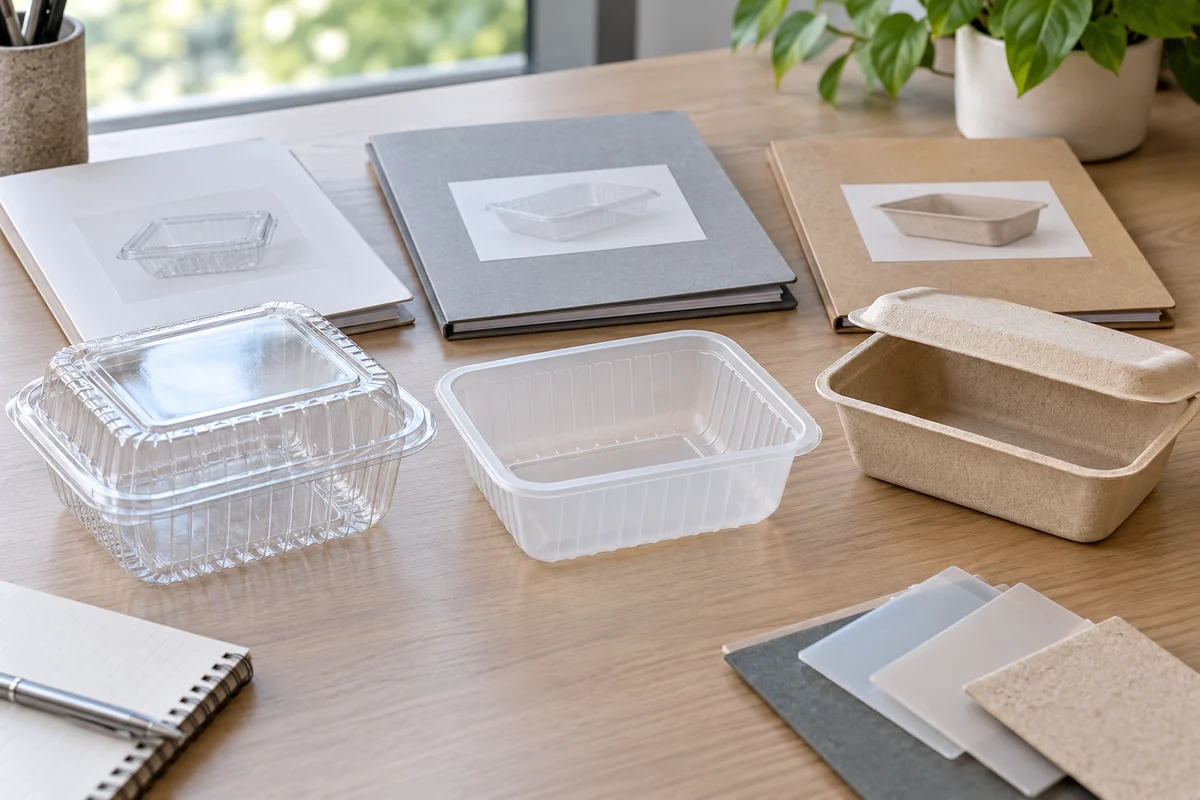
Evaluate a sustainable food container by the specific claim being made. Recycled content, recyclability and compostability answer different questions and need different evidence. Confirm the exact tray, lid, coating and printing construction before approving a claim or switching products.
A material change also needs a separate food-contact and performance review. Environmental evidence does not establish suitability for direct food contact, heating or the required delivery task.
Ask what the claim actually covers
| Claim | Evidence to request | Common scope gap |
|---|---|---|
| Made with recycled content | Percentage, calculation basis, material source and traceability or verification | Percentage applies to the tray but is presented as covering the whole pack |
| Recyclable | Actual material construction and evidence about relevant collection and processing routes | A resin identification code is treated as proof of local acceptance |
| Industrially compostable | Product-specific evidence, covered components and required facility conditions | Industrial compostability is presented as home compostability |
| Reduced material use | Comparable baseline, pack weights, identical function and measured result | A lighter tray is compared with a larger or differently functioning product |
The FTC Green Guides summary distinguishes these environmental claims and their evidence requirements. Use destination-specific rules and actual collection access when deciding the wording; avoid a broad “eco-friendly” label that implies unsupported benefits.
Separate YIYUAN catalog choices from environmental evidence
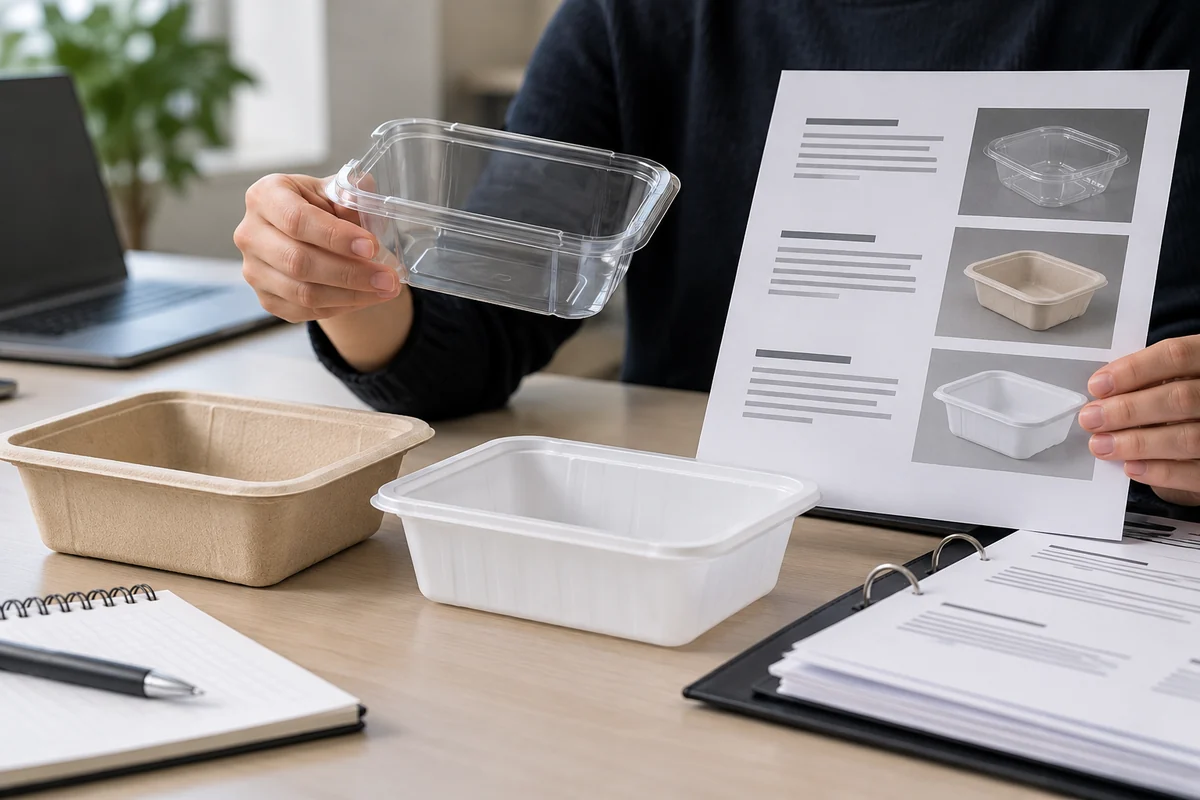
The YIYUAN product catalog describes PP container formats; the container range lists PP/PET options, capacities and closures. Use these to identify the proposed pack. A catalog material description does not establish recycled-content percentage, local recyclability, compostability or an environmental certification.
The aluminum foil catalog can help identify a foil option when the application permits. For example, model 220 is listed as 1,000 ml, 215 × 160 × 55 mm and 1,000 containers per carton. Compare the complete pack and actual use before switching. Neither a plastic-to-foil change nor a catalog listing alone establishes a lower environmental impact; request claim-specific evidence and confirm collection arrangements.
Check every component in the finished pack
Record tray, lid, liner, coating, label, adhesive and print where relevant. A fiber tray may have a barrier layer; a plastic base may be paired with a different-material lid. Ask whether the evidence covers the actual combination and whether disposal requires separation.
Match any certification number to the issuer’s record and covered product. Check the test or certification scope rather than borrowing a badge from a resin supplier or an unrelated container size.
Keep regulatory deadlines distinct from customer policy
The European Commission PPWR overview explains Regulation (EU) 2025/40. Application begins from August 12, 2026, with important requirements phased over later dates. Do not turn a retailer policy or a future target into an immediate universal recycled-content requirement for every food container.
For your product, record the destination, packaging category, legal duty, applicable date and responsible business. Have the relevant specialist confirm the interpretation. A multi-market assortment may need different claims and disposal instructions.
Review food-contact evidence independently
Request the finished product’s use evidence, including the recycling process or material source where relevant. For EU recycled-plastic food-contact materials, consult the Commission explanation of recycled-plastic rules. A recycled-content verification alone does not demonstrate food-contact suitability.
Run a bounded transition trial
- Freeze the approved construction and intended claim.
- Check fill, closure, handling and packing against the current product.
- Compare cost per usable complete pack and document any added process work.
- Confirm collection or composting arrangements with the actual destination service.
- Approve final wording and component-specific disposal instructions before printing.
If disposal infrastructure or evidence is missing, narrow the claim or defer it. Do not promise an environmental improvement solely from changing the resin name or reducing weight.
Prepare the next supplier discussion
Confirm the functional trial with food container sample tests. Send the exact pack construction, destination and proposed environmental claim to YIYUAN when asking what supporting evidence is available.
Prepared by YIYUAN NEW MATERIALS. Updated October 8, 2026. These are buyer planning procedures; product claims require evidence for the ordered specification and intended use.