
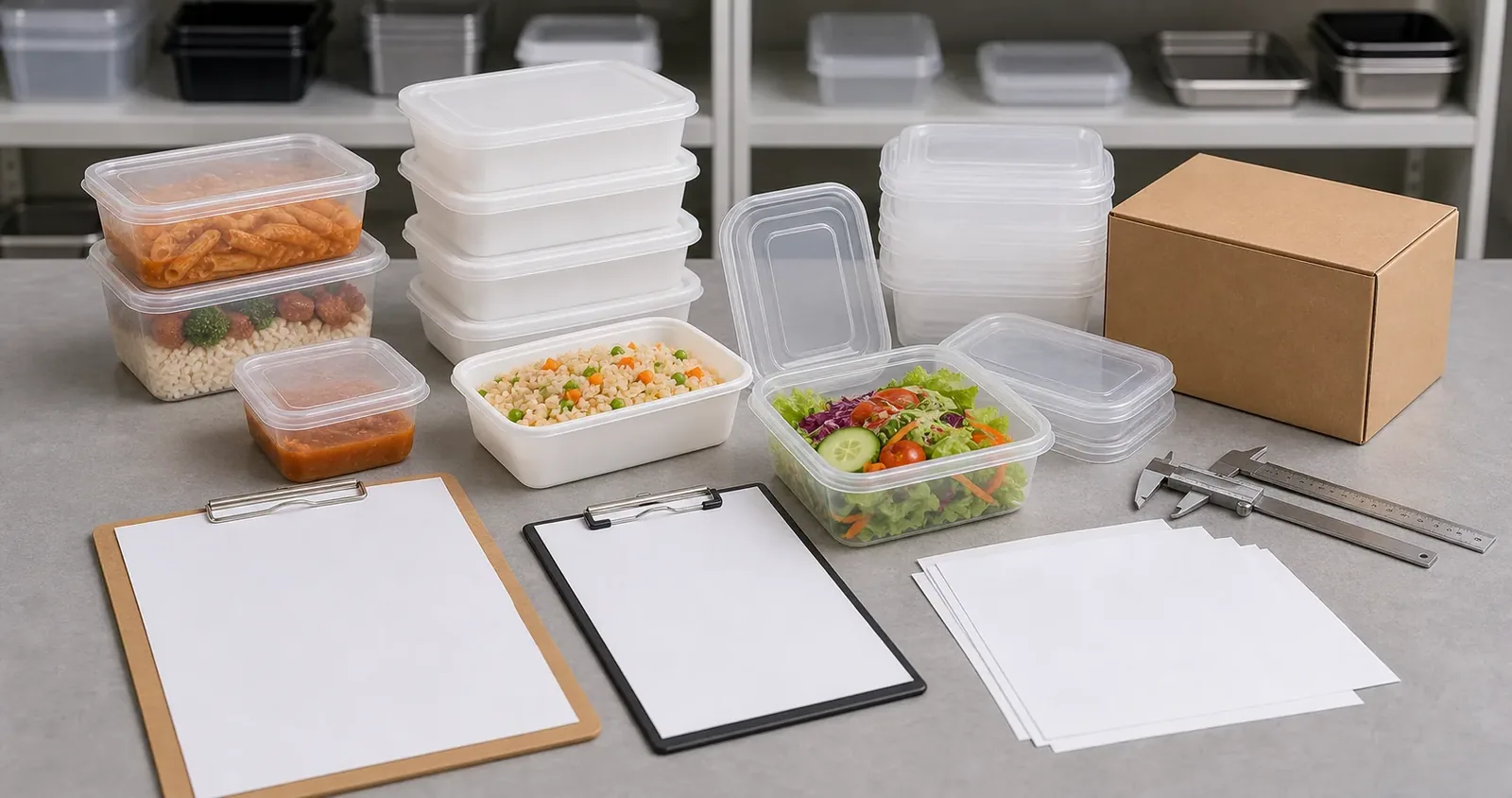
A loose base and lid on a meeting-room table are not a complete production sample. The approval set needs an item code, dimensions, material, matched lid, real-food result, storage and stacking observations, print reference, and carton information. That record is what makes a later bulk comparison possible.
Start With the Exact Sample Set
Confirm whether the sample is a stock sample, pre-production sample, printed sample, or final approved sample. A stock sample can help early selection, but it may not represent final color, logo, lid fit, carton packing, or material details. A final sample should be close enough to production for approval.
The sample set should include the base, lid, sleeve or label if used, and carton packing information where available. If the order has multiple sizes, test each size separately.
A common failure pattern: A meal prep importer approves a base sample but does not test the final lid. During bulk production review, the lid is harder to close than expected. A full base-and-lid sample approval before production would have caught the problem earlier.
Core Sample Checks
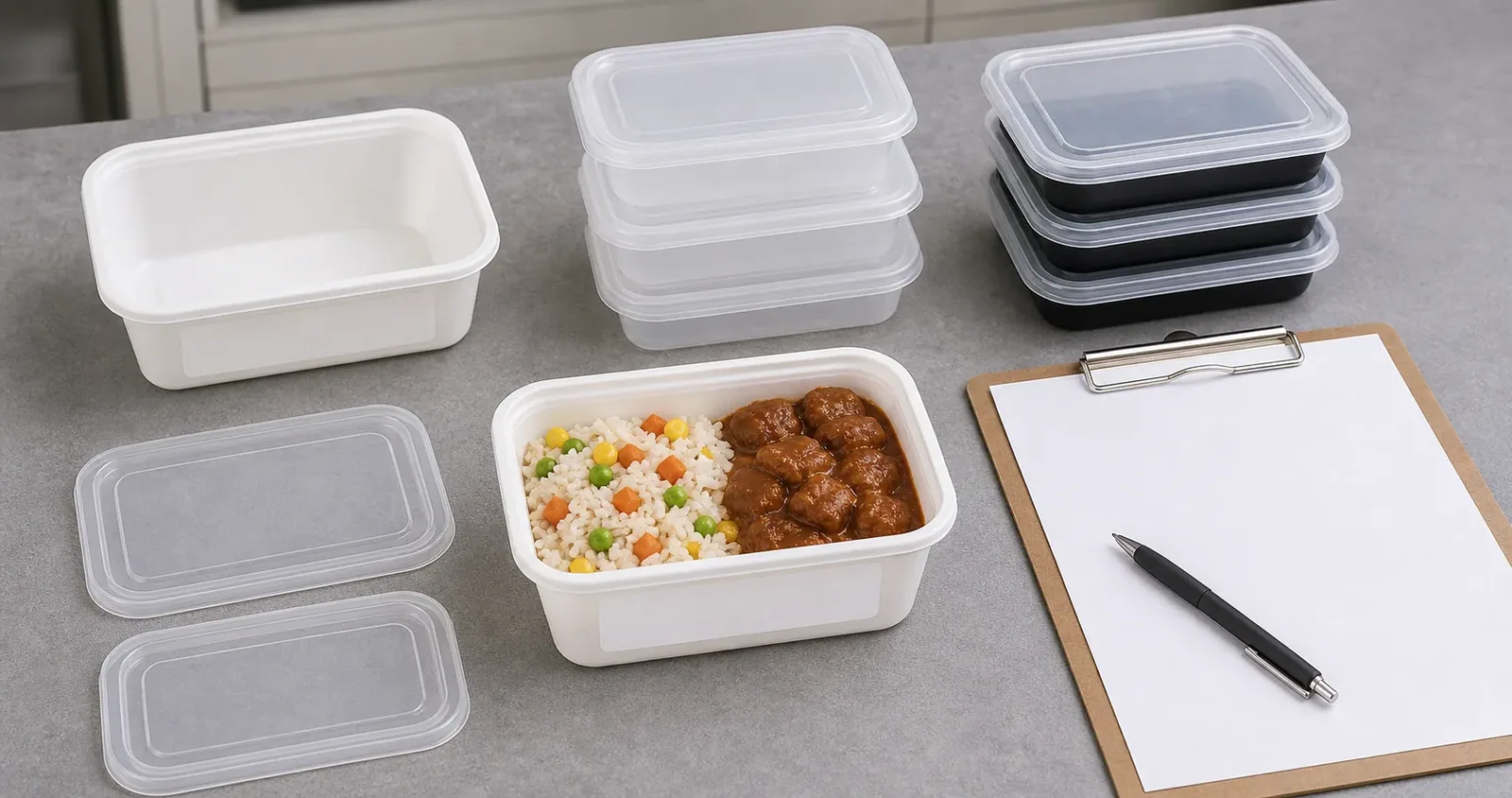
The first inspection should confirm that the sample matches the requested product. Check material, size, capacity, color, clarity, surface finish, rim shape, base stiffness, lid match, and compartment layout. If the supplier quotes several similar items, label each sample carefully so the buyer does not mix them.
| Sample Check | What to Review | Why It Matters |
|---|---|---|
| Size and capacity | Outer size, inner size, height, usable volume. | Confirms fit for real meal portions and shelves. |
| Material and feel | PP, PET, paper, bagasse, stiffness, clarity, surface. | Connects material choice to food and channel. |
| Lid match | Snap feel, rim fit, corner closure, repeated closing. | Prevents leaks and handling complaints. |
| Food fit | Real portion, sauce, headspace, presentation. | Checks whether the container works for the menu. |
| Carton packing | Pieces per carton, nested height, carton mark, gross weight. | Affects freight, warehouse receiving, and damage risk. |
Test Lid Fit and Leak Risk
Lid testing should use the exact lid and base planned for bulk production. Close the lid several times, check all corners, fill the container, tilt it, stack it, and place it in a delivery bag if the product is for takeaway. A lid that closes once while empty is not enough.
- Close the lid at normal kitchen speed.
- Check corner gaps and rim alignment.
- Test sauce, dressing, or condensation based on the menu.
- Stack filled containers and check whether the lower lids lift.
- Record the sample code and lid code used in the test.
Test Food Temperature and Storage
Temperature can change sample behavior. Hot meals may soften the base, create steam, or loosen the lid. Cold storage can create condensation, make some lids harder to open, or reveal cracking risk during handling. Test the sample in the condition that matches the actual food channel.
Check shape
Fill with realistic hot food and observe base shape, lid lift, and stacking.
Check handling
Test cold display, condensation, lid security, and cracking during replenishment.
Check routine
Test refrigerator, freezer, reheating-related claims, label area, and portion control where relevant.
Stack Test Before Shipment
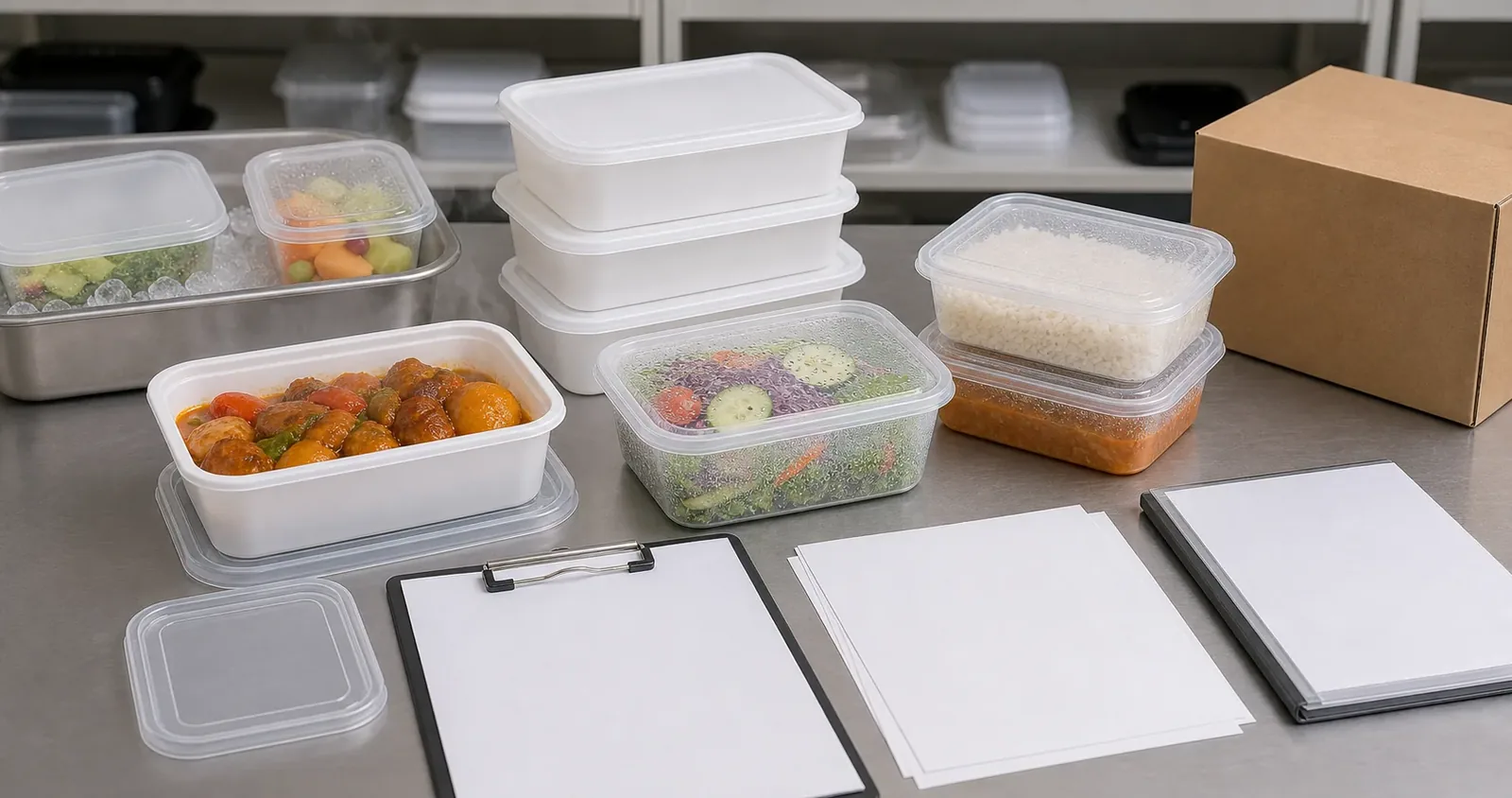
Stacking is important for kitchens, delivery bags, cartons, and warehouses. Test empty stacking and filled stacking. Check whether lids deform, bases stick too tightly, rims bend, or containers are difficult to separate at service speed.
If the order includes tall stacks in cartons, ask how the supplier protects rims and lids from compression during export. Carton deformation can turn a good sample into a receiving problem.
Private Label and Printed Sample Checks
For custom orders, the sample review should include artwork, color, logo position, barcode, label area, claims, language, and carton marks. Buyers should approve the final file version before printing and keep a record of what was approved.
- Confirm final artwork file name and version date.
- Check barcode size, position, and ownership.
- Review claim wording against target market requirements.
- Check printed color against approved proof or sample.
- Confirm carton marks for size, material, quantity, PO, and SKU.
- Record any approved difference between sample and production.
Keep a Sample Approval Record
A sample approval record should be simple and specific. Include product name, item code, base code, lid code, material, size, capacity, color, sample date, test result, photos, approved changes, and buyer name. If a sample fails, record what must change before retesting.
Buyers can review custom disposable food containers or send sample testing requirements through the YIYUAN contact page.
Use the detailed guides for portion and size selection and lid-fit testing when building the approval sheet.
Approve evidence, not just a loose sample
Prepare the intended meal, use conditions, sample codes, required tests, print files, and carton expectations before asking for production approval samples.