
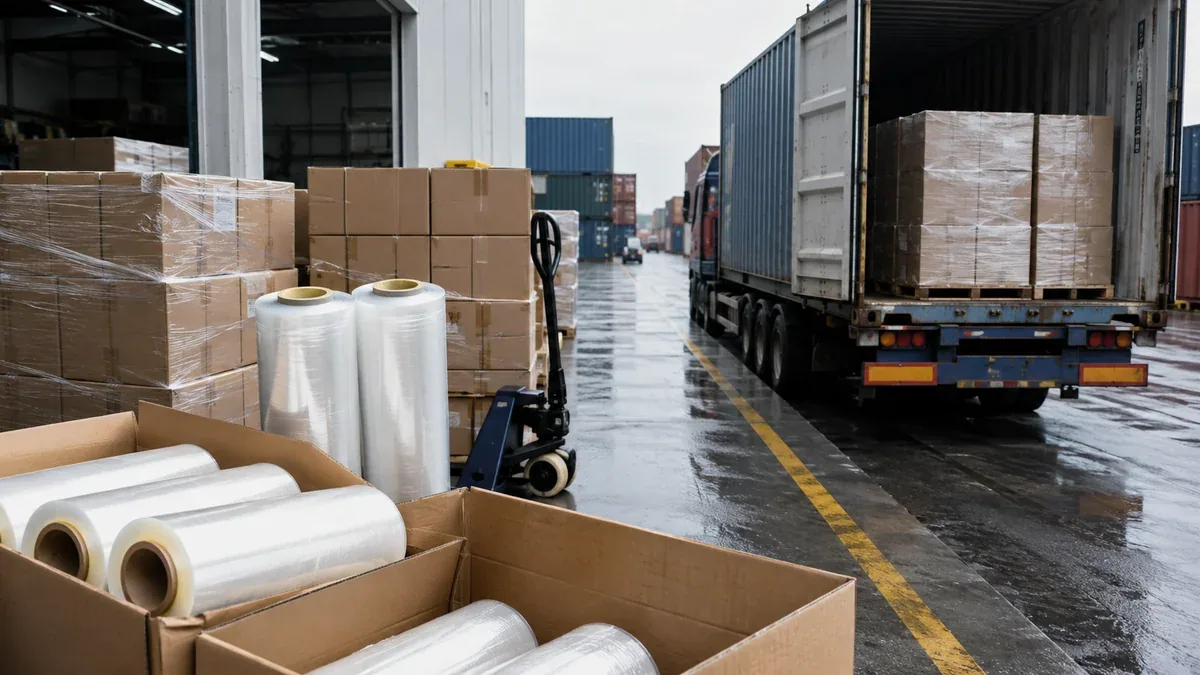
Choose LCL or FCL from current door-to-door quotes and the actual cling film cargo plan. LCL avoids paying for unused container space but adds consolidation handling; FCL gives one shipper a container movement but can create excess inventory. No fixed CBM rule works for every route and date.
Give forwarders identical data
- Pickup/delivery, ports, Incoterm and ready date.
- Carton count, external dimensions, gross weight and total CBM.
- Palletised or loose, stackability and unloading requirements.
- Commodity description, customs data and insurance request.
Compare the complete charge path
| LCL-specific focus | FCL-specific focus |
|---|---|
| Consolidation/deconsolidation, CFS charges, extra handling and labels | Container booking, loading plan, free time, restraint and unloading capacity |
DHL describes LCL as consolidated ocean freight in its current service overview; obtain route-specific quotes from the buyer’s forwarder.
Price damage and stock exposure
Compare cost per accepted roll after arrival, not ocean freight alone. Use the ocean-freight protection guide for evidence controls. Confirm exact carton dimensions and weight for the chosen commercial roll before mode selection.