
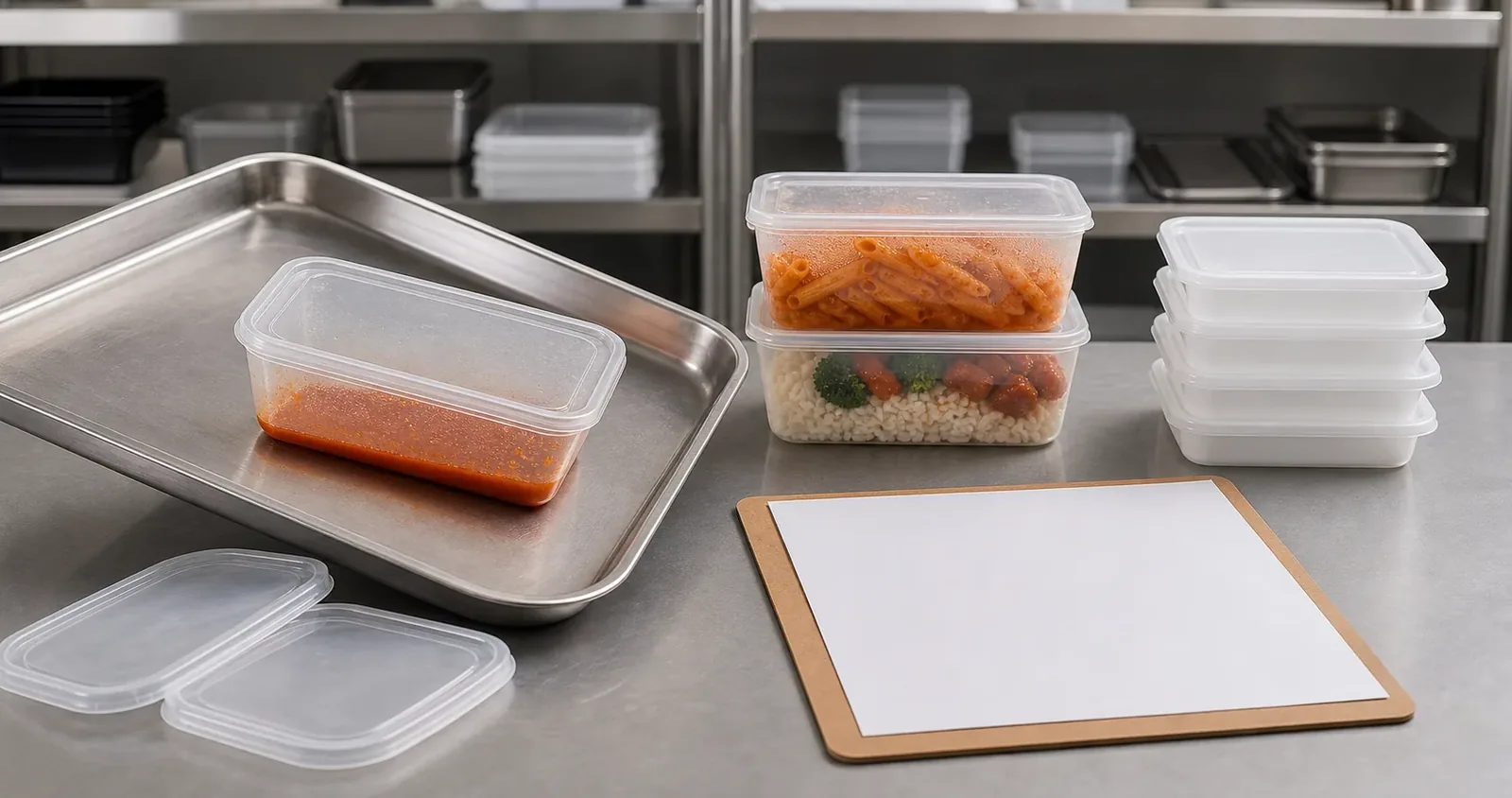
An empty snap test tells very little about a filled takeaway pack. The rim may change under heat, sauce can reach a weak corner, and stacked meals can press on the lid during delivery. A meaningful leak test uses the exact base and lid with a representative meal, fill level, holding time, and handling route.
- Lid fit should be tested with the exact base, exact lid, real food, real sauce, and real handling conditions.
- A good sample test checks snap closure, corner seal, tilt, short inversion, stacking, hot food behavior, cold storage, and delivery-bag movement.
- Leak resistance depends on container design, lid design, food type, fill level, temperature, and user handling.
- Avoid broad leak-proof claims unless the exact product, test method, and market wording support them.
- Bulk production should be compared against the approved base and lid sample before shipment.
Do Not Test an Empty Container Only
An empty container can close well and still fail when filled. Food weight pushes the base, steam can affect closure, sauce can find weak edges, and stacked containers can press the lid out of position. Test with realistic filling and handling, not only with clean empty samples on a desk.
This is especially important for takeaway meals, delivery apps, sauce containers, meal prep, supermarket ready meals, and catering packs. In these channels, the container is handled quickly and often travels before the customer opens it.
What this looks like in an order: A restaurant supplier approves a snap-lid container after testing an empty sample. During delivery trials with curry and rice, sauce reaches one weak corner after the bag is tilted. The buyer changes the lid design before bulk order and avoids customer complaints.
First Check Base and Lid Matching
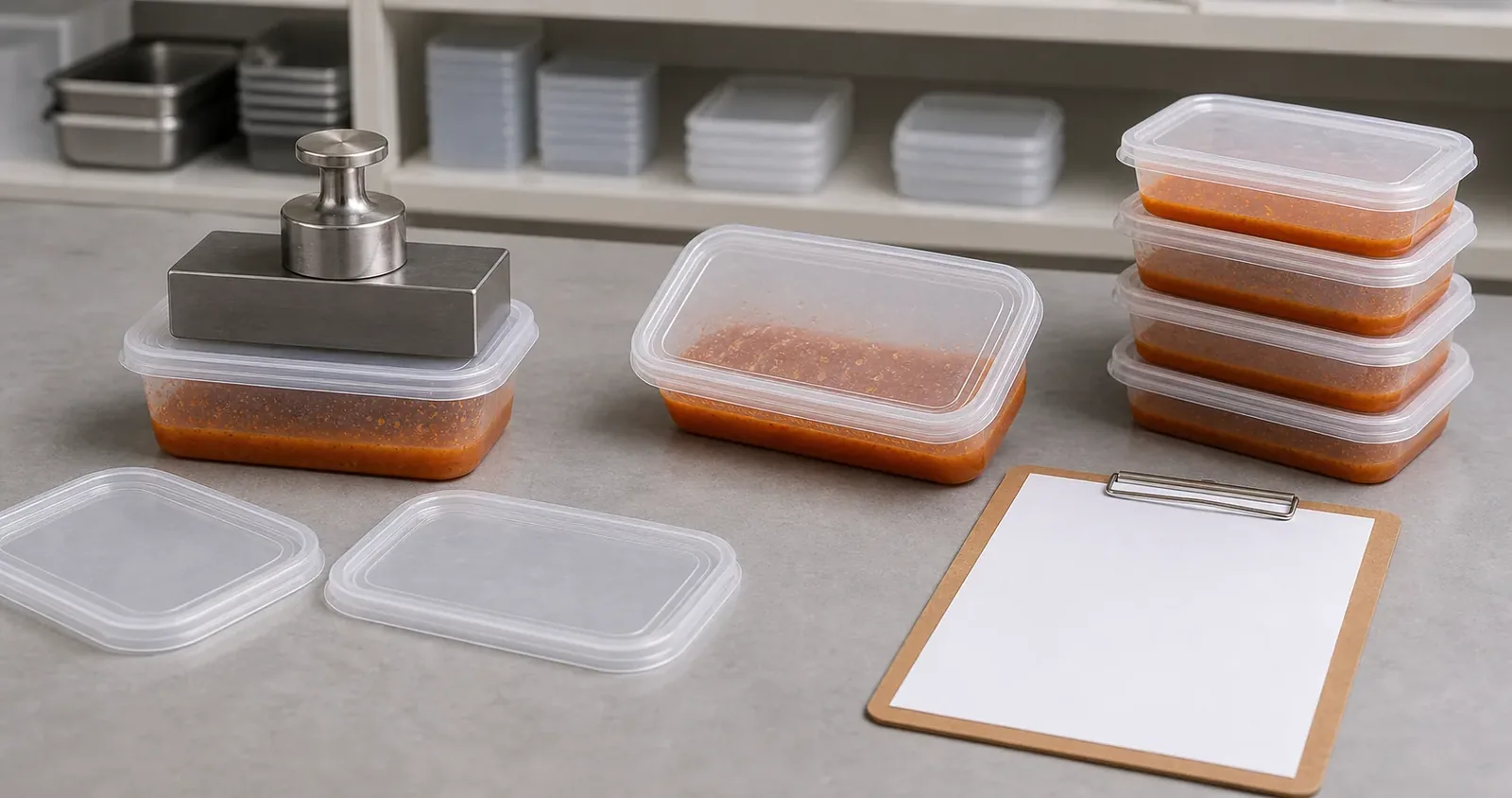
The lid should be matched to the exact base model. Similar-looking bases may have different rim shapes. If a buyer mixes old stock lids with new bases or sources lids and bases separately, the risk increases. The supplier should confirm item code, mold match, and packing method for bases and lids.
| Check Point | What to Look For | Buyer Risk |
|---|---|---|
| Rim match | Lid follows the base rim evenly. | Loose corner or uneven seal. |
| Snap feel | Closure is firm but not too difficult. | Staff may leave lids partly open. |
| Corner fit | All corners close without lifting. | Sauce or condensation can escape. |
| Base stiffness | Filled base does not twist too easily. | Seal may open during handling. |
| Stacking | Top container does not force lid open below. | Delivery and carton pressure complaints. |
Build a Simple Leak Resistance Test
A practical leak resistance test should match the buyer’s product. For sauce-heavy meals, test sauce. For salad, test dressing and condensation. For soup-style items, confirm whether the container is designed for that use before testing. Not every disposable food container is intended for liquid-heavy foods.
- Fill the container to the expected food level, not beyond the realistic fill line.
- Close the lid at normal kitchen speed.
- Check all edges and corners immediately after closure.
- Tilt the container in several directions for a short handling test.
- Place the container in a delivery bag and move it as a courier would.
- Stack filled containers to check pressure on lower lids.
- Record whether leaks, lid lift, deformation, or corner gaps appear.
Hot Food and Steam Can Change Lid Behavior
Hot food can soften the base, create steam pressure, and affect how the lid sits on the rim. Buyers testing PP hot food containers should check the filled container after a realistic holding time. If the container will be microwaved, reheated, or labeled for microwave-related use, confirm product design and market wording before using claims.
Check deformation
Watch base shape, lid lift, steam pressure, and stacking while filled.
Check condensation
Cold storage can create moisture that makes weak lid areas visible.
Check corners
Thin sauce often exposes gaps faster than dry food.
Short Inversion Tests Need Context
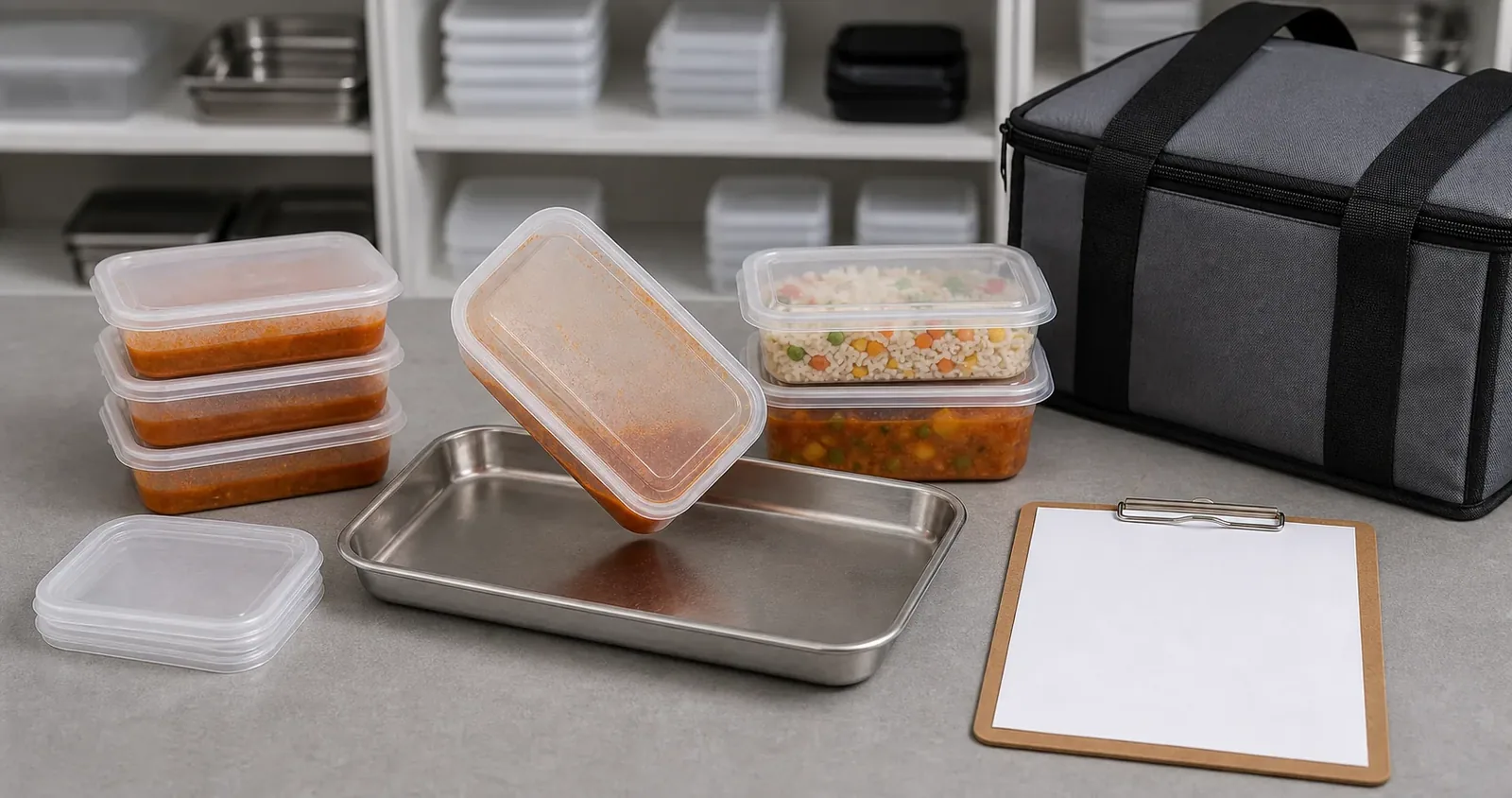
Some buyers ask for a full inversion test. This can be useful for comparison, but it should be interpreted carefully. A container designed for normal takeaway handling may not be suitable for being held upside down for a long period. Define what test is realistic for their channel and avoid writing exaggerated leak-proof claims.
For delivery packaging, a tilt and movement test may be more realistic than a long upside-down test. For sauce cups or liquid-heavy containers, the test standard may need to be stricter.
Carton Packing Can Affect Lid Fit
Even a good lid and base can arrive with problems if carton packing is weak. Deformed bases, bent rims, compressed lids, or mixed lids and bases can create closure problems at the buyer’s warehouse. Ask for carton packing details and pre-shipment photos.
- Confirm whether bases and lids are packed together or separately.
- Check carton dimensions, pieces per carton, and gross weight.
- Ask how rims and lids are protected from compression.
- Confirm carton marks clearly separate matching base and lid codes.
- Request packing photos before shipment for new or high-risk orders.
Approve the Test Method Before Bulk Production
The buyer and supplier should agree what sample passed and how it was tested. A simple approval record should show product code, base and lid code, material, size, fill level, food type or test liquid, temperature, test time, and result. This record makes later bulk comparison easier.
Buyers can review custom disposable food containers and send lid fit requirements through the YIYUAN contact page for sample review.
Lid-fit and leak-test questions
Does a snap lid mean the container is leak proof?
No. Snap feel is only one check. Leak resistance also depends on rim design, food type, fill level, temperature, stacking, and handling.
Should I test with water or sauce?
Use the liquid or sauce that best represents the buyer’s food. Water alone may not show the same behavior as oil, dressing, curry, or condensation.
Is an upside-down test necessary?
It can be useful for comparison, but buyers should define a realistic test for their channel and avoid claims that the product is not designed to support.
Can carton packing affect lid fit?
Yes. Deformed bases, compressed lids, bent rims, and mixed base-lid codes can create lid fit problems even if the original sample was good.
The PP versus PET guide explains why material and use condition must be set before interpreting a lid test.
Agree on the test before judging the result
Document the sample code, base and lid match, test food, temperature, fill line, test time, movements, and acceptance result before bulk approval.