
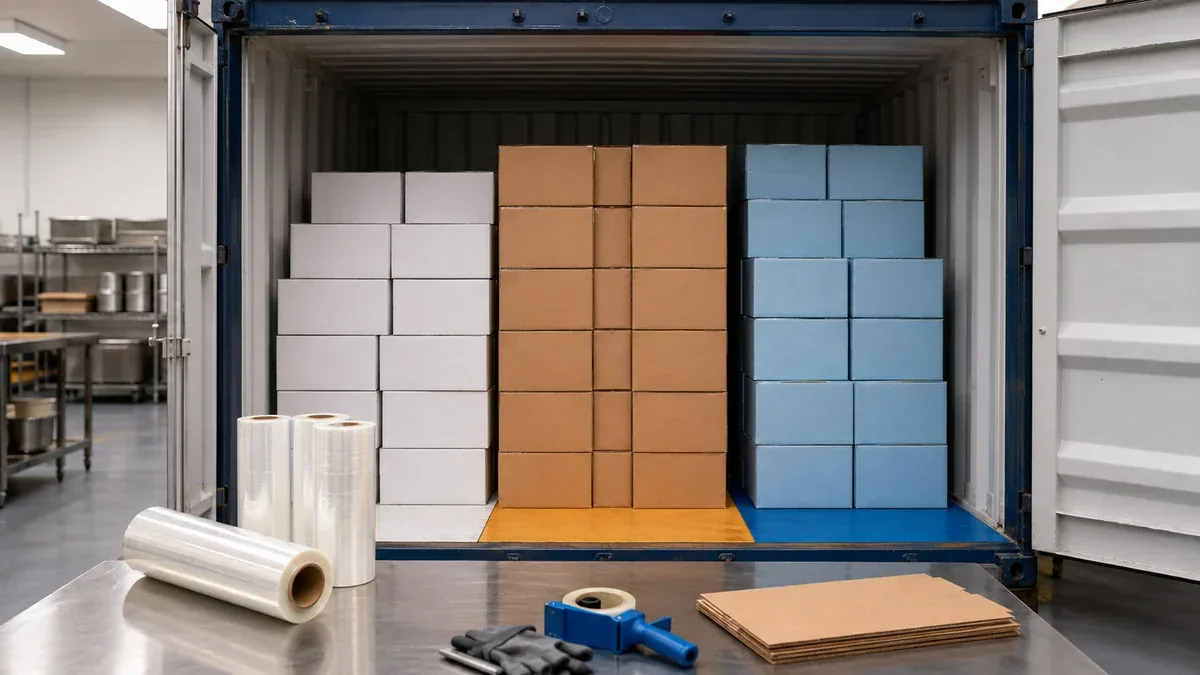
Allocate a mixed-SKU container by inventory coverage, then check cube, weight and loading sequence. Filling spare space is not the objective if it creates slow stock.
Calculate each SKU separately
Net requirement = demand through next replenishment + safety stock − usable on-hand − confirmed inbound.
Convert rolls to cartons using the exact case count, then round to production and packing multiples. Keep the rounding surplus visible.
| SKU | Weeks of demand | On-hand/inbound | Minimum increment | Final cartons | Final coverage |
|---|---|---|---|---|---|
| [width/length/format] | [ ] | [ ] | [ ] | [ ] | [ ] |
Optimise under hard limits
Reserve must-have minimums, then add cartons to the shortest-coverage SKU while checking total cube and weight. Reject additions that exceed acceptable aging, cash or warehouse exposure. A partly filled smaller load can be better than a full container of the wrong mix.
Make unloading part of allocation
Map SKUs by pallet, row or floor-load zone and preserve lot/artwork identity. The assortment article decides which SKUs exist; this sheet assigns shipment quantity. Obtain carton and MOQ data for every selected roll format.