
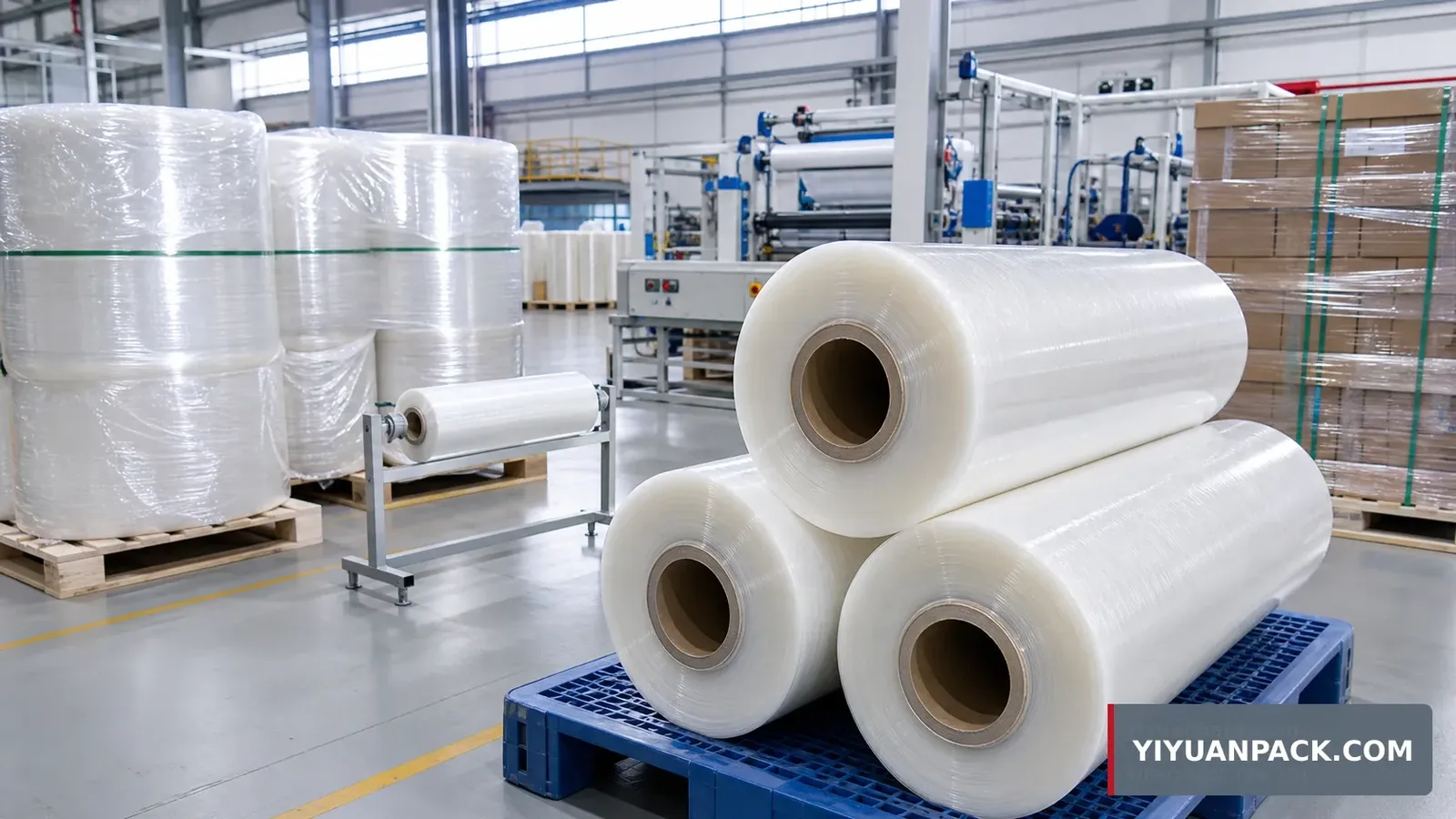
PE cling film jumbo roll buyers are usually not buying a finished retail product. They are buying a base roll that may be rewound, cut, packed, labeled, and distributed into several sales channels. That means the real buying decision is not only film price per kilogram. Importers and rewinders need to confirm width, thickness, core size, roll weight, winding tension, carton packing, and whether the roll works on their equipment before placing a bulk order.
Rewinding film supply
Width and thickness checks
Wholesale food wrap
- A jumbo roll order should be checked by usable film length, roll weight, core size, winding tension, and rewinding compatibility.
- Width and thickness affect both product performance and cost; do not compare suppliers only by kilogram price.
- Core size matters because it must match the buyer’s rewinding machine, storage setup, and handling method.
- Samples should be tested on the real rewinding line or cutting process before confirming container orders.
- Carton, pallet, and container loading details can change the landed cost even when the unit price looks attractive.
This article was prepared from YIYUAN PE cling film product information, common B2B rewinding and import purchasing checks, and public food-contact material context such as the FDA food-contact substances explanation. It does not claim that one document fits every destination market. Buyers should confirm the exact food-contact documentation, test reports, and batch requirements for their import market before bulk production.
For PE cling film jumbo rolls, the best specification is the one that runs smoothly through your rewinding or packing process while matching your customer’s finished roll size. A buyer should confirm width, thickness, core, roll weight, winding quality, packing, and documents before comparing final price. The cheapest jumbo roll is not always the lowest-cost product if it causes rewinding waste, carton damage, or customer complaints.
Why Jumbo Roll Buying Is Different From Finished Roll Buying
A finished roll buyer usually compares width, length, cutter box, label, and carton packing. A jumbo roll buyer has to think one step earlier. The jumbo roll must become a finished product later, so the buyer has to evaluate how the film behaves during unwinding, slitting, rewinding, packing, and storage.
Representative buyer scenario: A rewinding factory wants to import PE jumbo rolls and convert them into 300 mm household rolls and 450 mm food-service rolls. The buyer asks for a low price first, but the actual risk is whether the roll tension is stable, whether the core fits the machine, and whether the film breaks during high-speed rewinding.
The right supplier should be able to discuss not only the material but also the target finished product. If the importer wants to supply supermarkets, small restaurants, and household retail at the same time, the jumbo roll specification should be planned around those downstream roll formats. Buyers can use the PE cling film jumbo roll product page as a starting point, then send the target finished roll sizes for a more accurate quotation.
Width, Thickness, Roll Weight, and Core Size
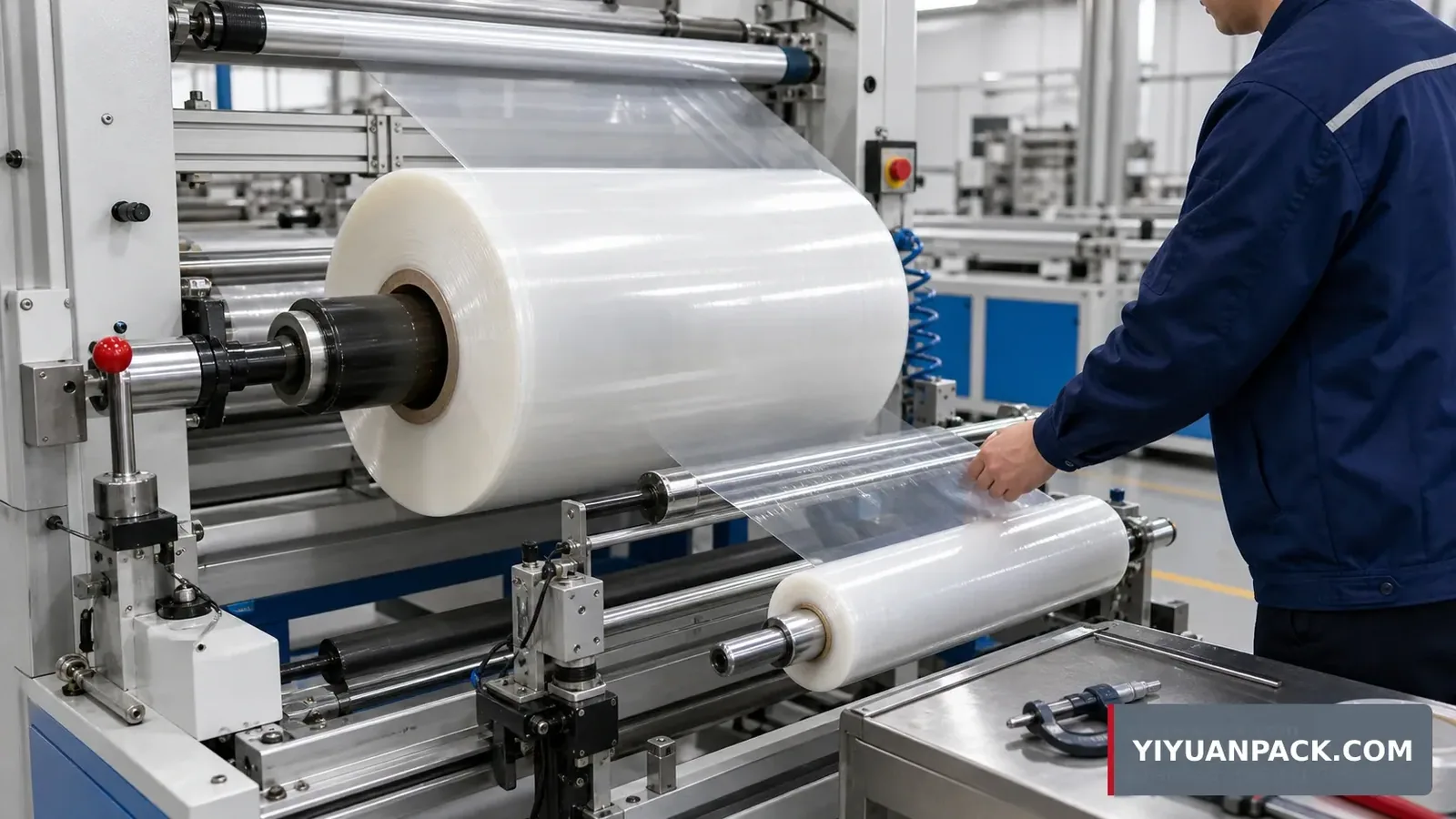
Width is the first visible specification, but it is not the only specification that affects the order. Thickness influences film feel, stretch, tearing behavior, and cost. Roll weight affects handling, shipping, and rewinding setup. Core size affects machine compatibility and storage. If one of these details is wrong, the buyer may receive a roll that technically matches the material but fails in production.
| Specification | Why It Matters | Buyer Check |
|---|---|---|
| Width | Controls finished roll sizes and cutting plan | Confirm target finished widths before ordering jumbo rolls |
| Thickness | Affects stretch, strength, film feel, and cost | Test samples instead of relying only on micron value |
| Roll weight | Affects handling, machine loading, and freight planning | Confirm max weight your team and equipment can handle |
| Core size | Must fit rewinding or dispensing equipment | Confirm inner diameter and core strength |
| Winding tension | Impacts unwinding smoothness and film breakage | Run sample rolls on the real machine if possible |
Rewinding Compatibility Checks
Rewinding compatibility is one of the most important checks for jumbo roll buyers. A film can look clear, smooth, and acceptable in a small sample but still create waste when the full roll is processed at speed. Common problems include film breakage, uneven winding, edge damage, static, and finished rolls that do not look consistent.
Core and roll weight
Confirm the core size, roll diameter, roll weight, and loading method against your rewinding machine before bulk production.
Tension and breakage
Ask for sample rolls that can be tested at practical rewinding speed, not only hand-pulled film samples.
Retail appearance
Check whether the finished roll looks clean, even, and suitable for your cutter box, shrink pack, or retail label plan.
Who Should Not Start With Jumbo Rolls?
Jumbo rolls are not always the best first order. A buyer without rewinding equipment, trained operators, or a stable downstream packaging plan may be better served by finished rolls, cutter boxes, or private-label packs. Buying jumbo rolls too early can create hidden work: rewinding setup, roll waste, packaging sourcing, label compliance, and extra quality checks.
Practical check: If your team cannot clearly answer what finished roll width, length, box format, and carton quantity you will sell, pause before ordering jumbo rolls. Ask for both jumbo roll and finished roll options, then compare landed cost and operational risk.
Packing, Pallet, and Container Loading
For jumbo roll imports, packing is not a secondary detail. It affects freight cost, warehouse handling, damage risk, and how quickly the buyer can move rolls into production. A quote should include roll packing method, carton or protective wrap details, pallet plan, gross weight, and estimated container loading.
If a supplier gives a low film price but cannot provide a clear packing plan, the importer may face hidden cost later. Damaged roll edges, unstable pallets, or unclear gross weight can slow down production and cause claims that are difficult to resolve after the container arrives.
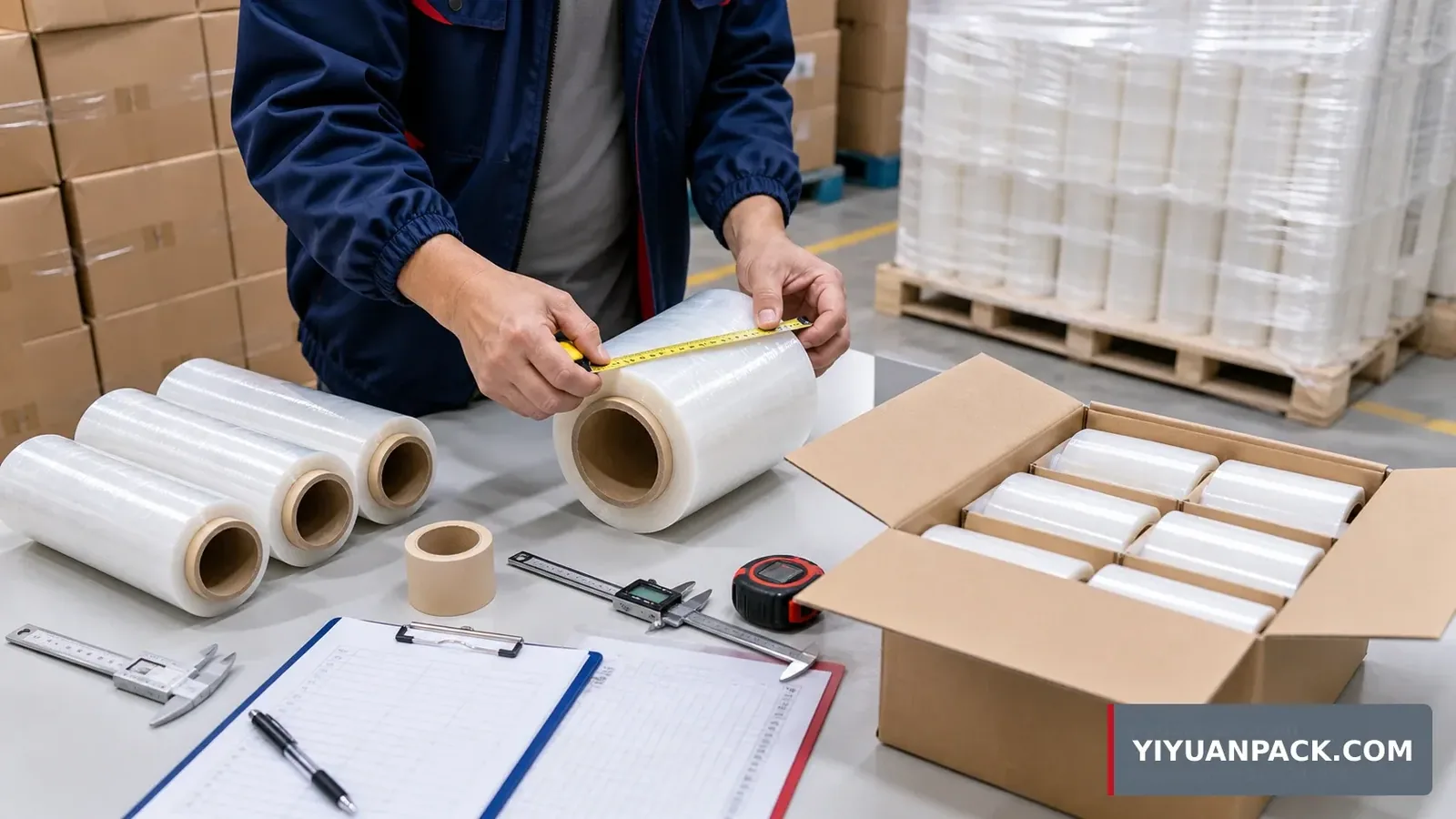
Buyer Checklist Before Ordering PE Jumbo Rolls
- Confirm material and target market documentation requirements.
- Confirm jumbo roll width, thickness, roll weight, diameter, and core size.
- Confirm the finished roll sizes you plan to rewind from the jumbo roll.
- Test sample rolls on the real rewinding or cutting machine.
- Check film breakage, edge quality, static, winding smoothness, and finished roll appearance.
- Ask for packing method, pallet size, gross weight, and container loading estimate.
- Decide whether you truly need jumbo rolls or whether finished rolls would reduce first-order risk.
- Compare total landed cost, not only price per kilogram.
FAQ
What is a PE cling film jumbo roll used for?
It is usually used as a base roll for rewinding, cutting, or converting into smaller household, food-service, or private-label rolls. Buyers should choose the jumbo roll based on the finished product they plan to make.
Should I compare jumbo roll prices by kilogram?
Price per kilogram is useful, but it is not enough. Buyers should also compare usable film length, thickness, waste during rewinding, packing, and container loading. A lower kilogram price can still produce higher landed cost if waste is high.
What core size should I choose?
The right core size depends on your rewinding equipment and handling method. Confirm inner diameter, core strength, and whether your machine can load the target roll weight safely.
How do I test jumbo roll quality before bulk order?
Run sample rolls on your actual equipment if possible. Check unwinding, breakage, edge quality, static, finished roll appearance, and whether the finished rolls fit your planned packaging.
Can YIYUAN supply finished rolls instead of jumbo rolls?
YIYUAN’s cling film range includes jumbo roll and fresh wrap product options. Buyers can review the cling film product category and send target roll format, packing, and market requirements for a matching quote.
When should I choose finished rolls instead of jumbo rolls?
Choose finished rolls if you do not have rewinding equipment, want faster market testing, need retail-ready cutter boxes, or want to avoid conversion waste during the first order. Jumbo rolls make more sense when you already control downstream converting.
What should I send when asking for a jumbo roll quote?
Send target material, jumbo roll width, thickness, roll weight, core size, finished roll size, destination market, annual or first-order quantity, packing needs, and whether you need food-contact documents for a specific market.
Final Notes
If you are sourcing PE cling film jumbo rolls, start from your downstream finished roll, not only from raw material price. YIYUAN can help review width, thickness, core, roll weight, packing, and sample requirements before quotation.