
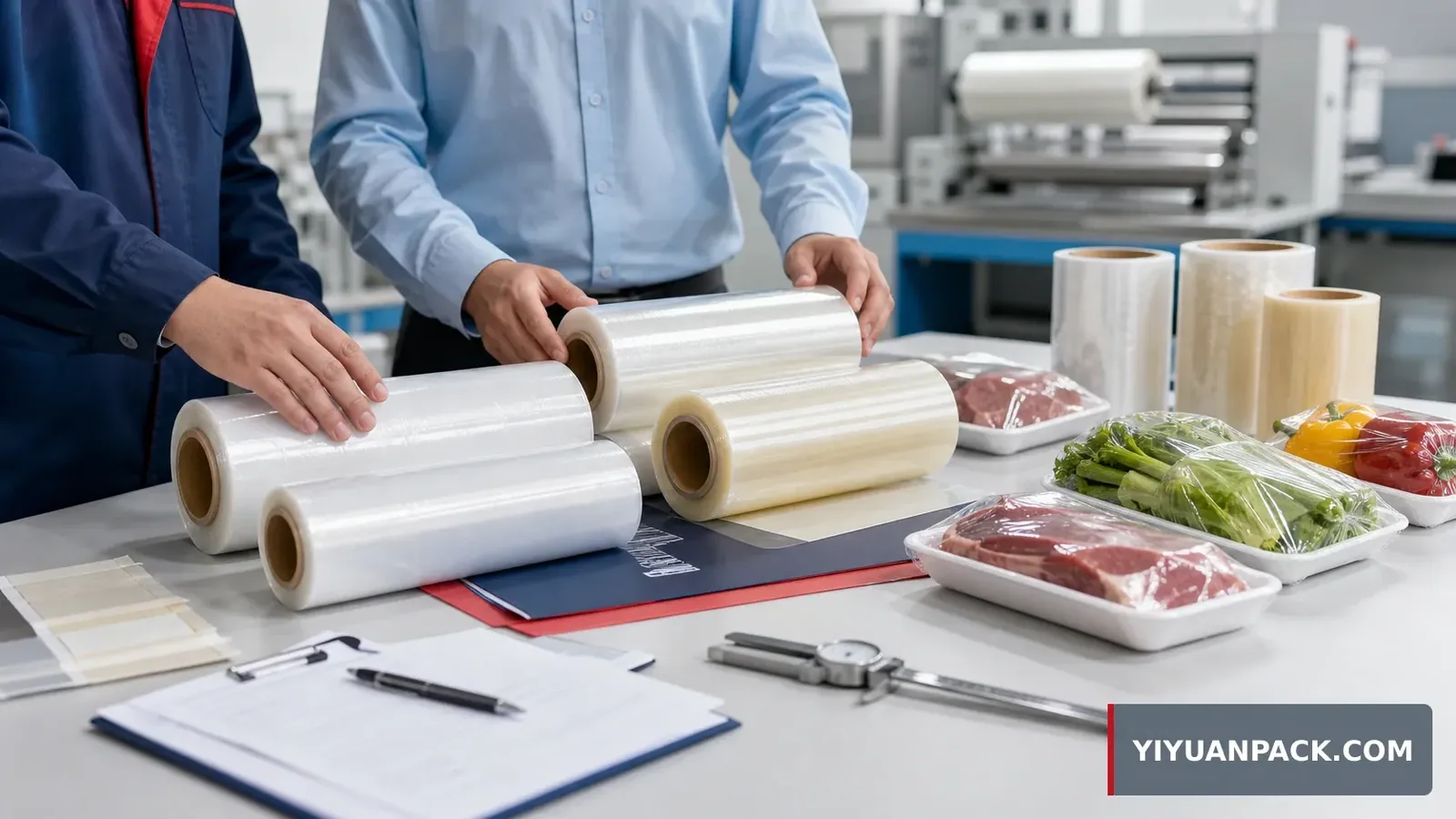
Importers often compare PE cling film and PVC fresh wrap only by unit price, but the better buying decision usually depends on channel, food type, roll format, and the documents required in the destination market. PE can be a practical choice for general food wrapping, jumbo rolls, and private-label household packs. PVC fresh wrap is often selected when buyers need strong cling, high clarity, and tray-wrapping performance for supermarket or food-service use.
Food wrap wholesale
Fresh wrap supplier
Jumbo roll specifications
- Choose PE cling film when you need a widely used food wrap material, jumbo roll supply, and a practical option for household or general food-service packing.
- Choose PVC fresh wrap when tray cling, clarity, stretch, and supermarket display performance are the main buying factors.
- Do not compare PE and PVC by price alone; compare width, thickness, roll length, core size, carton packing, and final use.
- For food-contact claims, ask for the exact documents for the material, order batch, and destination market instead of accepting broad claims.
- Before bulk production, approve samples under the real use condition: trays, fresh produce, deli food, kitchen containers, or rewinding equipment.
This guide was prepared from YIYUAN cling film product information, common B2B food packaging sourcing checks, and public food-contact material references, including the FDA explanation of food-contact substances and the European Commission overview of food-contact material legislation. Product-specific claims are limited to listed specifications; buyers should confirm certificates, test reports, and local market requirements before bulk orders.
PE cling film is usually the safer starting point when an importer needs a flexible general-purpose food wrap range, especially for jumbo rolls, household rolls, and private-label supply. PVC fresh wrap is usually the stronger candidate when the buyer cares most about cling strength, transparency, and tray wrapping. The buying question is not simply “Which material is better?” The better question is: “Which material matches my food type, wrapping method, market requirements, and packing format with the least risk?”
Where PE Cling Film Fits Best
PE cling film jumbo roll is commonly selected for buyers who need a practical food wrap material across several channels. A distributor may use PE jumbo rolls for rewinding into smaller retail rolls. A food-service supplier may use PE rolls for kitchen covering and general wrapping. A private-label buyer may prefer PE when the project includes retail roll sizes, cutter boxes, and stable carton packing.
Representative buyer scenario: A packaging distributor is preparing a first container order for household retail rolls and restaurant supply. The buyer is not only asking for the lowest price. They need to know whether the roll width, thickness, core size, carton size, and label format will work across retail and food-service customers.
For PE, the practical checks are roll dimensions, film stretch, tear behavior, carton strength, and whether the supplier can keep production consistent from sample to bulk order. If the importer plans to rewind jumbo rolls, the buyer should also confirm core size, roll weight, winding tension, and whether the film works with the target rewinding line.
Where PVC Fresh Wrap Fits Best
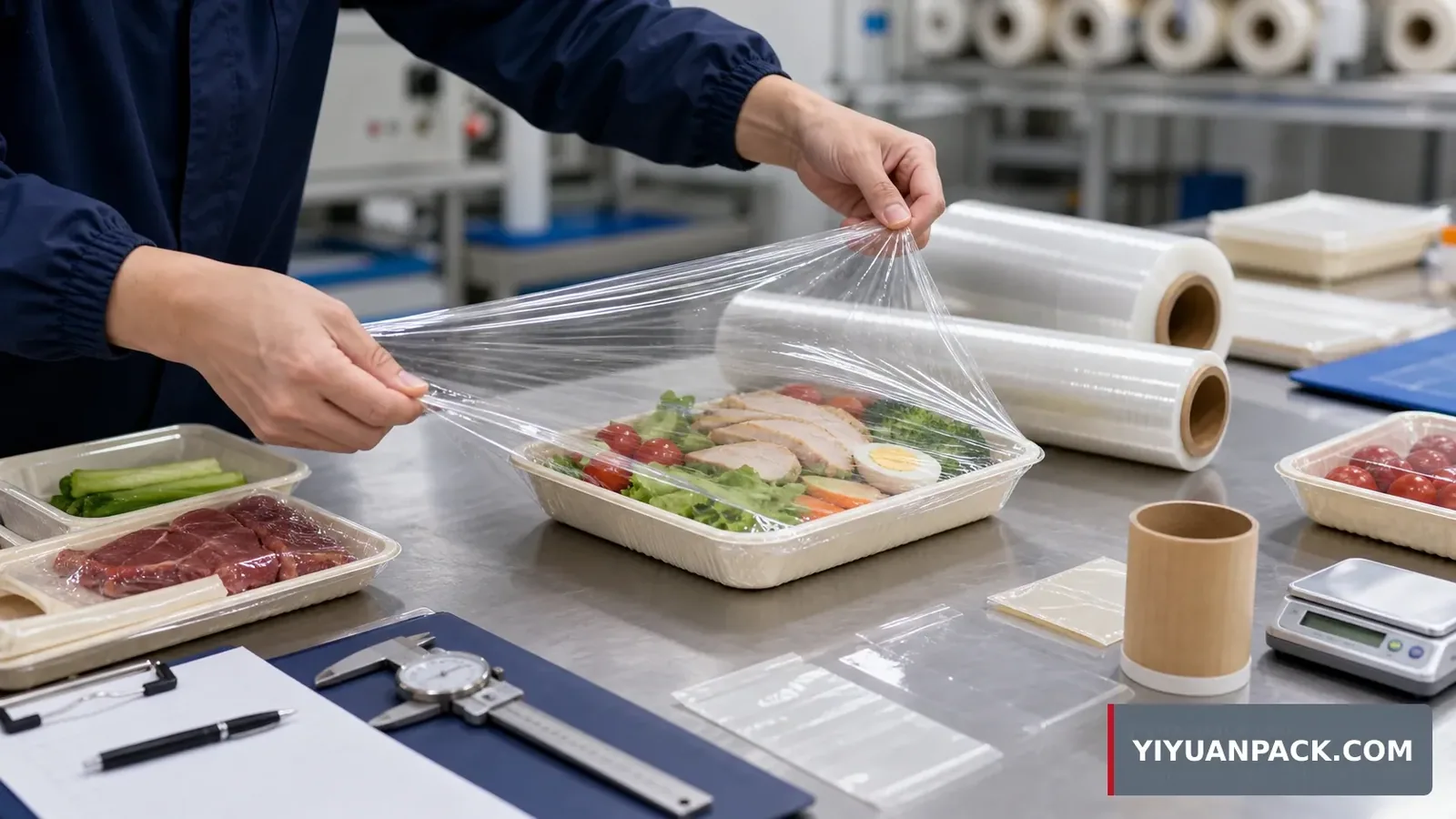
PVC fresh wrap film is often chosen when fresh food presentation matters. Buyers in supermarket, deli, bakery, meat, fish, and produce channels usually care about cling, clarity, stretch, and tray fit. A film that looks good on a specification sheet can still fail if it does not grip the tray edge, tears too easily during wrapping, or looks cloudy under retail lighting.
PVC can be attractive for fresh tray wrapping because buyers often want a film that holds tightly over irregular tray shapes and keeps food visible. However, this does not mean every PVC film is right for every market or food type. The importer still needs to confirm food-contact documents, plasticizer information where relevant, destination market expectations, and the supplier’s test documents for the exact order.
Cost, MOQ, and Packing Factors Buyers Should Compare
PE and PVC orders can look similar on a unit-price quote, but the landed cost can change after carton size, roll weight, pallet loading, and container utilization are calculated. A slightly cheaper roll may cost more if the carton is weak, the packing wastes container space, or the roll length does not match the buyer’s retail promise.
Match MOQ to sales channel
Jumbo roll buyers may calculate by kilograms or tons, while finished roll buyers may calculate by rolls or cartons. Confirm which unit the quotation uses before comparing suppliers.
Check carton and pallet plan
Ask for carton dimensions, gross weight, roll quantity per carton, and pallet loading. These details affect freight cost and warehouse handling.
Approve under real use
Test the film on trays, cutter boxes, rewinding machines, or kitchen containers before confirming bulk production. A hand-pulled sample is not enough for every channel.
Direct Comparison: PE vs PVC Cling Film
| Area | PE Cling Film | PVC Fresh Wrap | Buyer Check |
|---|---|---|---|
| Typical buying logic | General food wrap, jumbo rolls, retail rolls, private-label packing | Fresh tray wrapping, supermarket display, strong cling demand | Match material to channel before asking for final price |
| Key performance point | Stable roll specs, usability, rewinding compatibility | Cling, clarity, stretch, tray fit | Approve samples in the real application |
| Common formats | Jumbo roll, household roll, food-service roll | Cutter box, food-service roll, supermarket fresh wrap | Confirm width, length, core, carton, and pallet plan |
| Documentation | Food-contact documents should match material and market | Food-contact documents should match material, additives, and market | Do not rely on a broad “food grade” claim without documents |
Which Buyer Fits Each Option?
General wrap and jumbo roll supply
Choose PE if your order is mainly for household rolls, general food-service rolls, jumbo roll rewinding, or private-label retail supply where stable specifications and broad use matter more than maximum tray cling.
Fresh tray and display wrapping
Choose PVC if the main channel is supermarket fresh food, deli counters, produce trays, or food-service wrapping where cling, transparency, and tray grip are decisive.
Mixed distribution channels
Compare both PE and PVC samples if one customer sells to restaurants, another to supermarkets, and another to household retail. Mixed channels often need more than one film format.
If your order needs both materials or multiple roll formats, start from the full cling film and fresh wrap product range and separate the inquiry by channel. Mixing jumbo roll, cutter box, and supermarket tray wrap requirements in one line item often creates unclear pricing.
Buyer Checklist Before Bulk Orders
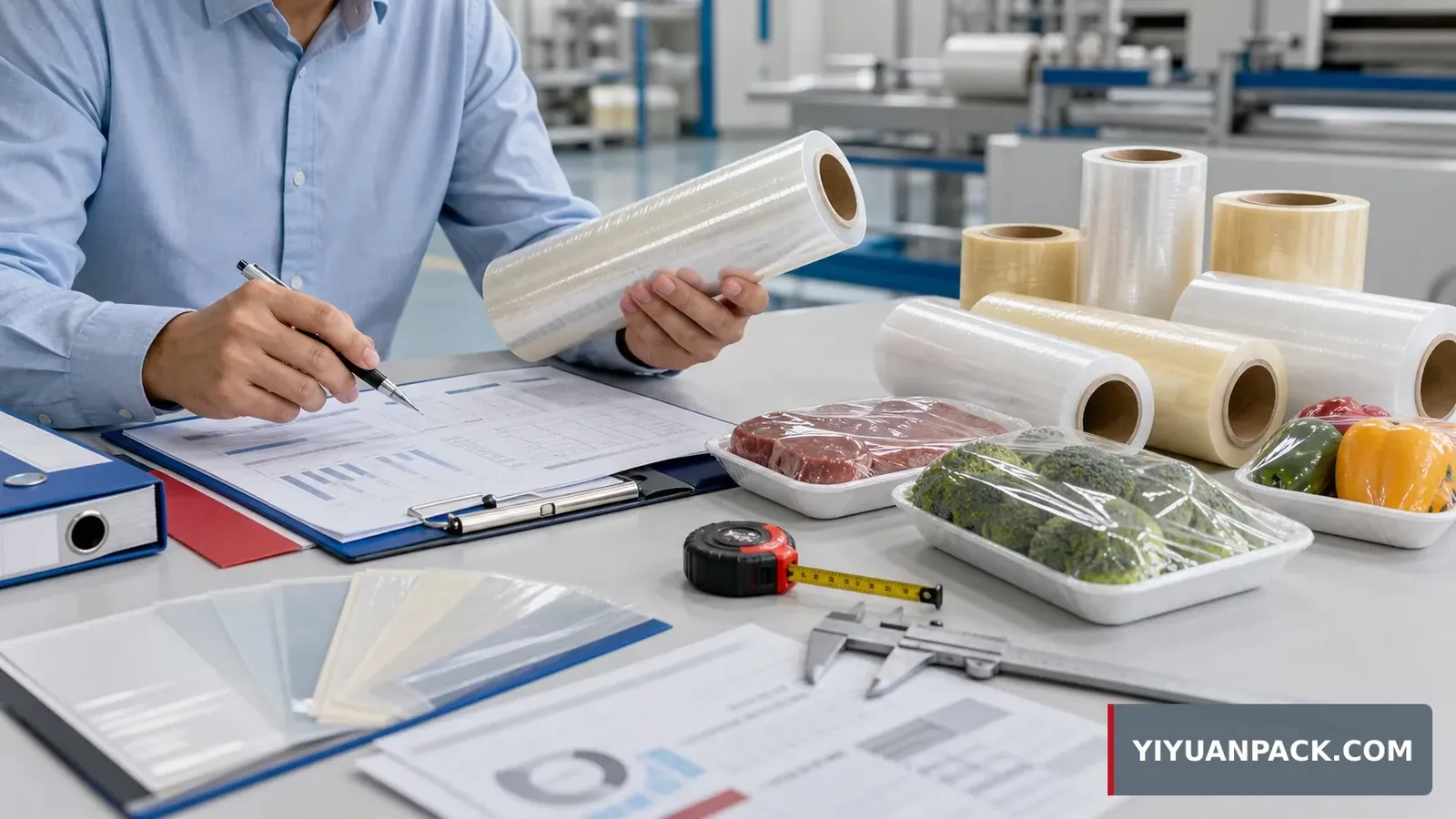
- Confirm material: PE, PVC, or both for different channels.
- Confirm width, thickness, roll length, roll weight, and core size.
- Ask whether the product is supplied as jumbo roll, finished roll, cutter box, or private-label retail pack.
- Request food-contact documents for the exact material and intended market.
- Test samples on the real trays, containers, or rewinding line.
- Compare quote units carefully: per roll, per carton, per kilogram, or per container load.
- Confirm carton size, carton weight, pallet quantity, and container loading plan.
- For custom packing, confirm artwork, barcode, language, and label requirements before production.
FAQ
Is PE cling film better than PVC fresh wrap?
Not always. PE is often practical for general food wrap, jumbo rolls, and retail packing. PVC is often selected for strong cling and fresh tray presentation. The better option depends on use case, market documents, and sample testing.
Which film is better for supermarket tray wrapping?
PVC fresh wrap is often considered for tray wrapping when cling and clarity are important, but buyers should test the exact film on their trays and food types. Do not approve bulk production only by material name.
Which film should a rewinder buy?
A rewinder should focus on jumbo roll width, roll weight, core size, winding tension, thickness stability, and machine compatibility. PE jumbo roll is a common starting point, but the final choice depends on the target finished product.
What documents should importers ask for?
Ask for food-contact documentation that matches the material, product structure, order batch, and destination market. For regulated markets, confirm whether additional testing or declarations are required before shipment.
Can the same supplier provide both PE and PVC film?
Some suppliers can support both, but the buyer should still compare sample performance, lead time, MOQ, carton packing, and document availability for each material separately.
What information should I send for a quote?
Send material preference, roll width, thickness, roll length or weight, core size, packing format, target quantity, destination market, and whether you need private-label printing or standard export cartons. If you are not sure about the specification, send your target use case and current market roll size.
Should I compare price by roll or by kilogram?
Both can matter. Finished retail rolls are often compared by roll or carton, while jumbo roll projects may be compared by weight. For a fair comparison, convert the quote into usable roll length, carton packing, and landed cost for your channel.
Final Notes
If you are choosing between PE cling film and PVC fresh wrap for wholesale import, start with the channel and application, not the price sheet. YIYUAN can review your target roll size, packaging format, and sample requirements so the quotation matches how your customers will actually use the film.