
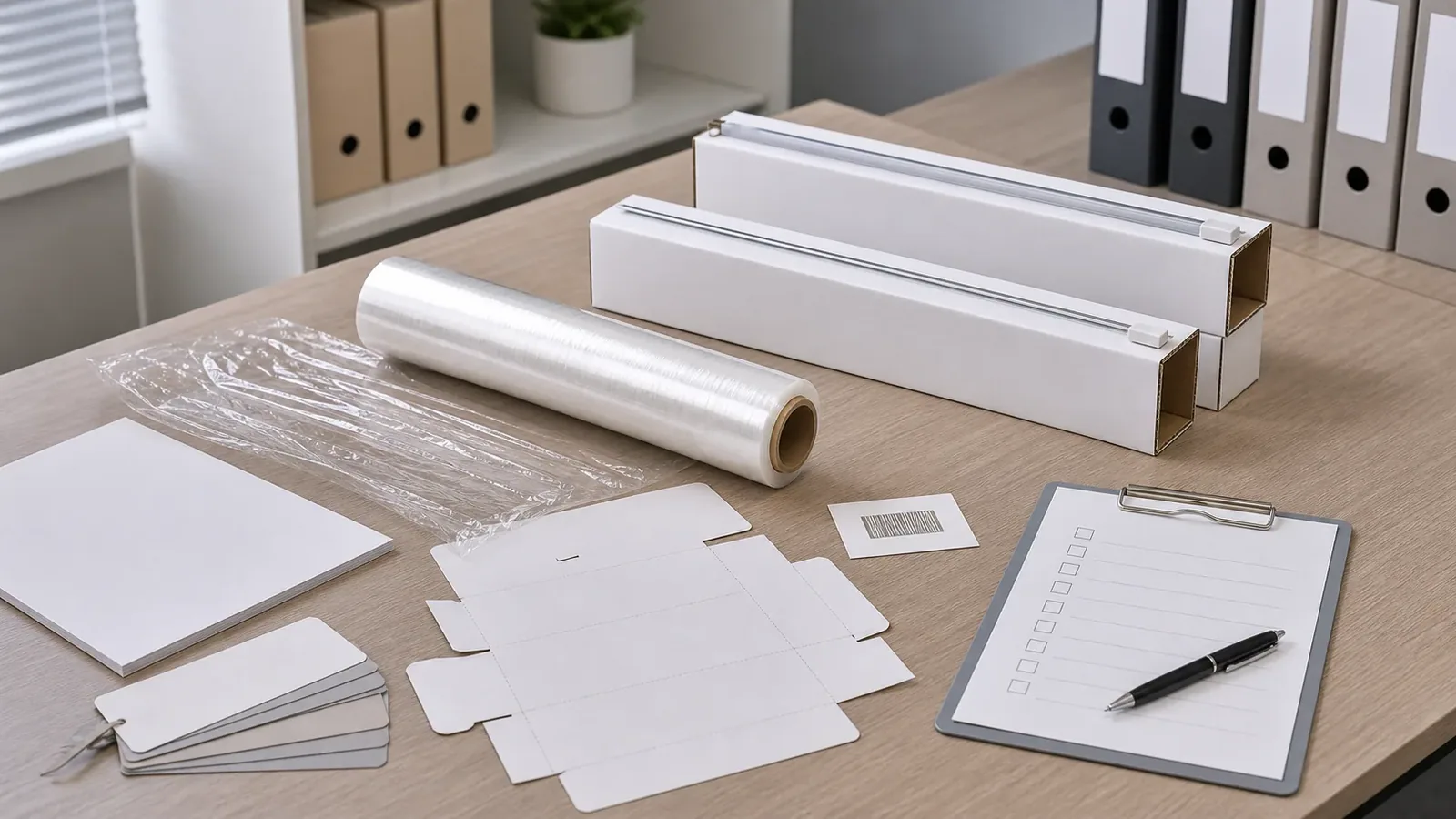
Private-label delays often begin before printing: the film specification is still moving while the designer is already building the box. That creates revised dielines, barcode mistakes, outdated claims, and samples that cannot serve as a production reference. Lock the product, then move through artwork, printed sample, carton marks, and final version control.
Start With Market and Use Case
Private label orders often start with a simple request: “Can you print our brand on the box?” That question is too late in the process. The buyer should first define where the product will be sold and how it will be used. A retail household roll, restaurant cutter box, supermarket fresh wrap roll, and refill roll may need different specifications and packaging.
Once the market is clear, the buyer can decide whether the project needs PE or PVC film, which roll width and length make sense, and whether the packaging should be standard or fully customized.
What this looks like in an order: A distributor wants a private-label cutter box for restaurants and local supermarkets. Before designing the box, the buyer should confirm roll width, length, cutter box structure, barcode needs, carton labels, and whether the market requires specific document wording.
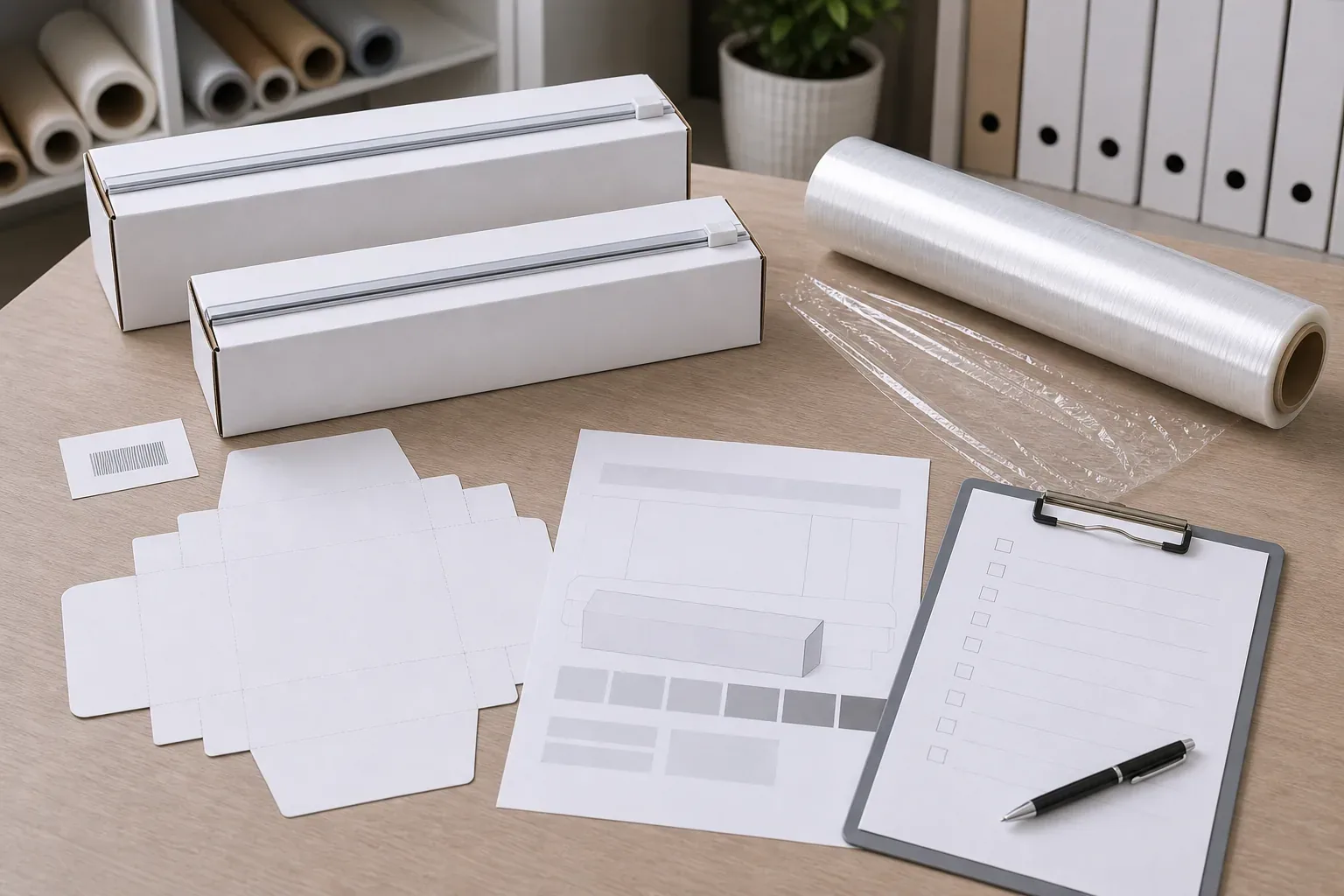
Confirm the Film Specification Before Artwork
Artwork is easier to change than a wrong roll specification. If the buyer approves artwork first, then changes roll length, width, material, core, or box size, the printed box may no longer match the product. This can waste printing cost and delay the order.
| Specification | What to Confirm | Why It Matters for Private Label |
|---|---|---|
| Material | PE, PVC, or another agreed film type | Material affects use case, claims, and document review. |
| Roll size | Width, length, thickness, weight target, and core size | These fields often appear on box or sales materials. |
| Box structure | Cutter box, refill roll box, retail box, or custom format | Dieline and artwork depend on physical packaging. |
| Blade / cutter | Serrated edge, metal blade, slide cutter, or buyer-defined option | Blade area changes box function and approval steps. |
| Carton packing | Pieces per carton, carton size, carton marks, pallet needs | Cartons affect warehouse receiving and repeat-order consistency. |
Buyers can review YIYUAN’s Commercial Cling Film Roll as a starting point, then define whether the private-label project needs a food-service roll, retail roll, or supermarket fresh wrap format.
Artwork Approval Is a Production Control Step
Artwork approval should not be treated as only visual design. Check dieline size, opening direction, blade position, barcode area, language, product claims, warning text, carton marks, and retail shelf readability. If the product is sold through chains or distributors, barcode and label requirements should be confirmed before mass printing.
- Confirm dieline version, box dimensions, opening direction, and blade area.
- Check brand name, product name, size statement, language, and claim wording.
- Confirm barcode type, barcode number, barcode size, and scan area.
- Review any recycling, food-contact, anti-fog, or temperature wording carefully.
- Check carton marks, SKU code, gross weight, net weight, and shipping marks.
- Keep final artwork files and signed proof records before printing.
Barcode and Label Details
Barcode errors are expensive because printed boxes and cartons are hard to reuse. Confirm whether the barcode belongs to the buyer, retailer, distributor, or local market system. The barcode should be tested in the intended sales channel when possible.
Label wording also needs care. Broad claims such as “food grade”, “anti-fog”, “microwave safe”, or special temperature-use wording should not be printed unless the buyer has confirmed product suitability and document support for the target market.
MOQ and Cost Factors
MOQ for private label cling film depends on more than the film. Printed boxes, carton printing, blade type, special roll length, custom width, mixed SKUs, and artwork proofing can all affect minimum quantity and lead time. Buyers who want a lower trial order may need to start with standard film specifications and simpler branded packaging.
Standard roll
Use a proven width and length, then customize the box or carton label for market testing.
Custom box
Custom structure, special blade, and full printing usually require more approval time.
Multiple SKUs
Mixed widths or designs need clear carton labels and warehouse separation rules.
Sample Approval Workflow
A responsible approval workflow checks film, box, artwork, carton, and documents before the factory starts bulk printing and packing. The buyer should not approve production only from a screen preview.
- Approve plain film sample for cling, stretch, tearing, clarity, and roll size.
- Approve box mockup for blade position, box strength, roll fit, and opening direction.
- Approve artwork proof for dieline, barcode, language, claims, and carton marks.
- Approve printed sample or production sample when the project risk justifies it.
- Confirm carton quantity, carton dimensions, gross weight, and pallet plan.
- Confirm document wording and target market requirements before printing claims.
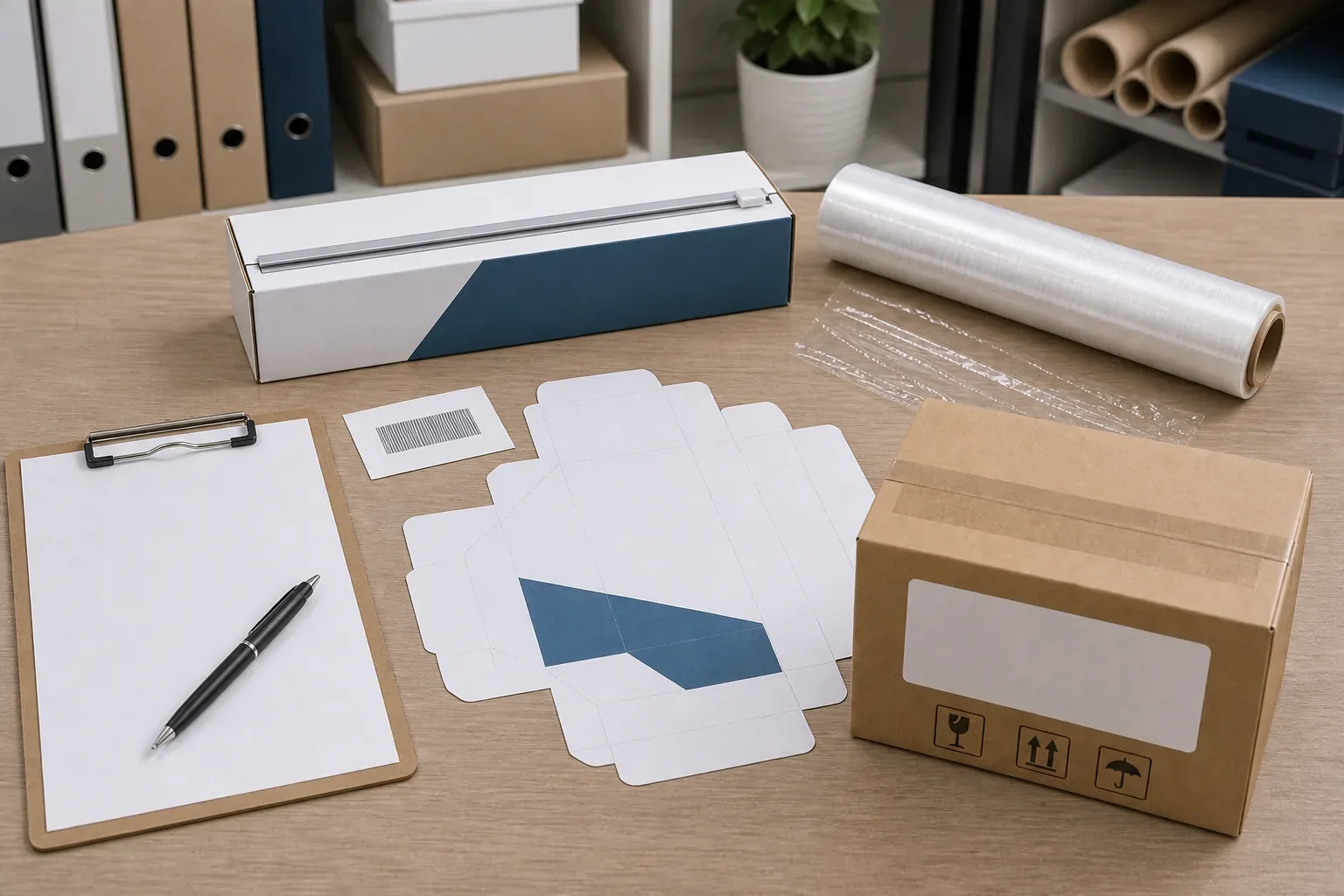
Common Private Label Mistakes
Many private label problems happen before production starts. The buyer may approve attractive packaging while leaving product details unclear. These mistakes are expensive because printed materials cannot always be reused after the specification changes.
- Approving artwork before final roll length, width, material, or box size is confirmed.
- Using unsupported product claims or unclear food-contact wording.
- Forgetting barcode ownership, scan size, or retailer label requirements.
- Ignoring carton marks and warehouse SKU separation.
- Skipping physical box testing because the screen proof looks correct.
- Changing specifications after printed boxes have already been ordered.
Before approving graphics, review the cutter-box blade, board, and roll-fit checks that affect the physical dieline.
Freeze the specification before the artwork
Bring the target film specification, market, artwork status, barcode requirements, SKU count, and launch quantity to the first private-label review.