
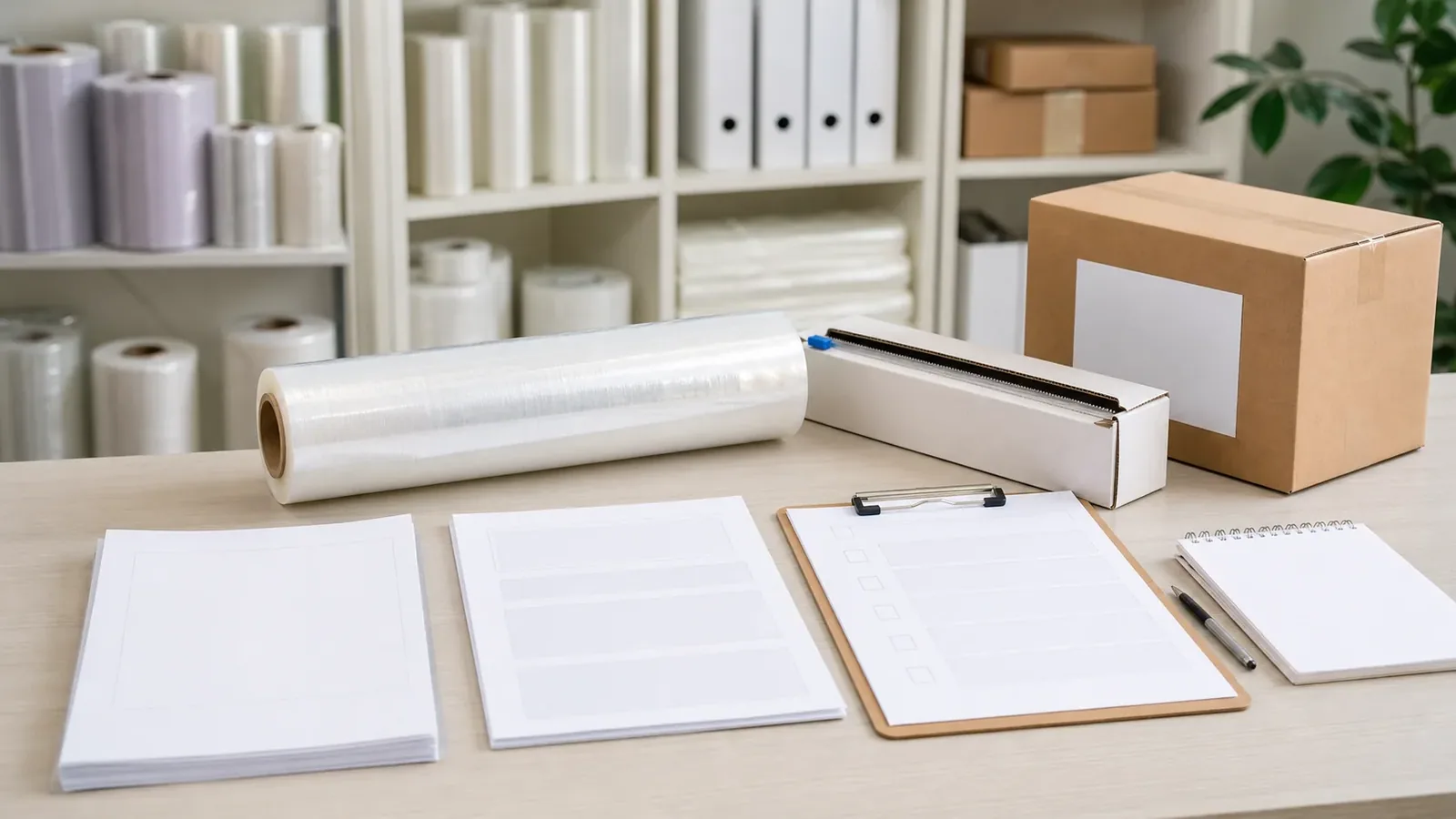
A deposit should start an agreed order, not a new round of product definition. Before payment, the quotation and approval record should answer what is being made, which sample controls it, what remains to be approved, and what evidence will be available before the balance is due. Any blank item becomes a likely dispute later.
Do Not Let Deposit Start Before the Order Is Clear
The deposit is a turning point. Once production materials, printing, cartons, or scheduling begin, changes become slower and more expensive. A buyer should use the pre-deposit stage to remove ambiguity. If the supplier’s answers are vague, the buyer should pause and ask for written confirmation.
This does not mean the process must be complicated. It means the important commercial details should be visible. A short question list can prevent the most common problems: wrong roll length, different roll weight, weak cutter box, missing barcode, unclear carton marks, or unrealistic shipment timing.
A common failure pattern: A buyer is ready to deposit after receiving a good cling film price. Before paying, the buyer asks for roll weight, carton dimensions, approved sample reference, and artwork version. The supplier then discovers the quotation used a standard box, while the buyer expected private label cutter boxes. The correction happens before money is committed.
Ask These Specification Questions First
Specification questions should come before price negotiation is treated as finished. Confirm width, length, thickness or gauge reference, roll weight, core size, material, and packing format. If the supplier cannot connect the price to these details, the quotation is not ready for deposit.
| Question | What the Buyer Needs | Where to Record It |
|---|---|---|
| What exact roll size is quoted? | Width, length, thickness or weight, and core size. | Quotation and proforma invoice. |
| What sample is this order based on? | Sample date, sample code, photo, or approval note. | Sample approval record. |
| Is roll weight controlled? | Target or reference weight where applicable. | Specification sheet. |
| What packaging format is included? | Plain roll, refill roll, cutter box, or private label box. | Quotation and artwork approval. |
| What tolerance or inspection method is expected? | Practical checking method agreed before production. | Order notes or quality checklist. |
Ask About Samples and Approval Evidence
A supplier may say the sample is approved, but the buyer needs to know which sample. Was it a roll sample, a cutter box sample, a printed box sample, or only a photo? Was it tested on the buyer’s actual trays or dispenser? Is the bulk order based on that same reference?
Keep sample photos and approval notes. If the order later has a dispute, a dated sample reference is much more useful than a message saying “sample is okay”.
Ask About Cutter Box and Private Label Details
Cutter box orders need more questions because the packaging affects daily use. Private label orders need even more control because artwork, barcode, language, and claims can block sales if wrong. These details should be confirmed before deposit, not after printing starts.
Usage questions
Ask about blade type, blade fixing, box board, roll fit, pull-out opening, and repeated cutting test.
Version questions
Ask which final artwork file, barcode, claims, language, and carton mark version will be printed.
Cost questions
Ask what happens if artwork or packaging is changed after deposit and before mass printing.
Ask About Carton Packing and Loading
Carton packing affects landed cost, carton damage, warehouse receiving, and customer presentation. Before deposit, buyers should ask for pieces per carton, carton dimensions, gross weight, carton material, carton marks, pallet method, and estimated loading quantity where relevant.
- How many rolls or boxes are packed per export carton?
- What are the carton dimensions and gross weight?
- Will carton marks include SKU, PO number, size, quantity, and barcode?
- Will the shipment be floor loaded or palletized?
- Can the supplier provide carton label photos and loading photos?
- Are mixed SKUs separated clearly for warehouse receiving?
Ask About Documents and Compliance Boundaries
Ask what test reports or food-contact documents are available, which product or material they relate to, and whether the supplier can provide scanned copies for review. The buyer should not ask the supplier to make broad claims that the document does not support.
Good questions include: What is the report number? What sample was tested? What material or product does it describe? What test item is shown? What date is on the report? Does the buyer need additional testing for the destination market?
Ask About Lead Time in Stages
Lead time should be broken into stages. A supplier may give a production lead time, but the real schedule also depends on sample approval, artwork confirmation, deposit arrival, material preparation, printing, packing, inspection, booking, and loading. Ask what the lead time assumes.
- When does lead time start: after deposit, sample approval, or artwork approval?
- Which materials or printed items need preparation before production?
- When can production photos or packing photos be provided?
- What is the expected shipment booking window?
- What delay risks should be confirmed before deposit?
- Who approves changes if schedule, artwork, or carton packing changes?
Ask What Evidence Comes Before Balance Payment
Before paying balance, buyers often want proof that production matches the order. This expectation should be agreed before deposit. Useful evidence can include production photos, finished roll photos, cutter box photos, carton label photos, packing photos, pallet photos, and loading photos.
For larger or higher-risk orders, the buyer may also arrange third-party inspection. If that is needed, the supplier should know the timing and inspection requirements before production is scheduled.
Buyers preparing supplier questions can also review cling film supplier checklist points and send their deposit-stage concerns through the YIYUAN contact page.
The end-to-end first import order checklist helps place these pre-deposit questions in the correct approval sequence.
Do not let the deposit become the specification
Use the checklist to mark each item as agreed, pending, or not applicable, then attach the final version to the order record.