
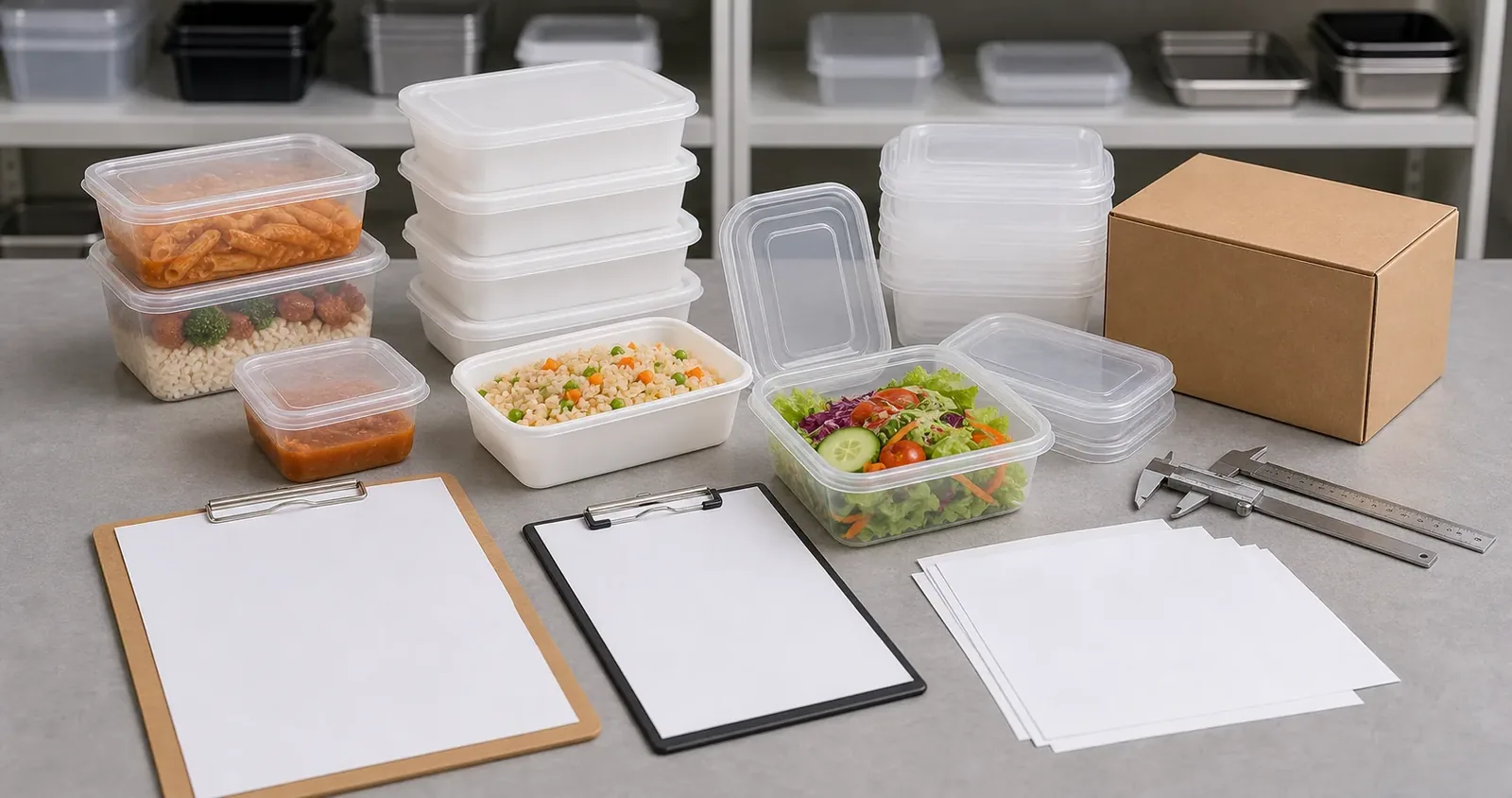
A container that looks right in a catalog can fail at the lid, hinge, stack, courier route, or destination requirement. The safest first order starts with a specific food and operating condition, then turns those conditions into a sample, packing, and shipment approval process.
Start with the food and operating conditions
Material selection follows the meal, temperature, handling route, and expected shelf time, not just the shape.
- Hot, cold, frozen, oily, sauced, or high-moisture food use
- Required capacity, footprint, compartment layout, and lid style
- Microwave, freezer, tamper-evident, or delivery requirements
- Target market, label space, and any sustainability claim you intend to make
Qualify suppliers by the exact construction
The supplier should be able to identify the material, tooling, lid relationship, and production controls for the quoted item.
- Material and intended-use statement tied to the SKU
- Base and lid code, fit method, and compatibility confirmation
- Sample or production images of the same construction and packing
- Clear response on tooling ownership, MOQ, lead time, and change approval
Issue a specification-led RFQ
Separate the product, lid, decoration, and export packing lines so a quote does not leave critical choices open.
- Dimensions, capacity, material, color, and permitted tolerance
- Lid inclusion, nesting direction, and base-to-lid matching code
- Pieces per sleeve, carton, pallet, and container-loading assumptions
- Custom print, mold, artwork, barcode, and approval milestones
Test samples in the real use case
Do not approve a container only on appearance. Test it with the actual food, fill temperature, stacking height, and transport route.
- Lid fit, leakage, hinge or rim performance, and opening force
- Deformation after hot fill, refrigeration, freezing, or microwave use as relevant
- Nesting, de-nesting, label adhesion, and stack stability
- Carton drop, compression, and pallet handling checks for the chosen packing
Release production with a controlled handoff
The first bulk order should document the approved construction, packing, inspection points, and shipping documents in one record.
- Approved sample, specification, artwork, and mold terms retained by both parties
- Pre-shipment sampling, carton count, and base/lid matching checks
- Commercial invoice, packing list, shipping marks, and bill of lading instructions confirmed
- Destination-market requirements checked by the importer before shipment
Risks and checks
| Risk | Check | Action |
|---|---|---|
| The base and lid are quoted separately | Confirm matching SKU codes, order ratio, fit, and spare-lid policy. | Approve a complete set and inspect base/lid matching before shipment. |
| A material claim is copied from a catalog | Tie the claim to the exact SKU, intended use, and evidence available for buyer review. | Avoid making market claims until your destination requirements are confirmed. |
| Mold costs or ownership are unclear | State ownership, storage, maintenance, approval, and reuse terms in writing. | Release tooling only after drawings and approval milestones are defined. |
| Cartons collapse or containers deform in transit | Review nesting, top-load, carton count, pallet pattern, and container loading. | Use a packing approval and pre-shipment inspection checklist. |
Frequently asked questions
What information should I send before requesting a container quote?
Describe the food, fill temperature, use conditions, target capacity and dimensions, material preference, lid requirement, packing, quantity, destination, and any branding or labeling requirements.
Should I approve a container based on a dry sample?
No. Test a complete base-and-lid set with the actual food and operating conditions, including filling, stacking, storage, and delivery where relevant.
Are food-contact and import requirements the same in every market?
No. Requirements depend on the destination and intended use. Confirm them with the appropriate local authority, customs broker, or qualified adviser before you release production.