
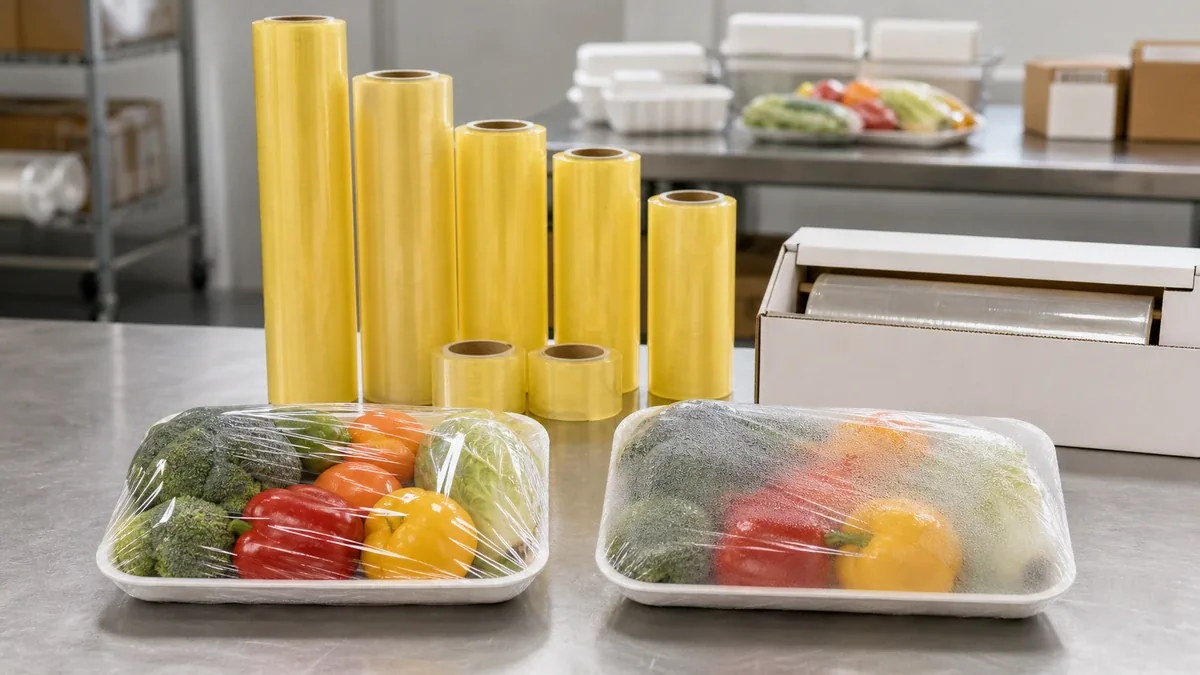
Cloudiness does not always come from the film. Condensation, a wet tray, uneven stretch, fingerprints, cold-chain transitions, and display lighting can all change what the buyer sees. Recreate the finished pack under the same background, temperature, and observation time before blaming film haze.
Describe Where the Cloudiness Appears
Record whether the haze is uniform or patchy and whether it appears on the roll, the outside surface, the food-facing surface, or in the air space under the wrap. Note when it becomes visible: immediately after wrapping, after chilling, after display, or after temperature change. Photos should use the same background, lighting, angle, and time point.
Questions that sharpen a cloudy-film complaint
How can condensation be separated from film haze? Record which surface looks cloudy, then compare dry and real-food packs through the same temperature route. Observe before and after wiping only where that action will not destroy evidence.
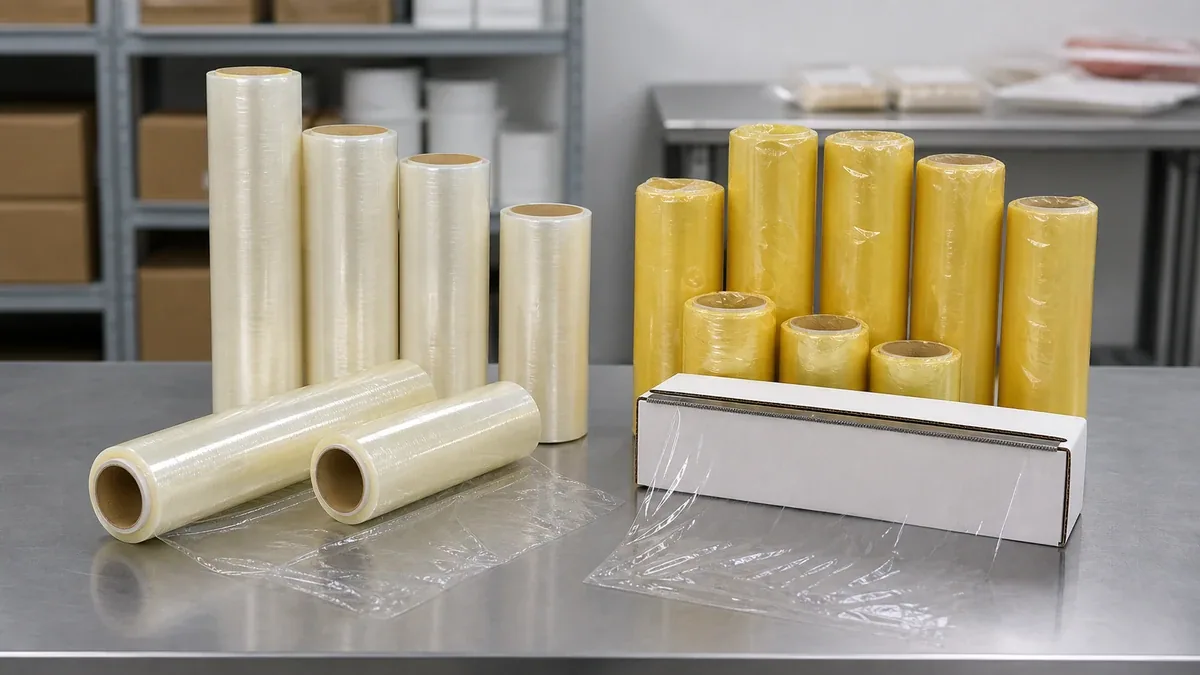
Is a loose-sheet clarity test useful? It is a screening view, not a finished-pack result. Select the actual format from the commercial cling film range and trial it on the intended tray, food, stretch, and display setup.
| Possible Factor | Controlled Check | Evidence to Keep |
|---|---|---|
| Film appearance | Compare unwrapped samples from complaint and retain rolls | Lot, roll position, background, lighting |
| Condensation | Observe both film surfaces and food at fixed time points | Food temperature, storage, timing, ventilation |
| Stretch | Wrap identical trays with a repeatable pull and overlap | Operator, dispenser, coverage, wrinkles |
| Surface contamination | Use clean tools and inspect handling contact | Gloves, counter, cutter, tray condition |
| Lighting | Compare under the actual display and a controlled reference | Light location and viewing angle |
Run a Side-by-Side Pack Trial
Use the same tray, food or controlled test load, film width, overlap, operator, dispenser, storage, and viewing schedule. Include an approved reference roll where possible. Label packs in a way that does not obscure the view. Compare appearance before wrapping, immediately after wrapping, and at relevant storage points.
Do Not Confuse Condensation With Film Haze
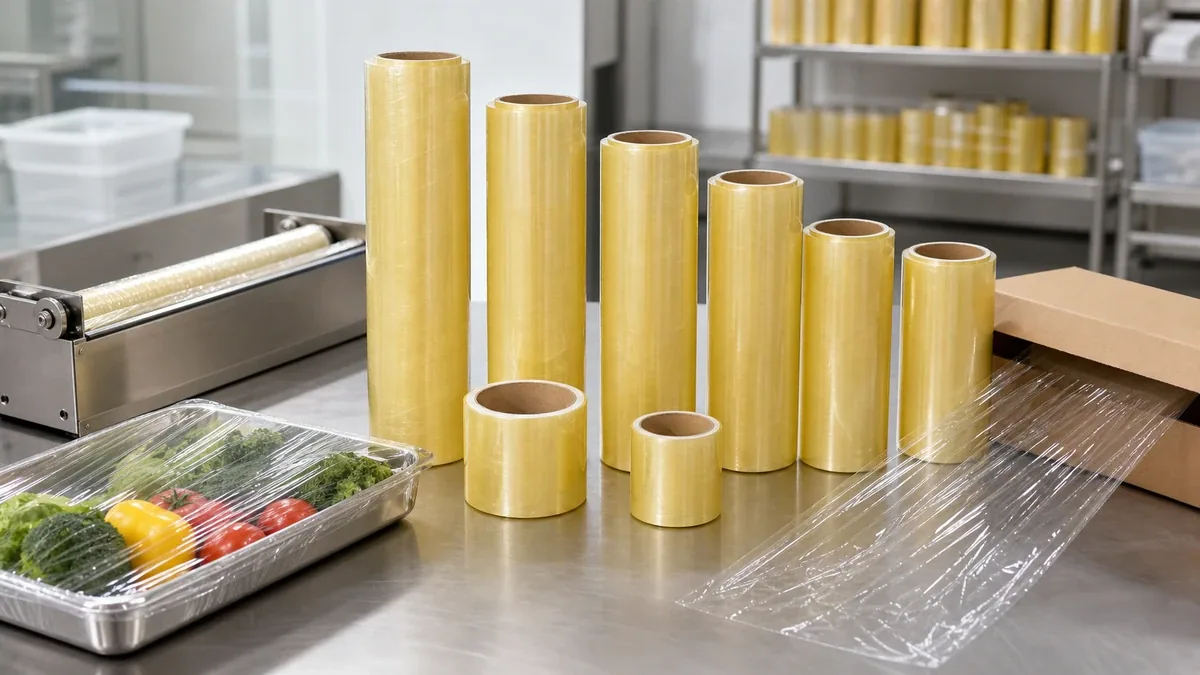
Moisture droplets can scatter light and change display appearance even when the film itself is clear. Check both surfaces and observe whether the appearance changes as temperature equalizes. Food condition, fill temperature, refrigeration, air space, tray geometry, and wrapping tightness may all change condensation. Avoid promising a universal anti-fog result unless that exact product and use condition have supporting evidence.
Check Roll and Storage History
Compare the beginning, middle, and later sections where practical. Record wrinkles, pressure marks, blocking, dirt, damaged edges, and core deformation. Retrieve receipt and storage records from the warehouse control process. If an odor or taste observation accompanies the appearance issue, handle it under the separate sensory complaint checklist.
Make the approval visual: Store reference photos of an acceptable wrapped pack under the intended display setup. Words such as “clear” and “slightly hazy” are interpreted differently without a controlled reference.
Send Actionable Supplier Evidence
Include complaint and reference lot numbers, roll section, photos with consistent setup, actual food and tray, wrap method, storage timeline, and affected quantity. State whether the issue is visible on loose film, only after wrapping, or only after storage. That narrows the investigation more effectively than a cropped photo of one tray.