
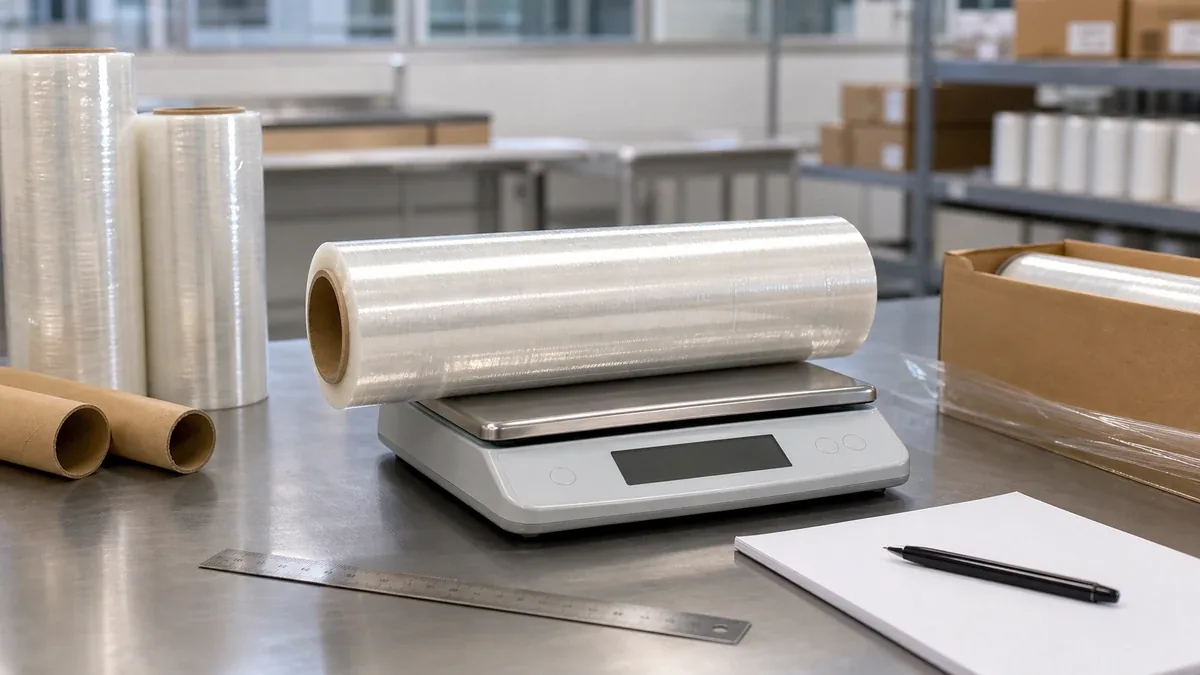
Seeing “300 m” on a roll label still leaves three quantities to reconcile: usable film length, net film mass, and gross roll weight with the core and pack. They can support one another, but they are not substitutes. The practical job is to decide which quantity was sold and how it will be checked.
Start With the Commercial Basis
Before choosing a verification method, identify what the supplier actually promised. A price per roll may be based on a declared length. A price per kilogram may be based on net film mass. A retail roll can include a heavy core and cutter box that matter to landed cost but do not add usable film.
A common comparison error: Supplier A quotes a lower price per roll and Supplier B quotes a higher price. The first roll uses a heavier core and contains less net film. Without separating core weight, film weight, width, thickness, and length, the buyer cannot tell which offer provides the lower usable-film cost.
Gross Roll Weight Is Not Net Film Weight
Gross roll weight normally includes the film and core, and may be reported differently if bags, labels, or dispensers remain on the sample. The inspection instruction should state what is removed before weighing. Core construction and moisture condition can also vary, so a core reference should come from the approved product rather than a guess.
| Quantity | What It Includes | Buyer Use |
|---|---|---|
| Gross roll weight | Film plus core under the agreed weighing condition | Quick incoming comparison when the method is consistent. |
| Core weight | Empty approved core of the same size and construction | Used to estimate net film weight. |
| Net film weight | Gross roll weight less the agreed core reference | Useful when buying or comparing film by mass. |
| Declared length | Usable film length stated for the roll | Useful for retail claims, kitchen yield, and cost per meter. |
| Direct unwind length | Length measured while consuming a sample roll | Strong evidence for selected samples, but destructive and time-consuming. |
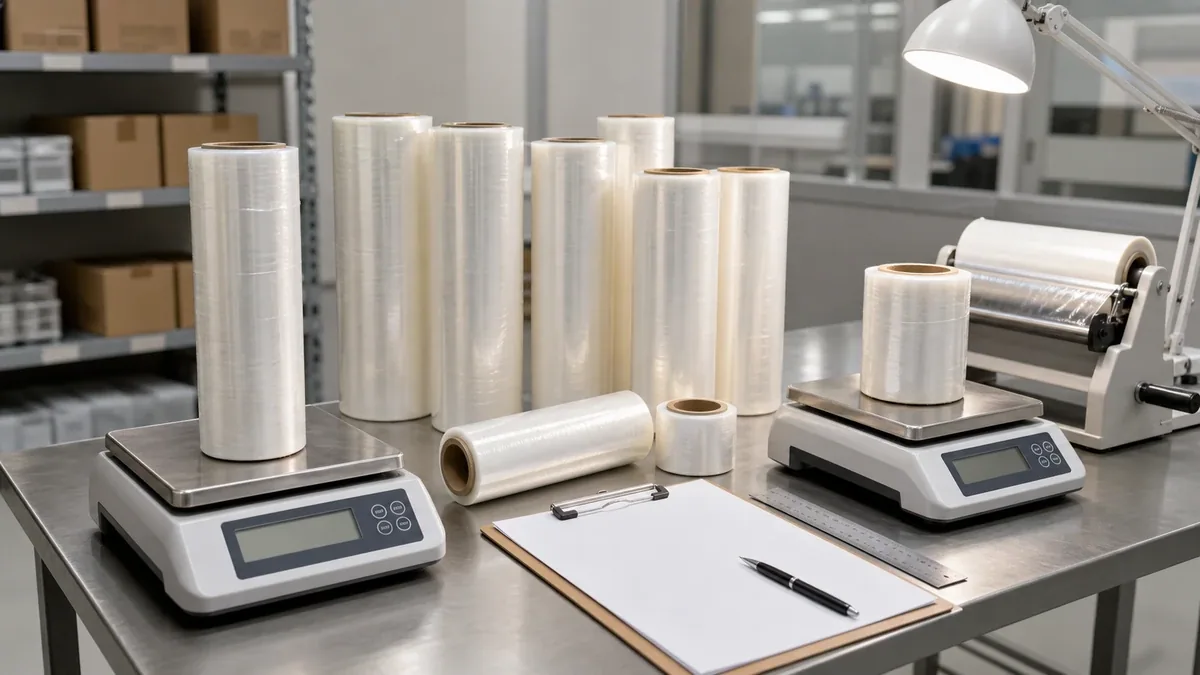
Two common roll-quantity questions
Is weighing the roll faster than unwinding it? Yes, but weight is a screening method unless thickness, width, material density, core weight, and packaging deductions are controlled. A direct unwind remains useful when declared length is the contractual quantity.
Should every roll be destructively unwound? Usually not. Buyers can combine selected unwind tests with broader net-weight checks. Start from the exact format on the commercial cling film range and state which test decides a borderline result.
Calculation Can Screen Rolls, Not Settle Every Dispute
Length can be estimated from net film mass when width, thickness, and the relevant material density are known. The calculation is only as reliable as those inputs. A nominal thickness, assumed density, or unverified core weight can make a neat spreadsheet produce a misleading length.
Use calculation as a screening and comparison tool. If a roll appears short, confirm the thickness-measurement method, core reference, width, and formulation input before assigning a shortage. The earlier guide on cling film thickness tolerance explains why a single micron reading is not enough.
Direct Unwinding Shows Usable Length
A controlled unwind can measure actual film length from a selected roll. It consumes the sample and needs a defined setup so stretching, slipping, overlap, or measuring-wheel error does not distort the result. Record the roll label, starting condition, device, operator, and any unusable material at the beginning or end.
- Select the roll according to the agreed sampling plan, not after looking for a convenient sample.
- Record gross weight and label details before unwinding.
- Use a measuring method suitable for continuous flexible film.
- Avoid pulling tension that intentionally stretches the film during measurement.
- Record splices, torn sections, damaged edges, or unusable tail material separately.
- Weigh the empty core after the unwind and compare it with the reference.
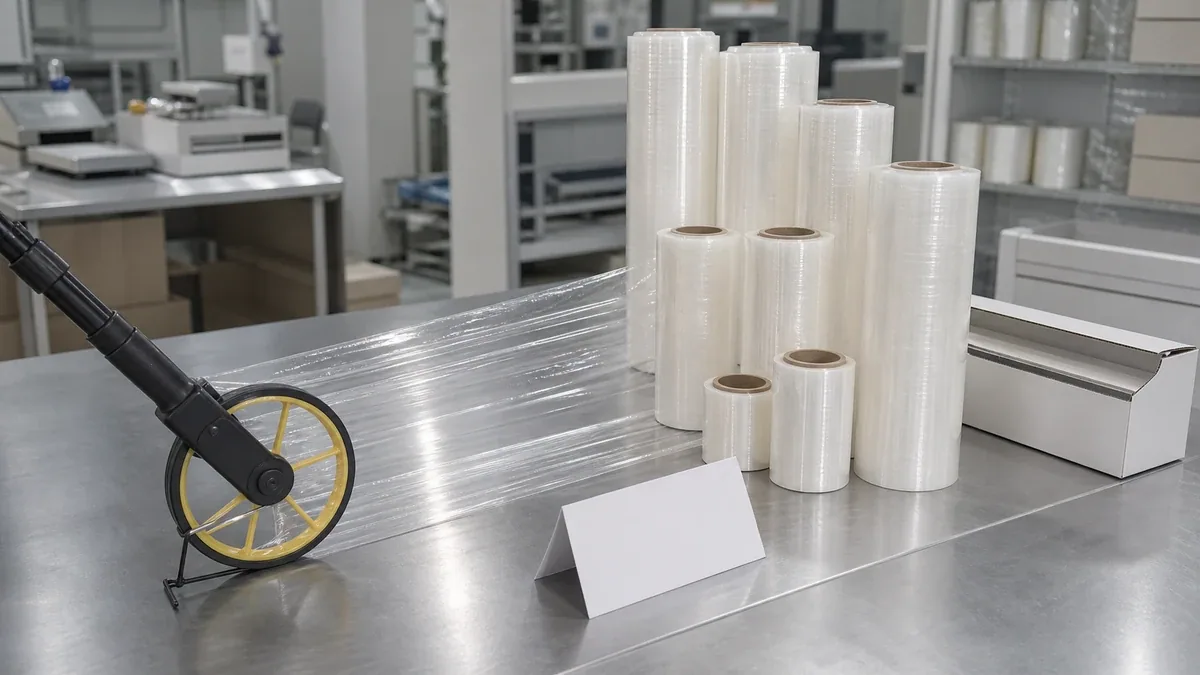
Use a Layered Inspection Plan
It is rarely efficient to unwind every roll. A practical order may use gross-weight checks across a broader sample, net-weight calculations on selected rolls, and destructive length verification on a smaller agreed subset. The buyer and supplier should set the escalation rule in advance: for example, what additional checks follow an unusual weight or length result.
Keep roll quantity checks connected to pricing. The article on comparing cling film quotations shows why width, thickness, length, roll weight, and carton packing must be normalized before price comparison.