
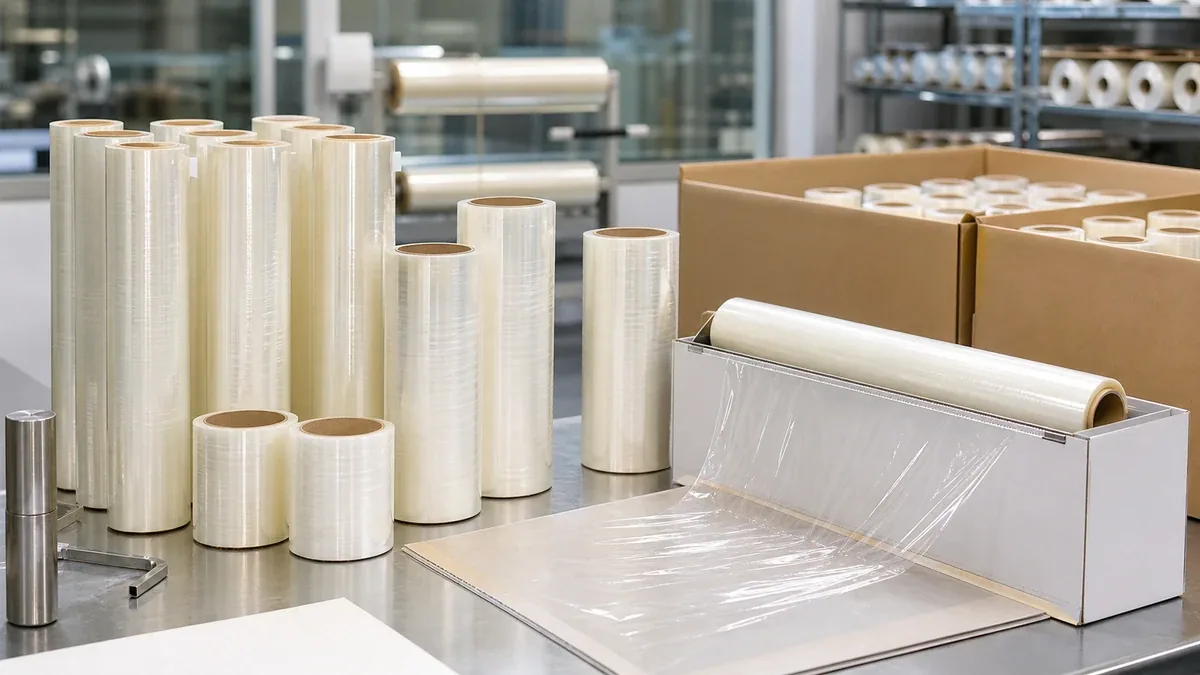
Finished-roll fit depends on more than film width. A roll can meet that tolerance and still scrape inside its dispenser because the core is long, the web is off-center, or the outside diameter changes under pressure. Inspect these dimensions as one system and record how the soft roll was supported during measurement.
Define Each Dimension Without Ambiguity
| Feature | Define in the Specification | Typical Fit Concern |
|---|---|---|
| Film width | Measurement tool, roll condition, and permitted range | Narrow coverage or contact with box walls |
| Core length | End-to-end length and end condition | Dispenser fit and lateral movement |
| Core overhang | Film-to-core position at both ends | Uneven support or exposed core |
| Roll-edge alignment | Permitted unevenness across the wound face | Snagging, edge damage, unstable unwind |
| Outside diameter | Where and when it is measured | Box clearance and roll quantity consistency |
Questions to settle on the dimensional drawing
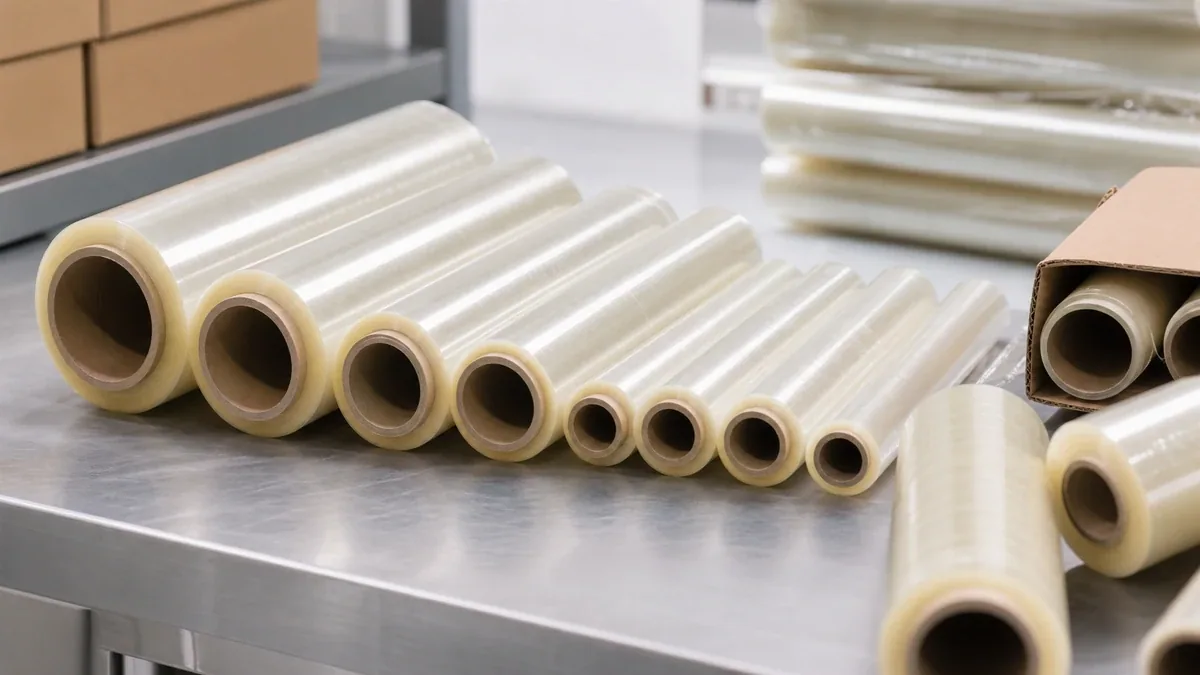
Should roll outside diameter be a hard acceptance limit? Only with a defined support and measurement method. A soft roll can change shape when squeezed or left unsupported.
How much web offset is acceptable? Set it from dispenser and cutter-box clearance, not from appearance alone. Compare the intended width, core, and pack with the commercial roll specification, then record actual fit-test evidence.
Which readings belong in the inspection report? Record film width, core length, offset at both ends, outside diameter under the agreed support condition, tool resolution, roll identity, and individual results. A single pass mark makes later fit complaints almost impossible to reconstruct.
Use the Same Conditioning and Method
A soft film roll can change shape when squeezed or left unsupported. State whether outside diameter is measured while the roll rests, on a spindle, or in the finished box. For width, avoid stretching the web or measuring a wrinkled loose edge. Record the tool and resolution used.
Keep the roll label and sample ID in measurement photos. If the supplier and inspector use different reference points, apparent disagreements may be method differences rather than production variation.
Sample Across Time and Position
Do not take all units from the top of one carton. The agreed plan can spread checks across cartons, packing time, machine lanes, or jumbo-roll sources. The quantity and acceptance rules belong in the purchase specification or inspection instruction; there is no useful universal sample count for every order.
Pair Dimensions With a Fit Test
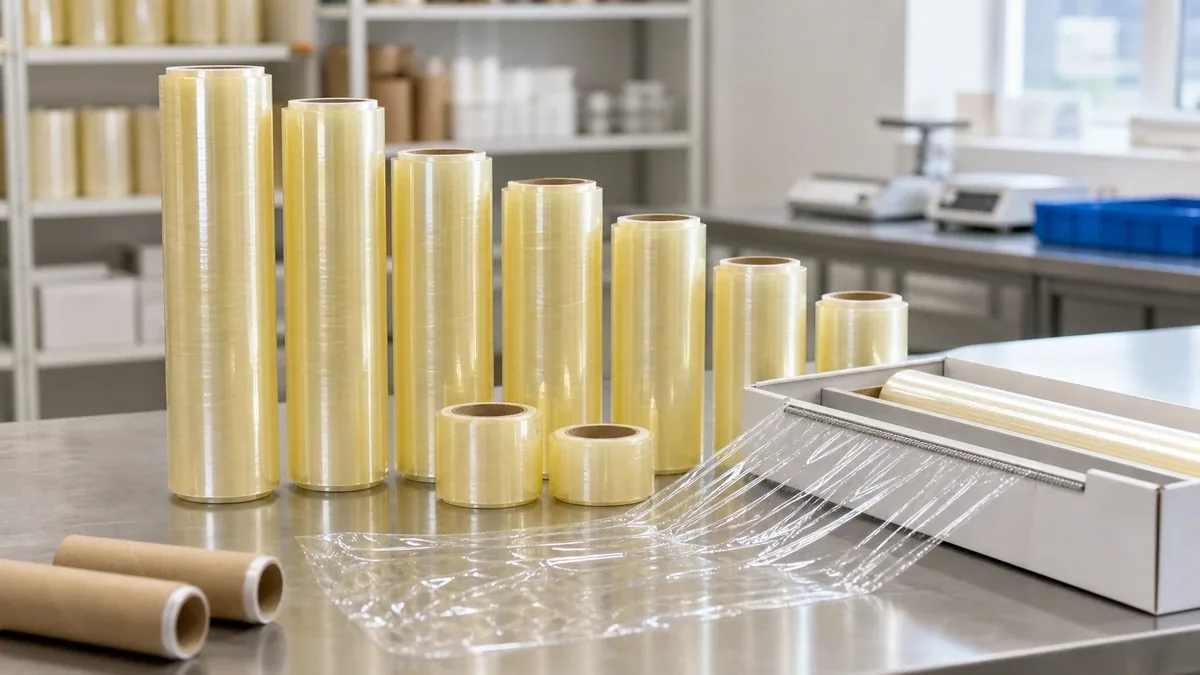
Install measured rolls in the approved dispenser or final cutter box. Check lateral play, rotation, contact with side panels, pull angle, edge tracking, and cutting. The core and dispenser compatibility checks cover the core interface in more detail.
Do not average away a fit problem: A roll can have an acceptable average width while one edge is uneven or the film sits off-center on the core. Record individual values and the corresponding functional result.
Handle Nonconformity by Pattern
Separate isolated damage from a consistent lane, shift, or winding pattern. Useful corrective evidence includes roll IDs, carton locations, measurements at both ends, face photos, core photos, and fit-test videos. For converter-side controls, see jumbo roll slitting and rewinding yield.