
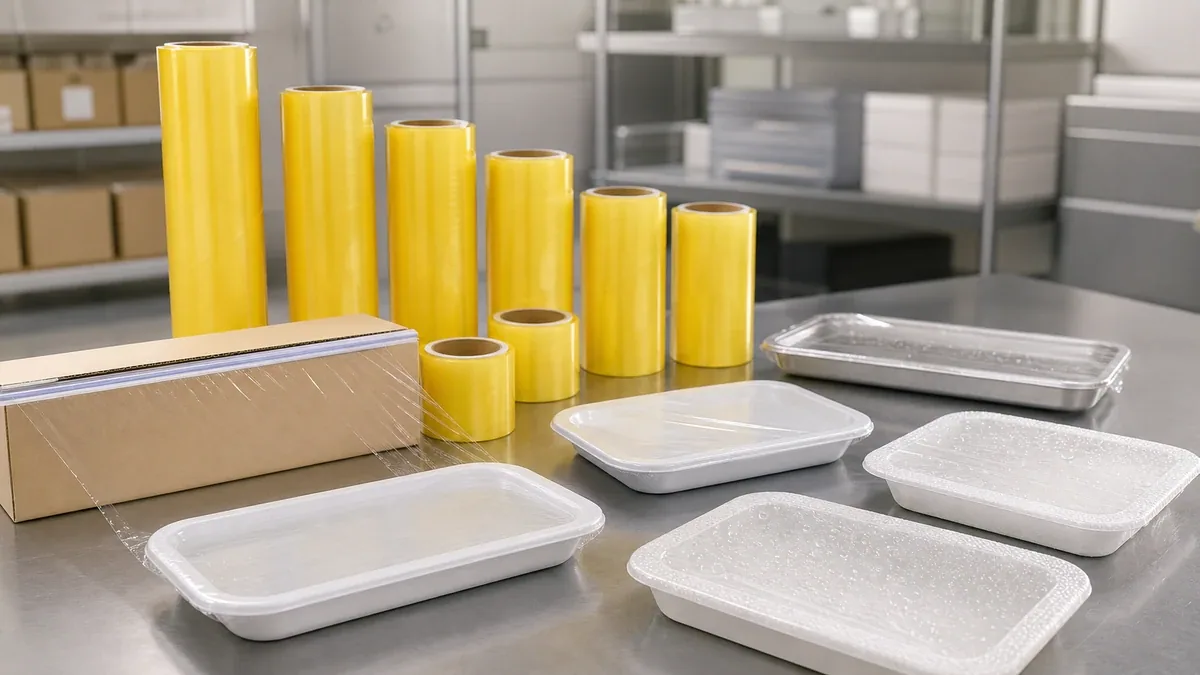
When cling changes from one tray to another, the film may not have changed at all. Rim width, texture, oil, water, temperature, molded marks, film tension, and overlap determine how much clean contact is available. Treat the tray and film as one packaging system during approval.
Start at the Tray Rim
Film normally relies on clean, continuous contact around a usable rim or against itself. A narrow rim, interrupted flange, sharp corner, heavy texture, or molded mark reduces the available contact area. Measure the actual surface and note where the first release occurs after wrapping.
Separate Clean, Wet, and Oily Conditions
Run a controlled comparison using identical trays with clean dry rims, measured water exposure, and representative food or oil contamination. Do not wipe some samples and leave others untreated without recording it. Moisture may form during filling or refrigeration even when the rim began dry.
| Variable | Hold Constant | Observe |
|---|---|---|
| Tray surface | Film, food load, tension, operator | Initial contact and release location |
| Rim moisture | Tray lot, moisture amount, wrap sequence | Seal continuity before and after storage |
| Temperature | Pack design and observation time | Condensation, tension change, edge lift |
| Stretch and overlap | Tray and surface preparation | Wrinkles, pullback, film-to-film hold |
Control the Wrapping Method
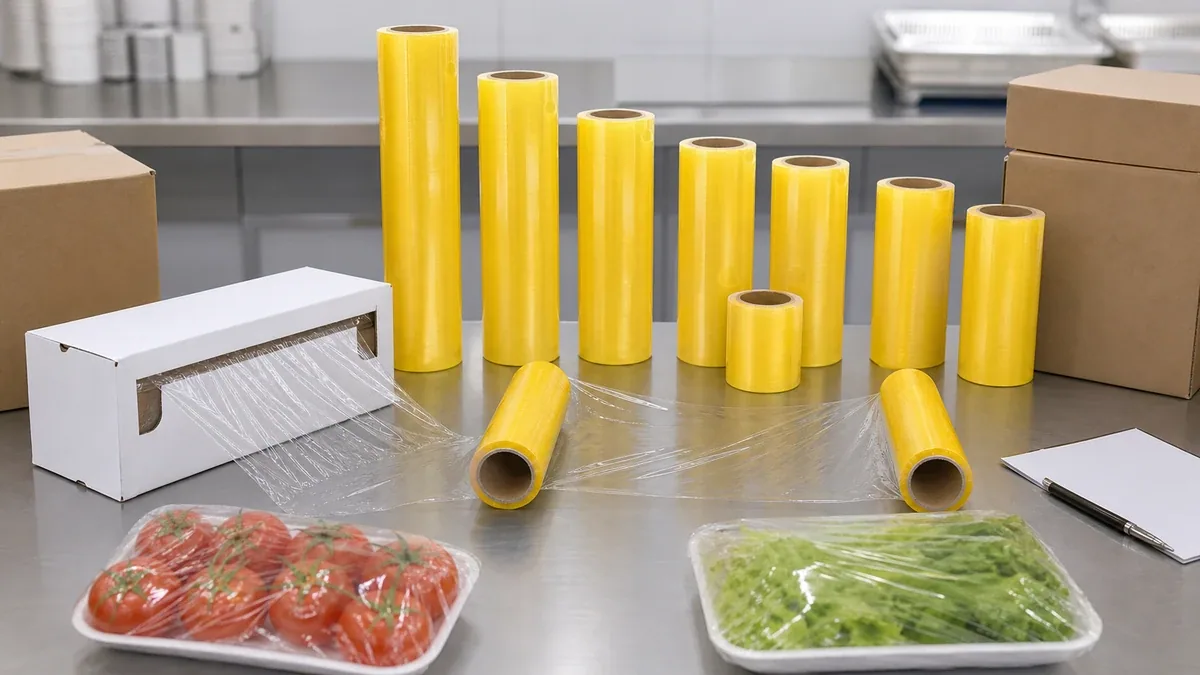
Film that is barely laid on the rim behaves differently from film pulled tightly around sharp corners. Define dispenser, unwind direction, pull length, stretch, overlap, bottom contact, cutting method, and operator sequence. Excessive tension can pull film away as the pack relaxes; too little tension may leave wrinkles and gaps.
Observe the Pack Over Its Real Route
Check immediately after wrapping, after the relevant chilled or room-temperature hold, after stacking, and after simulated shelf handling. Record whether the change comes from film release, condensation, tray flex, food movement, or physical damage. Use supplier-stated film conditions and the food business’s own safety controls.
Useful complaint evidence: Send the tray code, rim photos, food type, surface condition, film lot, dispenser, wrapping video, time-temperature history, and an unopened roll. “Not sticky” does not reveal which interface failed.
Choose the Film and Tray as One Pack
Compare candidate rolls using the same tray trial and record both unwind behavior and pack hold. The unwind and tack consistency checks cover roll-side variation; the cling film troubleshooting guide helps separate common process causes.
Questions to ask at the tray, not only at the roll
Should tack be tested on a standard smooth plate? That can compare samples, but it does not predict performance on a narrow, textured, wet, or oily production tray. Include the real rim in final approval.
What evidence helps when release happens only at one corner? Mark the first release point, rim geometry, contamination, wrapping direction, tension, and time. Tie the trial to the selected commercial film format so another thickness or material is not compared by mistake.
Can the supplier set one universal tack requirement? A laboratory control may help monitor film consistency, but commercial acceptance still needs the buyer’s tray, food condition, wrapping method, and observation route. Record both the controlled film check and the pack trial instead of merging them.