
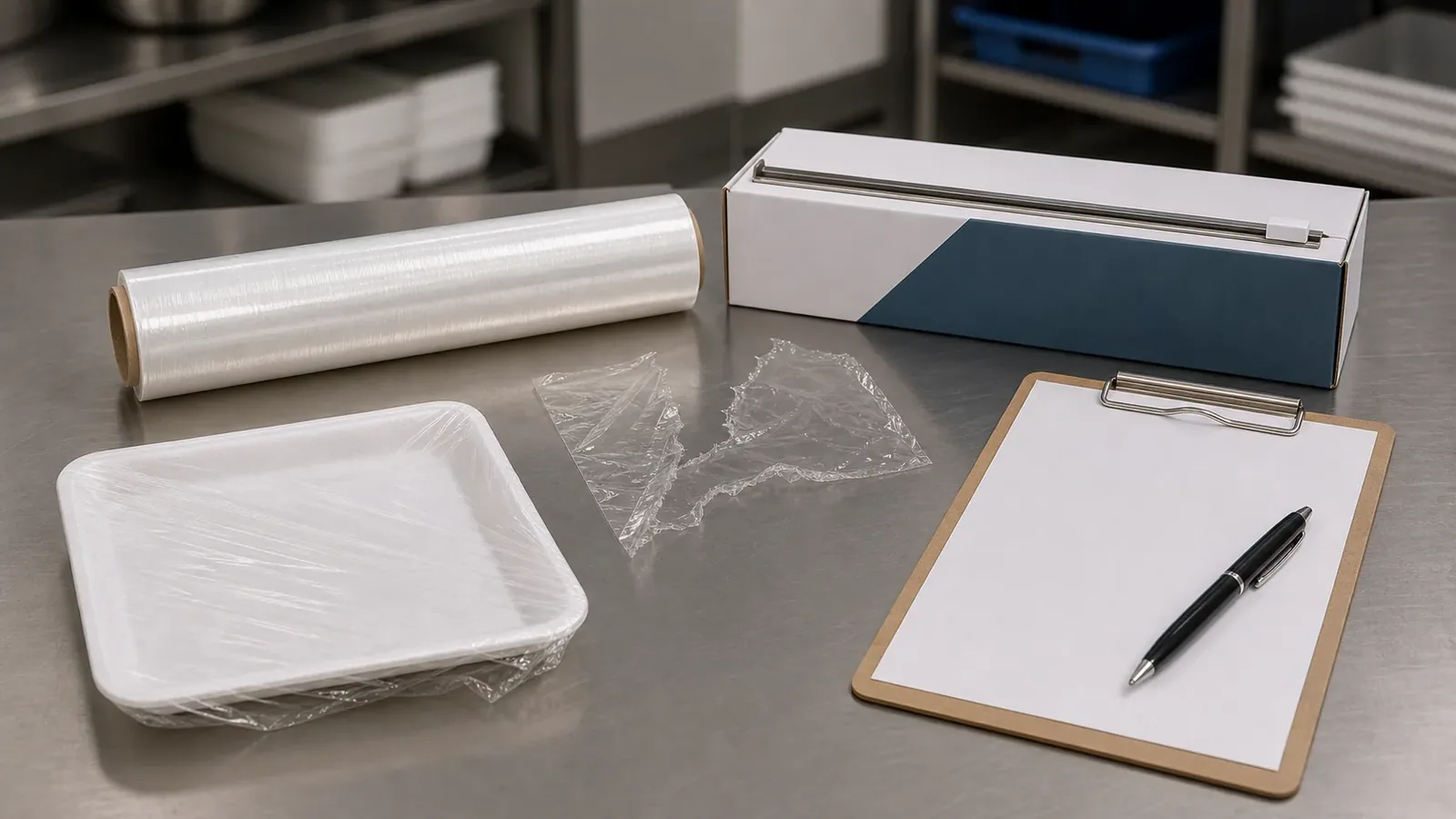
Two complaints that sound identical can have different causes. One roll tears because the cutter drags; another was damaged in a compressed carton; a third is being pulled across a wet tray edge. Compare the complaint sample with the approved specification and reconstruct the wrapping conditions before changing material or thickness.
- Cling film tearing can be caused by thin film, poor winding, cutter box blade issues, fast wrapping, or storage damage.
- Poor cling can come from material mismatch, tray surface, moisture, food type, storage condition, or wrong use case.
- Test samples on real trays and with the actual cutter box, dispenser, or wrapping station.
- Bulk production should be compared against the approved sample before shipment.
- Complaint review should include roll specs, packaging, carton condition, user handling, and customer use environment.
Do Not Treat Every Complaint as a Material Defect
A material issue is possible, but it is not the only explanation. A film may tear because the blade is misaligned. It may not stick because the tray edge is wet or textured. It may look poor because cartons were crushed during shipping. Buyers need a structured review before asking the supplier to change material or thickness.
This matters for importers because customer complaints can be costly. If the buyer changes the wrong specification, the next order may still fail. A better process starts with sample comparison and real use testing.
Purchase scenario: A restaurant distributor receives complaints that film tears during use. The buyer first assumes the film is too thin. After checking samples, the issue is traced to a weak cutter box blade and crushed cartons that affected roll edges during transport.
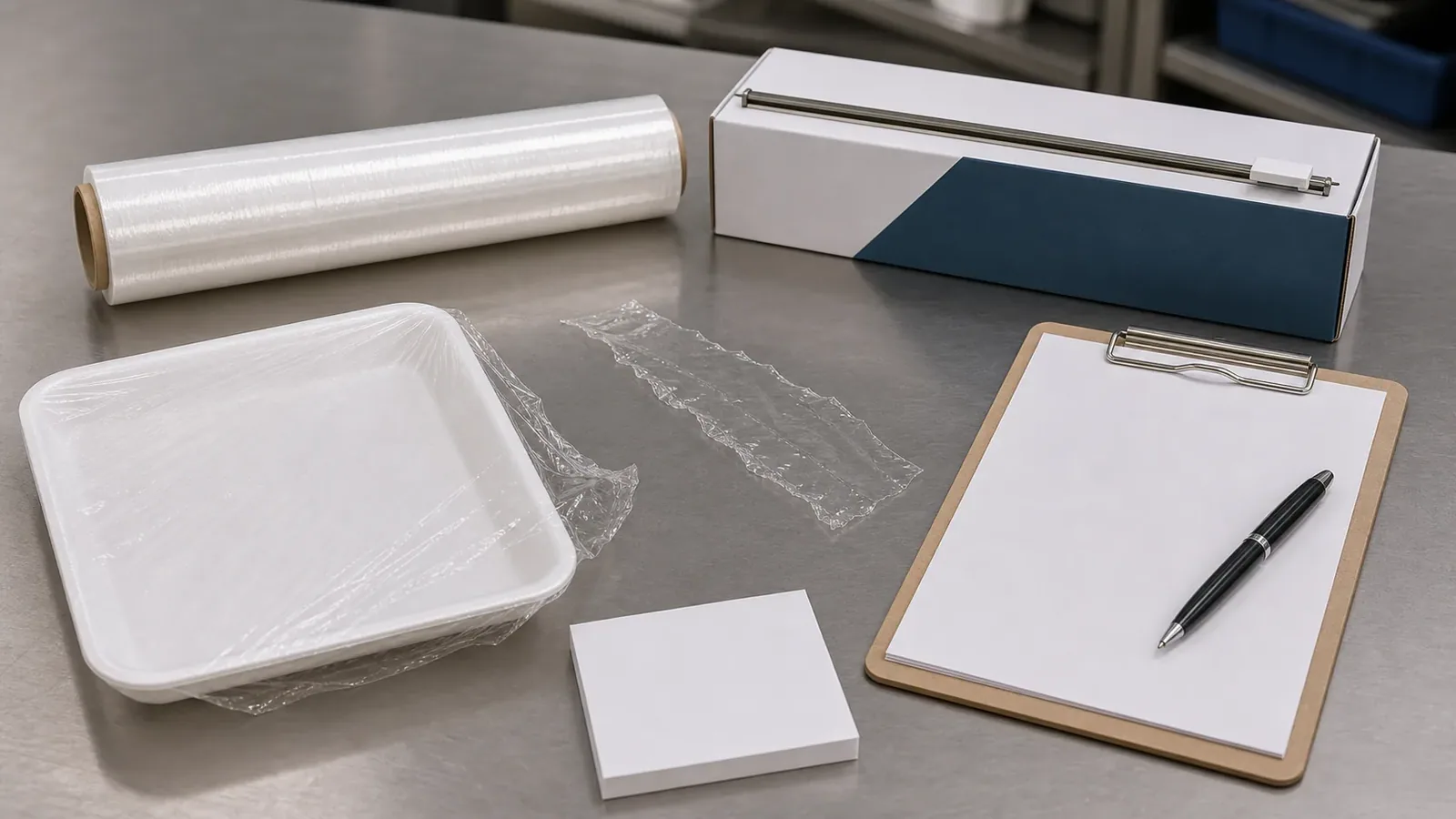
Common Reasons Cling Film Tears
Tearing can happen during pulling, cutting, wrapping, or storage. Buyers should identify when the break happens. If it tears before reaching the blade, roll winding or pull-out opening may be involved. If it tears at the blade, the blade position or cutting method may be the issue. If it tears around tray corners, thickness, stretch, tray shape, or wrapping speed may be involved.
| Problem Moment | Likely Check | Buyer Action |
|---|---|---|
| Tears while pulling from roll | Winding tension, roll edge damage, pull-out opening | Inspect roll edge, box opening, and carton damage. |
| Tears at cutter box blade | Blade position, blade fixing, box strength | Cut repeatedly and compare with approved sample. |
| Tears at tray corners | Thickness, stretch, tray shape, wrapping speed | Test real trays at normal working speed. |
| Tears after storage | Carton pressure, temperature, roll handling | Review warehouse and shipping conditions. |
Common Reasons Cling Film Does Not Stick
Poor cling can mean different things. The film may not hold tray edges, may lift after cold storage, may not grip a certain surface, or may lose neat appearance after handling. Buyers should describe the exact problem rather than saying only “not sticky”.
Tray material, surface texture, moisture, food type, temperature, and film formulation can all affect cling. If the buyer supplies both restaurant kitchens and supermarket trays, one film may not perform the same across every use case.
Check material
Foam, PET, PP, paper, and aluminum trays may hold film differently.
Check edge condition
Wet tray edges or cold condensation can reduce edge hold.
Check channel
Restaurant storage, produce trays, and meat display may need different sample tests.
Thickness and Stretch Should Be Checked Together
Thicker film may feel stronger, but thickness alone does not solve every tearing issue. The film also needs enough stretch for the tray shape and enough control for the cutter box or dispenser. A buyer should compare thickness, roll weight, stretch, and actual wrapping behavior together.
For cost-sensitive orders, reducing thickness may lower unit price but increase waste if users tear more film during wrapping. This should be tested before bulk orders.
Cutter Box and Blade Problems
A poor cutter box can make good film look bad. If the blade is loose, dull, misaligned, or poorly protected, the film may tear unevenly. If the box bends, users may pull at an angle and waste film. Test boxed samples repeatedly before approving production.
- Cut the sample many times from normal user angles.
- Check whether the blade moves or pulls the film.
- Check whether the box board bends after repeated use.
- Review roll fit, core position, and pull-out opening.
- Compare production photos against the approved cutter box sample.
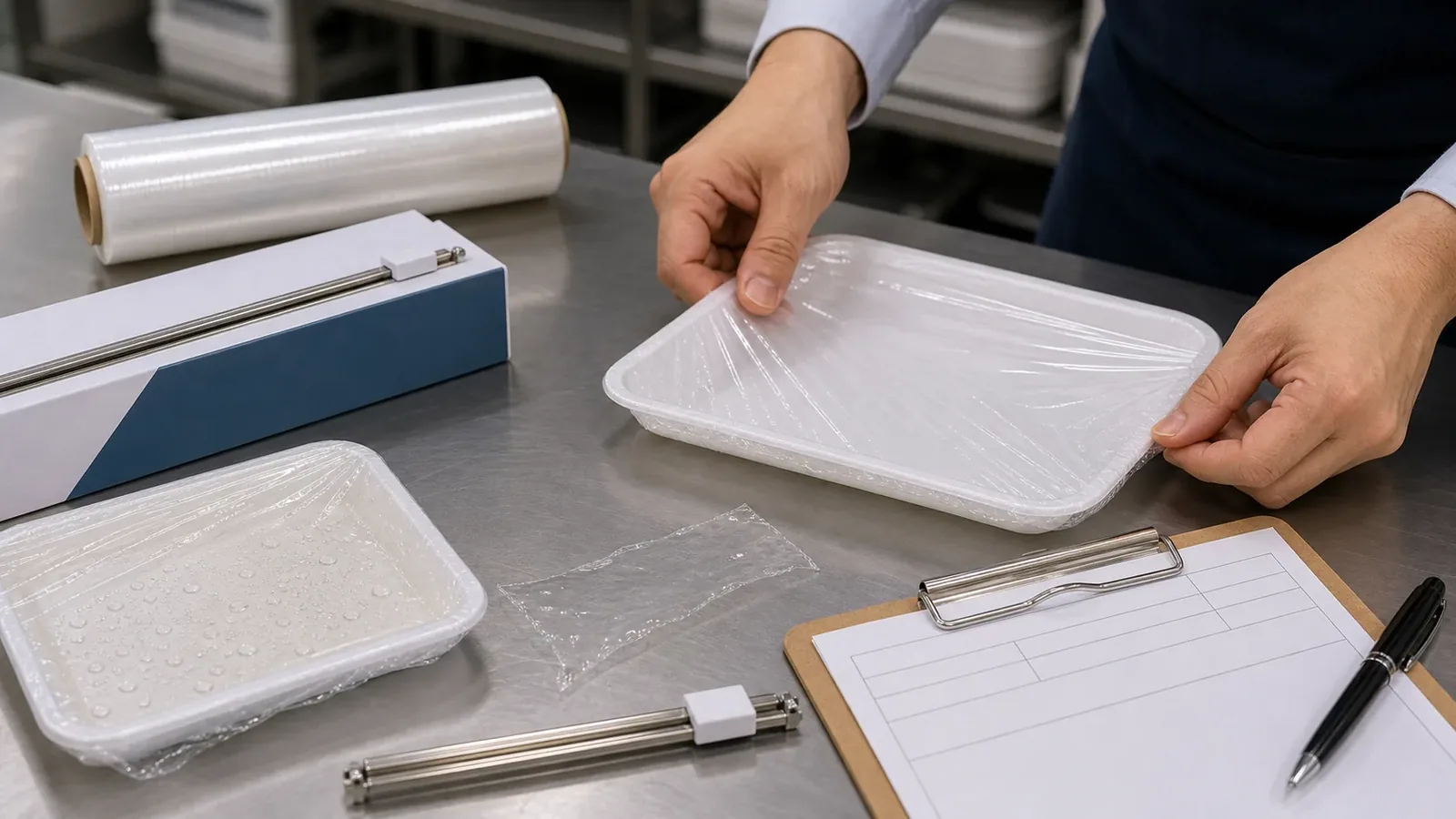
Storage and Carton Damage
Rolls can be affected before the customer uses them. Cartons may be crushed, roll edges may be damaged, or boxes may deform during transport. If complaints appear after shipment, buyers should inspect carton condition and warehouse handling, not only the film formula.
Ask for carton photos, pallet photos, carton dimensions, gross weight, and packing method before shipment. If the order includes cutter boxes, carton protection is especially important because damaged boxes can affect cutting performance.
How to Review a Complaint With the Supplier
A clear complaint file helps the supplier identify the issue. Send photos, videos, roll labels, carton labels, the approved sample reference, and a description of the use condition. Vague complaints are harder to solve.
- Send photos or video showing exactly when the film tears or lifts.
- Send roll label, carton label, batch or order reference where available.
- Describe tray material, food type, storage temperature, and wrapping method.
- Compare the problem roll with the approved sample if available.
- Separate film behavior, cutter box behavior, and carton damage observations.
- Agree on what should be changed before repeating the order.
Buyers comparing new samples can review PVC Fresh Wrap and Commercial Cling Film Roll options depending on whether the issue is supermarket tray wrapping, restaurant use, or general food-service supply.
Troubleshooting questions
Why does cling film not stick well?
Poor cling can come from material mismatch, tray surface, moisture, cold storage, food type, wrong use case, or differences between sample and bulk production.
Does thicker cling film always solve tearing?
No. Thickness can help in some cases, but tearing can also come from blade, roll winding, tray shape, wrapping speed, or storage damage.
How should buyers test cling strength?
Test the film on real tray materials and storage conditions. Check edge hold immediately after wrapping and again after handling or cold display where relevant.
What should I send when reporting a cling film problem?
Send photos or video, roll label, carton label, order reference, tray material, food type, storage condition, wrapping method, and approved sample comparison if available.
Use the approved sample record and the cutter-box checks when separating film defects from packaging problems.
Diagnose the use condition before changing the film
Photos or video of the tear, roll and carton labels, tray material, storage condition, and wrapping method make a troubleshooting review much more useful.